
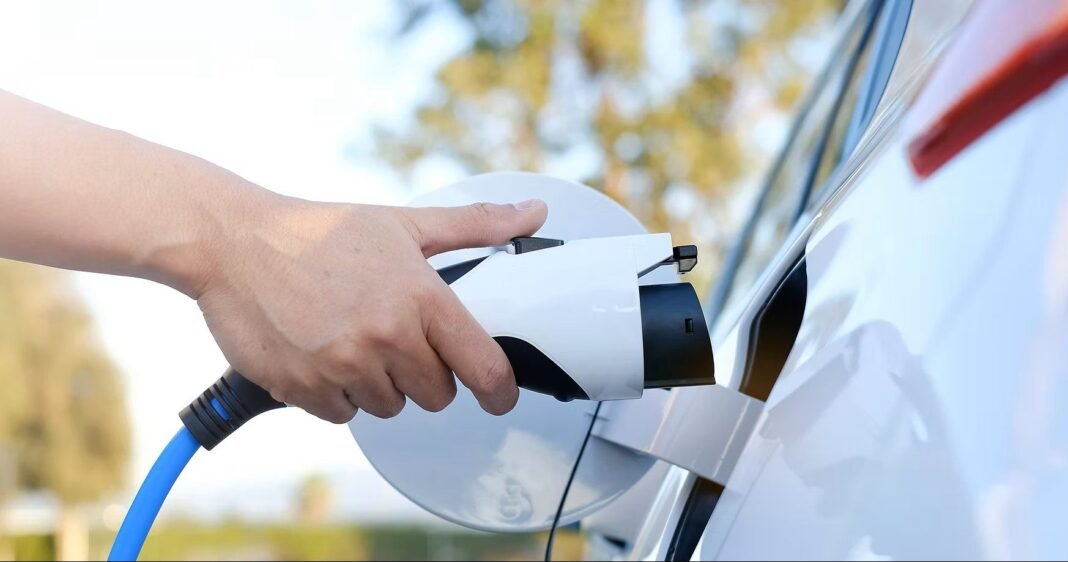

Surging petrol and diesel prices have narrowed the cost gap between traditional fuels and electric vehicle (EV) charging, with new analysis showing that public charging is now, on average, cheaper than refuelling with petrol or diesel. However, industry leaders warn that government intervention is essential to ensure EV charging remains affordable in the long term.
A recent snapshot analysis from ChargeUK reveals that, for the first time in over a year, the cost of charging an EV on public networks has dropped below that of petrol and diesel in most everyday scenarios. While public charging prices have increased by 38% between 2021 and 2025, they have remained relatively stable in recent weeks compared to rapidly rising fuel costs driven by global conflict.
Using data from RAC Fuel Watch and Zapmap Price Index, the analysis highlights a significant shift in running costs. Charging on a standard public charger—such as those found on residential streets or in local car parks—at the national average rate of 54p per kWh now costs around 15p per mile. This compares favourably with approximately 17p per mile for petrol vehicles and 17.5p for diesel. Drivers using a typical mix of 80% standard and 20% rapid charging can expect costs of around 16p per mile, while only those relying exclusively on ultra-rapid chargers will pay more than drivers of conventional vehicles.
Despite this milestone, ChargeUK is urging the government to address policy-related costs that continue to inflate public charging prices. As ministers promote an “era of clean energy security”, the organisation argues that while global factors largely dictate petrol and diesel prices, EV charging costs are more directly influenced by domestic policy decisions.
Its 2025 white paper, Delivering Affordable Charging For All, found that at the beginning of the decade, EV charging was consistently cheaper than petrol or diesel, regardless of whether drivers charged at home or in public. While home charging remains highly affordable—costing as little as 2p per mile—public charging costs have risen sharply, largely due to increased standing charges and other policy-driven expenses.
Following the report, the UK government committed in its November budget to review the cost of public EV charging, a process that is now underway. At the same time, a Tax Tribunal ruling that VAT on public EV charging should be reduced from 20% to 5%—aligning it with home charging—has been challenged by HMRC. ChargeUK has described the appeal as “disjointed and disappointing”.
Looking ahead, the analysis warns that affordability gains may be short-lived. From 2028, the introduction of the government’s 3p per mile electric Vehicle Excise Duty (eVED) could once again make public charging more expensive than petrol and diesel for drivers who rely heavily on public infrastructure.
Vicky Read, Chief Executive of ChargeUK, said: “While this is not how we wanted to see the gap between public EV charging and petrol prices closed, it once again demonstrates the urgent need to make driving an EV more affordable for all. Following news that new electric cars are now cheaper than petrol, the cost of public charging is now the final hurdle for mass EV adoption.”
She added: “We need to see government take control of the situation to ensure the numbers stack up not just in a time of global crisis, but for the long term. The cost pressures currently pushing up public EV charging prices are largely within the government’s grasp, whereas the global pressures pushing up petrol and diesel prices are not.”
Proposed solutions include reducing standing charges, equalising VAT rates between public and home charging, and incorporating renewable electricity into the UK’s renewable transport credit scheme. These measures, ChargeUK argues, could significantly lower costs, support wider EV adoption and help manufacturers meet growing demand.
Industry voices beyond the charging sector echo these concerns. Ian Plummer, Chief Customer Officer at Auto Trader, said: “Cheaper running costs have long been a key incentive to make the switch to electric, and we’ve seen a significant uptick in consumers looking at EVs on our platform following recent petrol price hikes, so we know there’s growing awareness of just how much you can save.
“Our analysis also shows the average price of a new EV, including discounts and government grants, has fallen below petrol for the first time ever. With the upfront price often being the biggest barrier to electric adoption, this is a key milestone in the UK’s transition and should hopefully signal the growing affordability of electric cars. While there’s lots to be positive about, interest spikes and growing new-car affordability don’t mean the transition is sorted. If the government is serious about a fair and accessible transition, it should do all it can to make public charging as affordable as possible.”
Melanie Shufflebotham, co-founder and COO of Zapmap, highlighted the broader cost benefits of EV ownership: “At Zapmap we’ve been tracking the cost of charging on the public network since November 2023, using typical use-case scenarios. This shows that the vast majority of drivers choosing electric will enjoy total cost of ownership savings.
“We’re now seeing that for EV drivers with a typical 80/20 split between home and public charging, the cost saving of charging their EV compared to fuelling a petrol or diesel car is at the highest level since May 2024.
“However, in the UK we still have the highest public charging costs in Europe, and we welcome all measures to tackle this to help progress the transition to sustainable transport.”
Simon Williams, Head of Policy at RAC, added: “While the dramatic increase in petrol and diesel prices due to the conflict in Iran has understandably sparked increased interest in going electric, it remains the case that public charging costs are higher than they need to be. Issues outside of operators’ control such as 20% VAT on public charging, compared to 5% at home, and high standing charges aren’t helping. We hope the government will seek to address these issues so more people can make the switch to electric driving and charge affordably away from home.”
As the UK pushes towards electrification, the latest data underscores both progress and ongoing challenges. While rising fuel prices have temporarily tipped the balance in favour of EVs, long-term affordability will depend on decisive policy action to ensure public charging is accessible, competitive and sustainable.

