
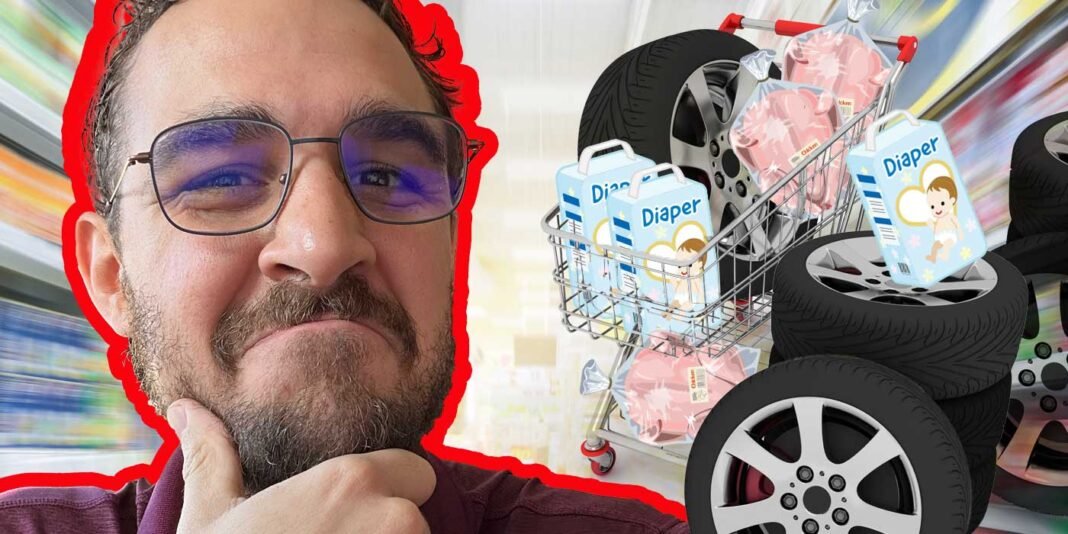

Remember how, at the end of any episode of Supermarket Sweep, the contestant always ran to fill their cart with diapers and turkeys? Everyone knew the winning strategy. It wasn’t that hard. Every few years, the tire industry seems to go on its own sort of shopping spree. You’ve no doubt seen the deluge of news involving the countless tire industry acquisitions and expansions this year. The difference is that there are a few more complications in this business than in that classic grocery store sprint
Let’s hover a magnifying glass over a few of the big ones: Sun Auto Tire & Service has been the most active operator in our coverage window. It added stores across Alabama, Mississippi, Tennessee, Texas, North Carolina, and Arkansas, and opened greenfields under the Plaza Tire Service and Fausak banners.
Les Schwab Tire Centers made acquisitions that extended its reach, including in Nebraska. Mid-market operators kept pace, too. Victory Tire & Auto stitched together four Minnesota deals, and Dobbs Tire & Auto Centers pushed to 97 locations with the Conrad’s acquisition.
Even one-store additions (also plentiful this year) add to this story. Each one fills a service desert and tightens a brand’s radius.
Three Themes Behind Tire Industry Acquisitions
Reading through our own reporting since March, three themes stand out to me:
- Retail stores are getting scooped up, expanding the footprints of highly established brands in targeted corridors.
- Distribution announcements are getting denser and faster.
- Manufacturers are amping up domestic market access for the next wave of demand.
Why does this matter to independent tire dealers? We’re living in a market where traffic is flat and costs are not. Replacement tire demand is largely tied to vehicle miles traveled, which has grown slowly since the rebound from the pandemic. The U.S. Department of Transportation reports total Vehicle Miles Traveled (VMT) in July 2025 hovered around 3.3 trillion miles, barely 50k miles more than the same figure in July 2023. At the same time, the Bureau of Labor Statistics shows auto repair labor wages up ~5% year-over-year, while inflation’s heel keeps utilities and equipment costs high. Tire distributors have also seen costs rise due to rising trucking and warehousing expenses.
As a result, a brand’s footprint density is its leverage. More rooftops means shorter dispatch times, better bay utilization, and shared techs. Tire dealers across the board are concerned about tightening margins; expansion allows those dealers to create margin without hiking door rates.
Re-Wiring the Map Through Distribution
Let’s not discount the distribution shake-up happening behind the scenes. Lead times and fill rates are a competitive advantage, and if a distributor can get same-day or first-wave next-day on more sizes, they win the job and won’t have to overstock to make ends meet for dealers.
Some of the bigger news in this regard include: K&M Tire bought four Turbo Wholesale warehouses across the Michigan–Indiana lane; Unicorn Tire opened a Pennsylvania facility to serve the Mid-Atlantic; and Tire Group International added a Portland distribution center for West Coast coverage. Layer in ATD’s sale, stated focus on core tire distribution, and partnership with Nokian Tyres, and you get a clear theme: more nodes, closer to dealers, with faster replenishment.
My assumption is that we’ll continue to see distributors prioritize regional depth with more warehouses closer together over long-haul reach, and to consolidate SKUs that aren’t turning over quickly to their larger warehouses.
Manufacturers are Prepping Specialty Tire Lines for the Next Cycle
On the supply side, we’ve seen tire manufacturers make some practical moves that align capacity and channel with where demand is going next. And where might that be, you ask?
Exhibit A: We logged Hankook’s Tennessee plant expansion alongside a refreshed TBR lineup, perhaps signaling that commercial (and specifically last-mile) will remain a growth driver over the next 12 months. Nexen Tire added offices across Europe, Latin America, and the Middle East to localize decision-making and support, and CEAT’s acquisition of the CAMSO business (post-license period) gives CEAT an opportunity to hold proven product lines in off-highway/ag, rather than being a contract manufacturer.
Specialty and commercial segments are very healthy relative to the consumer, and we’re seeing brands shore up OTR/ag and urban TBR while keeping capacity flexible.
Where Tire Industry Acquisitions Are Clustered
We mapped every acquisition and expansion we reported since March and tagged mentions of states and regions. Two regions dominated: the Southeast/Gulf (Mississippi, Alabama, Louisiana, Texas, Arkansas) and the Upper Midwest (Minnesota, Michigan, Ohio, Indiana).
The U.S. Census Bureau reports that Southeast/Gulf states are among the fastest-growing regions in the U.S. in terms of population, and that corresponds with new vehicle registrations, thus heightened demand. The Upper Midwest connects a ton of automotive manufacturing hubs and Great Lakes shipping routes.
For independent dealers in those zones, expect more postcards via snail mail and more calls pressuring you to join someone else’s ranks.
So, Why Is All This Good for Independent Tire Dealers?
I’m looking at the same tea leaves as you are, and I see opportunities for a profit boost. Of course, your best move for your business will be highly dependent on your location and store count. However, these focus areas over the next year are likely the diapers and turkeys for most independent tire shops:
- Focus on fill-rate: As distribution densifies, independents that choose to carry a curated mix rather than any tire under the sun can avoid tying up cash in tires that rarely move. With stronger distributor networks, you can stock smarter, deliver more same-day customer saves – that should lead to healthier margins. Ask yourself what really belongs on your rack.
- Brand ladders: Manufacturer and importer portfolios are consolidating redundancies. That’s good for you. When a customer’s OE fitment is back-ordered, you should shift them laterally, not down. If you aren’t doing the Good-Better-Best thing, I recommend you start.
- Talent and training can keep you in the spotlight: Investing in your techs is rarely a bad move. Those skills are ultimately what will keep comebacks down and your reviews up. Sometimes this is a priority for those brands backed by private equity. Sometimes, it is not.
- Commercial and specialty deserve focus: There’s revenue in them fleet hills! The key is offering services fleets actually need. Fleets will stay loyal for on-site service windows, retread guidance, casing programs, and inflation management services.
- Mix marketing and logistics: The strength of your supply chain can be a great marketing tool. As distributors add more warehouses and cut delivery times, that speed should become part of your message. In some cases, it might be stronger than advertising the lowest price.
Your Business, Your Strategy
The strategy behind growing your tire shop doesn’t feel too far off from that old grocery store game show. On TV, you don’t see contestants meandering down the aisles hoping for a lucky break. They studied prior episodes and knew exactly where to go, and they loaded up on what mattered most. For tire dealers, the same rules apply. Stock the right mix and sharpen your service. Invest in your people, and lean into where tire industry acquisitions are taking you. That’s how you make sure your cart is full of baby staples and poultry when the clock runs out.

