
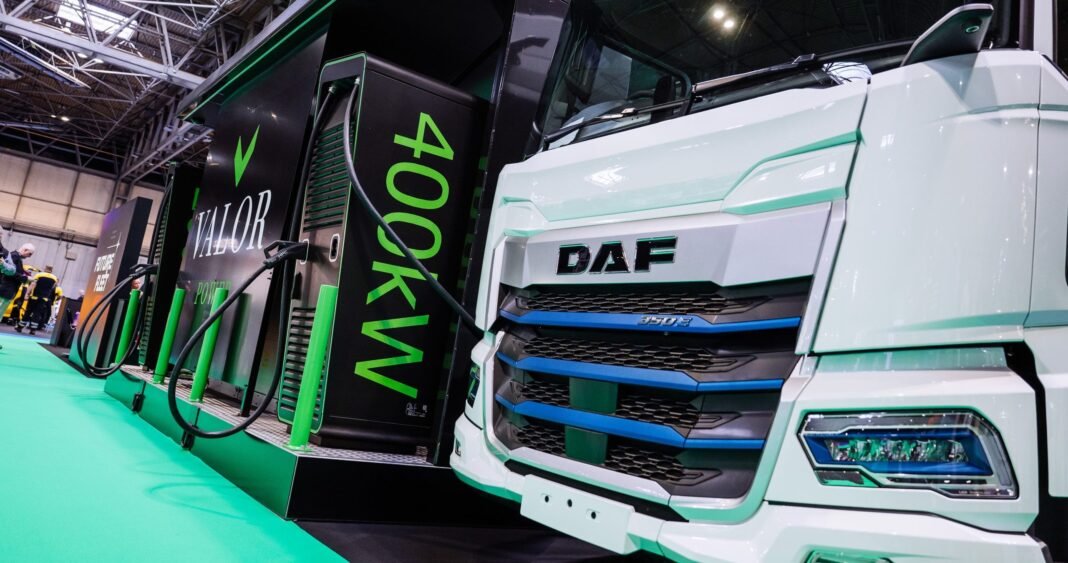

A new HGV Decarbonisation Report from the Commercial Vehicle Show has revealed that the UK heavy goods vehicle sector remains in the early stages of decarbonisation, with operators sharply divided over the future role of electric and alternative fuel technologies.
Based on responses from 61 UK-based HGV fleet operators, the report highlights a fragmented market where no single pathway to net zero has yet emerged as the clear industry standard.
While the light commercial vehicle sector has moved beyond early EV adoption into wider operational deployment, diesel continues to dominate HGV fleets, accounting for almost 90% of the average fleet mix. Although operators are increasingly exploring alternatives including electric trucks, HVO and gas-powered vehicles, adoption levels remain relatively low.
The findings point to a sector progressing at very different speeds, shaped by operational requirements, infrastructure availability and confidence in current vehicle technologies.
The report reveals a significant divide in attitudes towards electric HGV adoption. While some operators are actively investing in lower-emission technologies, others remain cautious about whether current solutions can support demanding commercial operations at scale. Nearly three in ten operators surveyed said they currently have no plans to introduce electric HGVs into their fleets.
Confidence around achieving the UK’s net zero targets for heavy transport also remains limited. More than two-thirds of operators surveyed said they are not confident the sector will meet its 2040 decarbonisation goals, while only 13% believe the targets are achievable under current conditions.
Infrastructure emerged as the single biggest barrier slowing HGV decarbonisation. More than half of respondents identified charging and energy infrastructure as their primary concern, ahead of both operational limitations and total cost of ownership.
Public charging availability and depot grid capacity were highlighted as the most significant challenges facing operators considering electrification. The findings suggest that many fleets are not fundamentally opposed to decarbonisation but remain uncertain whether the infrastructure required to support large-scale electric HGV deployment will develop quickly enough.
The report also highlights continued uncertainty around the long-term role of alternative fuels such as hydrotreated vegetable oil (HVO) and gas.
HVO has gained traction among some operators because it can often be used within existing diesel vehicles with minimal disruption. However, more than 70% of respondents do not believe HVO will fully replace diesel across the HGV sector, largely due to concerns around long-term fuel supply and scalability.
Gas-powered HGVs generated similarly mixed responses, with some operators already investing in the technology while others have no intention of adopting it. The findings reinforce the lack of industry consensus around any single decarbonisation solution for heavy transport.
Nick Davison, Event Director for the CV Show said: “The transition to lower-emission HGVs is clearly underway, but this report shows the sector remains at a much earlier stage than other parts of the commercial vehicle industry. Operators are facing significant operational and infrastructure challenges, and there is still no universally accepted route to decarbonisation for heavy transport.
“The conversations taking place at the CV Show continue to demonstrate how important collaboration, investment and real-world operational insight will be in shaping the future of the sector.”
The report underlines the scale of the challenge facing the UK’s heavy transport industry as it attempts to balance decarbonisation targets with operational reliability, infrastructure constraints and commercial viability.
Click here to download the full HGV Decarbonisation Report

