
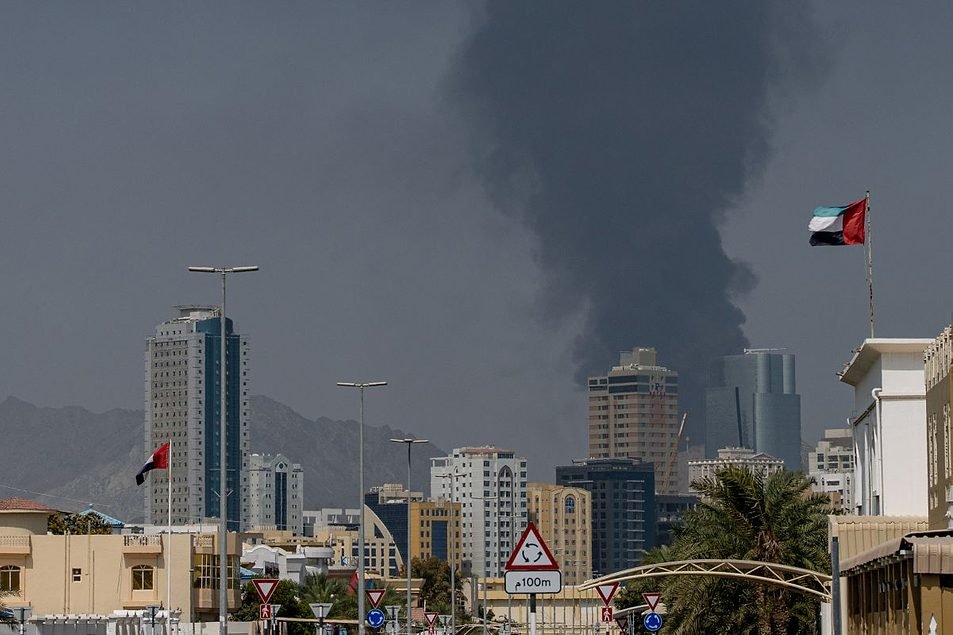

Chief supply chain officers reacting to the outbreak of war in the Middle East should take immediate actions, including communicating their response strategy to C-suite peers, and implementing logistics workarounds by switching transportation lanes to alternative carriers and routings.
That’s the advice from David Gonzalez, research vice president in the logistics, customer fulfillment and network design team at consulting firm Gartner. And get ready for 12 months of transportation disruption in the region, at least 40% rate increases, higher fuel surcharges, and the implementation of war surcharges. It could be as serious as the disruptions caused by the Gulf War that started in 2003, Gonzalez says. Or more serious.
“The proliferation outside of Iran and Israel is the most significant thing for me,” he says, contrasting it with the brief skirmish between the U.S./Israel and Iran in 2025, which was fairly contained. “With this, the impact on the region is so significant. What’s really the concern is how this has expanded to engulf the entire region. So it’s not just significant for logistics and supply chain in the region; but for logistics and supply chain well beyond the confines of the Middle East.”
Most supply chain execs will have picked up the phone and called their carriers at the weekend, if not first thing Monday morning, says Gonzalez. So the next thing to do is communicate and strategize. “You need to communicate and manage external expectations, including everyone in the supply chain,” says Gonzalez. “And planning is so important. Take the implications of what’s going on and apply it to your organization, your customers and suppliers, and proactively inform them of the level of impact that this could have on business.”
If no alternative carriers and routes are available, supply chain managers should work with incumbent partner carriers and maintain a close watch on developments. They should prioritize inventories in the event that capacity runs tight for longer than the four-to-six-week period currently being touted by the White House, and extend lead times to accommodate longer transit times.
Ideally, Gonzalez says, CSCOs would have read and implemented the recommendations in the Gonzalez’s January 2026 paper, “CSCOs Must Ensure Logistics Is Prepared for Conflict in the Middle East.” If you didn’t take that advice, “you’re then stuck in the middle of the situation, and the best you can do is survive the disruption as it plays out in front of you.”
Regardless, Gonzalez says, functional leaders such as heads of logistics will be “immersed” in communicating with carriers and partners, assessing the robustness of distribution networks in and around the Middle East, and evaluating options for alternative supply lanes into and out of the region.
Other functional supply chain heads, such as those in planning, manufacturing, and sourcing and procurement, should focus on checking the status and impact on suppliers, raw materials, manufacturing sites in the impacted areas, and finished goods inventory levels across the network, he advises. “CSCOs must apply holistic oversight of these actions and activities, and bring them together as a cohesive plan detailing the company’s end-to-end supply chain response that can be communicated to C-Suite and enterprise stakeholders.”
Medium-term strategies include initiating a budget review with your CFO by presenting what-if scenarios that detail the likely impact to your supply chain costs. “Assume an increase in transportation expenditure based on companies switching to airfreight where they can, as well as fuel surcharges,” says Gonzalez. Shipping lines have already implemented a war risk surcharge as high as $2,000 per twenty-foot container; most are currently avoiding the region altogether for now.
Meanwhile, Gonzalez says, it’s wise to complete a risk assessment by evaluating the business impact of interrupted supply, the costs to mitigate, and the long-term effects. Diversify sourcing locations and plan for shortages by identifying the products and components sourced from or supplied to Middle East countries, he suggests.
“C-suite leaders are not simply looking for a replay of news headlines,” warns Gonzalez. “CSCOs must analyze, interpret and communicate the consequences and impacts of real-time events on their revenue and strategy, and predict what-if scenarios should the conflict in the Middle East escalate or be protracted and the situation worsens.”
Gonzalez strongly advises against giving in to panic; the eventual impact will most likely be a mixed bag. Firstly, Iran accounts for around 4% of global oil production and 6% of natural gas. “This is not insignificant, but also not so much that damage to Iranian infrastructure and ability to produce would threaten global supplies,” he says. “It is more likely that it will adversely affect countries that have become dependent on Iranian oil and gas, such as China and India. For most CSCOs, the prospect of oil price spikes may prove to be a distraction, as the global crude oil market is significantly oversupplied by almost 3.7 million barrels per day.”
“Do not frame risks or issues as the event itself. Instead, lead with critical revenue and strategic objectives, and indicate how much damage impact is expected to that revenue and those goals,” he continues. “Provide strategic recommendations that include the tradeoffs involved in terms of cost and opportunity costs.”
Lastly, he says, do not ignore the potential for your business to leverage upside as a consequence of an otherwise difficult geopolitical event.

