

Over two-thirds of transportation and logistics (T&L) organizations and nearly half of manufacturers are deploying artificial intelligence (AI) for inventory management, demand forecasting, and predictive analytics, according to a study from Zebra Technologies Corp.
The study showcases how improving frontline workflows with modern technologies like AI, automation, and data improves profitability and enhances the customer experience, Zebra said. Specifically, organizations which embrace what Zebra calls “intelligent operations” report significant gains:
- Retailers achieved up to 1.8-percentage-point increases in revenue growth and profitability through improvements in their prioritized workflow of inventory management.
- Manufacturers optimizing their top workflow of quality control and assurance saw revenue growth uplift by 2.4 percentage points and profitability improvements of 1.4 percentage points.
- T&L firms optimizing key delivery and inventory workflows experienced a revenue growth increase of up to 3.4 percentage points with a similar increase in profitability.
“Retail, manufacturing, and logistics are being redefined at the workflow level – where speed, visibility, and precision drive growth and elevate frontline productivity and improve customer experiences,” Joe White, Zebra’s chief product & solutions officer, said in a release. “Intelligent operations simplify complexity by combining the best of advanced technologies with the people on the frontline, enabling organizations to adapt to rapid change and thrive in competitive markets.”
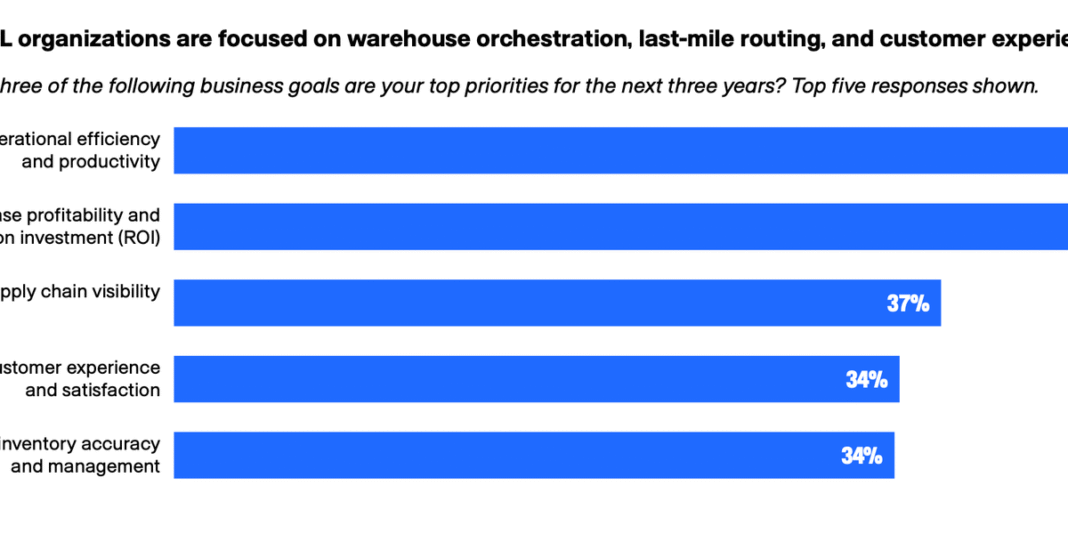
Digging further into the replies from transportation and logistics firms, Zebra asked those respondents to list their top business priorities for the next three years, and found they were:
- Improve operational efficiency and productivity (48%)
- Increase profitability and return on investment (ROI) (47%)
- Enhance supply chain visibility (37%)
- Improve customer experience and satisfaction (34%)
- Improve inventory accuracy and management (34%)
The study also found that better data management is essential to achieving further workflow digitization over the next three years, especially in priority areas like improving operational efficiency (48%), better understanding of supply chain issues and opportunities (37%), happier customers (34%), and enhancement of inventory accuracy and management (34%).
However, some of the top barriers to improving workflows involve dealing with change, including the high cost of training or upskilling workers (selected by 41% of respondents) and difficulty upgrading or integrating with legacy technology (36%).
The research, which was conducted in cooperation with Oxford Economics, combined econometric analysis with surveys of participants including 1,000 senior leaders across retail (400), manufacturing (400), and T&L sectors (200) from the U.S., Mexico, United Kingdom, Germany, India, Japan, Australia and New Zealand.

