
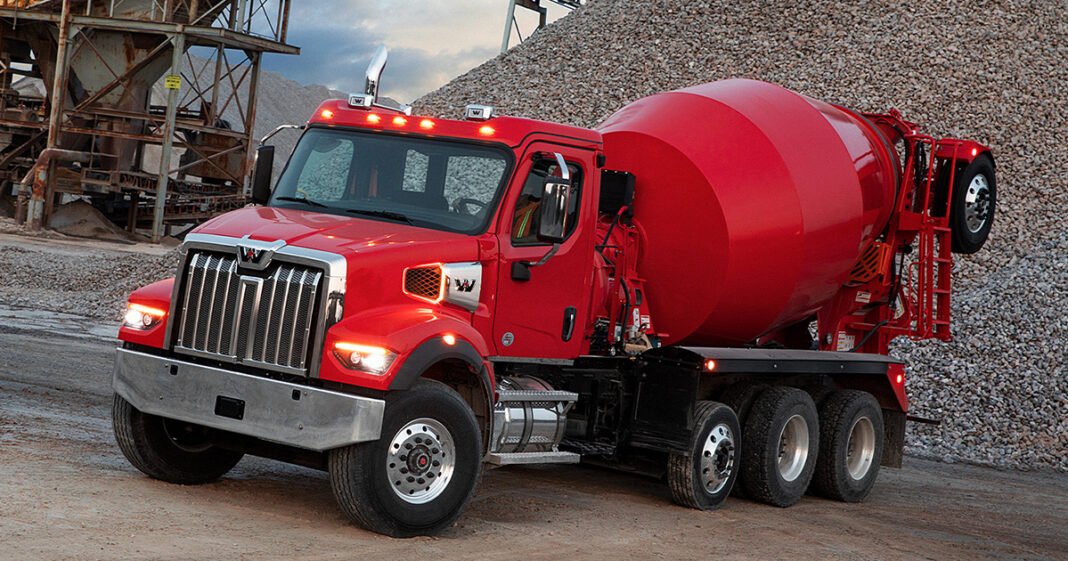

The 47X is Western Star’s latest version in its X Series vocational lineup. (Daimler Truck North America)
March 13, 2026 4:46 PM, EDT
Key Takeaways:
- DTNA retired the Western Star 57X to prioritize its growing heavy-duty vocational lineup.
- The 47X and 49X have outperformed expectations and now anchor Western Star’s vocational strategy.
- Executives aim for more than 35% vocational market share by 2030 as demand shows signs of improvement.
Western Star trimmed its truck lineup recently, quietly ending production of the 57X on-highway tractor as parent company Daimler Truck North America seeks to expand its heavy-duty vocational truck market share in the U.S. and Canada.
The 57X was launched in 2022 and replaced the 5700XE in vocational truck-focused Western Star’s lineup.
Four cab options were initially offered: the day cab, 60-inch midroof, 72-inch midroof and 72-inch Stratosphere configurations.
Western Star launched the X Series starting in 2020, adding the 49X and then the 47X.
“Daimler Truck North America is sunsetting the Western Star 57X vehicle model as part of our strategy to align our product offerings with evolving market demands,” Western Star’s parent company said in a statement provided to Transport Topics.
“The 57X has been a reliable and innovative vehicle in our lineup. However, the 47X and 49X reception has exceeded expectations, and Western Star continues to be a leading brand in the heavy-duty vocational market with the toughest, most advanced trucks available,” DTNA added.
Dealers were informed that the 57X would be retired in 2025, a spokeswoman said in an email. The decision was not, however, widely communicated.
The honing of DTNA’s focus toward vocational trucks during a difficult 2025 for on-highway demand saw the Daimler Truck division completely invert manufacturing at the Cleveland Truck Plant — the company’s largest in North America — to produce more Western Star trucks.
Top Daimler Truck executives told analysts and investors in July that DTNA would be sharpening its focus on the North American heavy-duty vocational market in the coming months and quarters.
“The heavy-vocational segment is a growth opportunity,” Chief Financial Officer Eva Scherer said July 8 during the company’s Capital Market Day presentation, which was held at the Cleveland, N.C., plant.
She pointed specifically to the Western Star X Series lineup, adding: “We are underpenetrated at 24% of the market.”
DTNA is looking to increase its heavy-duty vocational truck sales by 60% by 2030. The truck and bus maker — which historically focused more on the Class 8 on-highway market — is aiming for a heavy-duty vocational truck market share of more than 35% by 2030.
Western Star’s 2025 Class 8 U.S. retail sales market share rose to 5.5% in 2025 from 4.8% in 2024, according to Omdia Automotive data.
DTNA CEO John O’Leary told the July gathering that “we have the right products for any job our customers need to get done,” while also noting how loyal vocational truck owners typically are.
Another reason for concentrating on vocational trucks, executives said at the investor day, is that Daimler Truck North America aims to increase its margins in the second half of the 2020s.
A heightened focus on the heavy-duty vocational market is part of this initiative because there tends to be a higher average selling price due to an elevated level of spec’ed content, the executives said.
By 2030, Daimler Truck expects its North American unit’s margin to be as lofty as 14%, 2 percentage points higher than the ceiling forecast at Capital Market Day in 2023. DTNA’s floor also is higher, rising to 10% from 9%, the executives said.
Portland, Ore.-based DTNA’s return on sales in 2024 was 12.9%. However, ROS fell to 9.8%, according to Daimler Truck’s fourth-quarter 2025 earnings. In July, executives expected a ROS of around 12%, but the ongoing downturn in truck demand and impact of tariffs undercut those expectations.
DTNA in the third quarter of 2025 laid off around 2,000 employees at five production plants. Workers at production facilities in Mount Holly and Gastonia, N.C.; Detroit; Portland, Ore.; and Saltillo, Mexico, were affected.
Patrick Brennan of Cox Fleet talks about the common missteps that fleets make in planning for future maintenance and operational needs. Tune in above or by going to RoadSigns.ttnews.com.
Daimler Truck executives are, however, more positive about heavy-duty truck demand in 2026, including the vocational sector.
Scherer said vocational demand held up slightly better during the fourth quarter, noting that it “was faring a bit better than on-highway [in Q4], but it was obviously also weaker in a generally weak market environment.” She added that DTNA is now seeing “a bit of a better order momentum” and expects vocational orders to follow that trend if construction activity strengthens.
Scherer also pointed to rising production, saying, “Western Star is growing absolute volume, outperforming the market and building a strong pipeline of unregistered units currently at bodybuilders awaiting outfits.”
As those trucks move through the system, she said, registrations should reflect that growth.
“We are confident that we can expand our position toward our Capital Market Day target of more than 35% market share by 2030,” Scherer added.

