

VIAS, the institute for road safety, conducted a study on load securing on behalf of the Department of Mobility and Public Works. This revealed a significant number of breaches and underlined the lack of knowledge that still prevails in the sector. To explore this theme further, Transportmedia created the ‘Safety Arena’: a conclave of experts in cargo securing, which can be viewed during Transport & VAN.TV on Trends Z this weekend. This first edition took place at Fabriek Logistiek in Zwijnaarde.
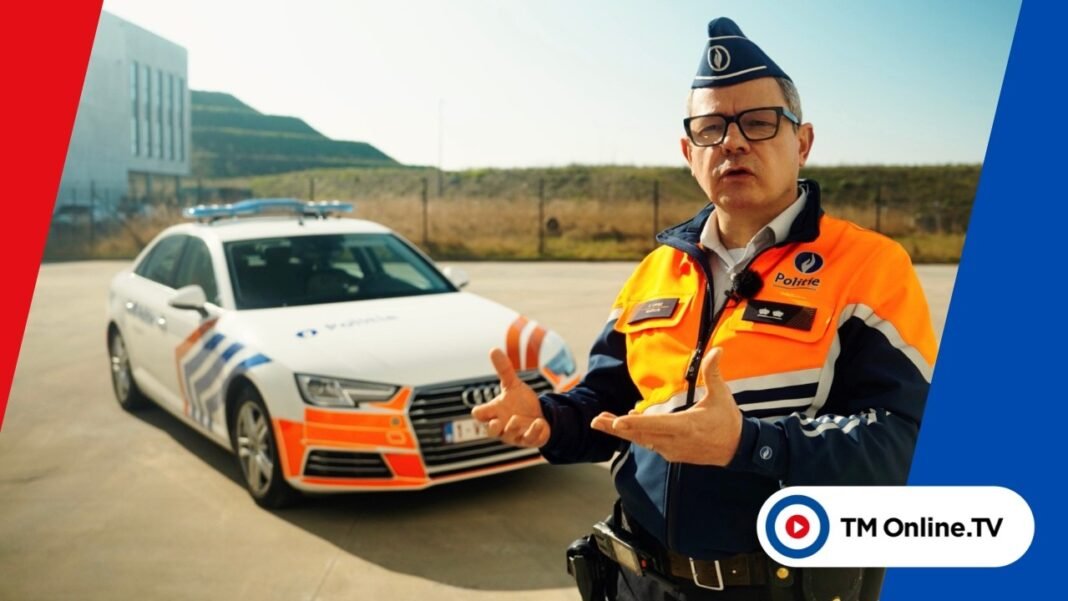
Kurt Garrez, the first chief inspector of the Federal Police, provides some insight into the subject in the first ‘Safety Arena’.
Is the legislation on cargo securing sufficiently known? “Belgium has strong and clear legislation on load securing, which also forms an important reference framework for responsibilities within Europe,” answers Kurt Garrez. “Truck drivers are usually well informed of these rules, partly thanks to the mandatory Code 95 training that covers load securing.”
Yet Kurt Garrez notes that other links in the logistics chain, such as shippers, shippers and packers, are often less familiar with these regulations. “They are usually only confronted with it when it is too late, for example when their cargo is involved in an accident,” he explains. “Packagers also bear responsibility as soon as goods are delivered. When the police discover violations, a report is drawn up against all parties involved.”
Responsibilities
How are the responsibilities divided? “The carrier must provide a suitable vehicle and the necessary resources. The shipper, in turn, must provide correct information and consider how the cargo can be safely secured.”
Parties can make mutual agreements about the approach, but legally speaking it is in principle the shipper who must load the vehicle correctly, taking excess weight and axle loads into account. At the same time, the load must be placed in such a way that the driver can secure it effectively. “The carrier knows its equipment best, so cooperation is essential to achieve a safe solution.”
Are the standards publicly available? Kurt Garrez: “Our Belgian legislation includes many standards on load securing. However, many of those standards are chargeable and are written in a different language. The Council of State has ruled that this is not possible. These standards must be made available free of charge in the language of the user, i.e. in Dutch. But we have carried out checks on this and have still had convictions. A lot of knowledge from those standards is available for free on the European Guideline.”

