
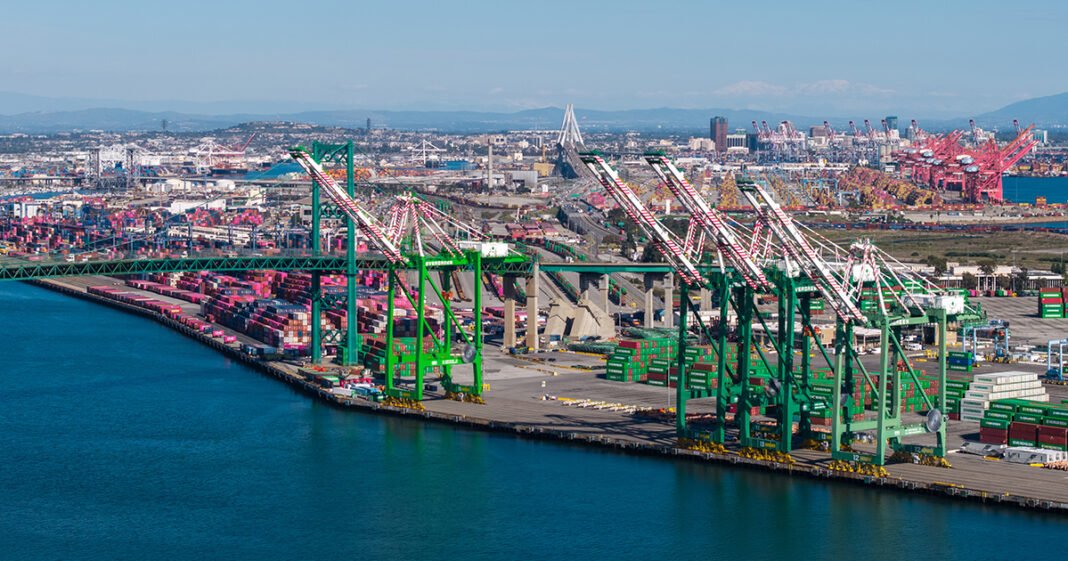

Shipping containers at the Port of Los Angeles. (Kyle Grillot/Bloomberg)
March 11, 2026 1:56 PM, EDT
The Trump administration is poised to announce a series of trade investigations on March 11, according to a person familiar with the matter, a move aimed at setting the stage for new levies on imports after the Supreme Court struck down the president’s tariff agenda.
Those trade investigations will be conducted under Section 301 of the Trade Act of 1974 and carried out by the Office of the U.S. Trade Representative, according to the person, who requested anonymity to detail the plans. Among the issues that will be investigated are taxes on digital services and alleged currency manipulation, according to the New York Times, which first reported the plans.
The probes would mark a major step in the administration’s effort to rebuild President Donald Trump’s tariff wall after the U.S. Supreme Court in February nixed his so-called “reciprocal duties” that hit imports from a slew of economies. Trump has assailed that decision and vowed to quickly revive tariffs he says are crucial to bringing in revenue and forcing companies to bring more manufacturing jobs to the U.S.
The White House and USTR did not immediately respond to a request for comment.
Tariffs have been a core plank of Trump’s economic agenda and he has used his ability to unilaterally impose them to wield leverage against foreign countries. On the very day that the high court struck down his levies, Trump announced that he would impose a 10% global tariff as a stopgap for 150 days using a different legal authority and subsequently vowed to raise that baseline to 15%, though the administration has yet to actually impose that higher rate.
Patrick Brennan of Cox Fleet talks about the common missteps that fleets make in planning for future maintenance and operational needs. Tune in above or by going to RoadSigns.ttnews.com.
Section 301 allows the U.S. trade representative to impose tariffs in response to other nations’ trade measures it deems discriminatory to U.S. businesses or in violation of international trade agreements. But the investigations to lay the groundwork for those tariffs typically take months to complete.
Trump has complained that alternate provisions for tariffs such as through Section 301 or Section 232 of the Trade Expansion Act of 1962 lack the same flexibility as the emergency law he employed for his earlier levies, though these avenues are seen as more legally sound. He has already used them to impose tariffs on autos, metals and certain imports from China and Brazil.

