
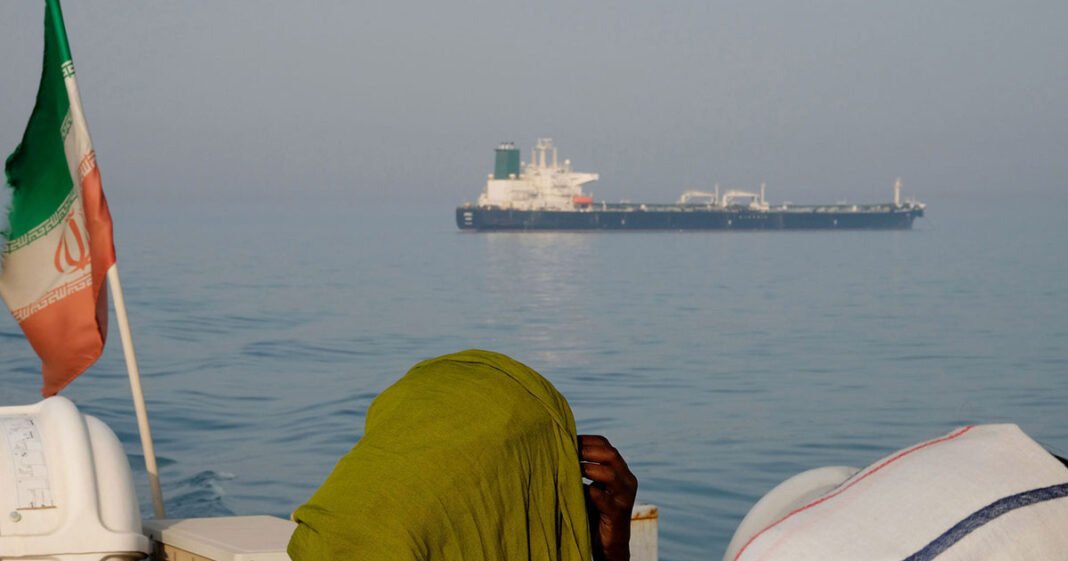

An oil tanker in the Strait of Hormuz in 2017. (Kaveh Kazemi/Getty Images/Bloomberg)
March 3, 2026 3:30 PM, EST
Key Takeaways:
- President Donald Trump said the U.S. will provide insurance guarantees and possible Navy escorts to keep oil tankers moving through the Strait of Hormuz.
- The move aims to stabilize energy markets after U.S. and Israeli attacks on Iran halted flows through the waterway, driving Brent above $80 a barrel and lifting gasoline prices.
- Officials said restoring full shipments could take weeks as the U.S. works to suppress Iranian threats and roll out measures to ease price impacts.
President Donald Trump said the U.S. will provide insurance guarantees and naval escorts to ensure safe passage for oil tankers and other vessels through the Strait of Hormuz, aiming to head off a potential energy crisis caused by the war with Iran.
Trump said March 3 that the U.S. International Development Finance Corporation would offer insurance “at a very reasonable price” to help ensure the flow of energy and other commercial trade in the Gulf. In addition, he said, “if necessary, the United States Navy will begin escorting tankers through the Strait of Hormuz, as soon as possible.”
“No matter what, the United States will ensure the FREE FLOW of ENERGY to the WORLD,” the president posted on social media.
RELATED: Diesel and Gasoline Prices Rise on Iran Strikes
Oil prices pared gains briefly on the news, with global benchmark Brent trading near $80 a barrel after settlement. While the latest measures knocked out some of the risk premium in energy markets, traders remain skeptical that it will allow oil flows to return to normal levels through the critical passageway quickly.
Prices have surged more than 10% since the U.S. and Israel launched attacks on Iran over the weekend, triggering widespread disruptions in the Middle East and effectively bringing oil flows through the critical Strait of Hormuz, through which a fifth of the world’s energy supplies transit, to a halt.
Trump’s post did not elaborate on the insurance mechanism to be offered by the DFC, an institution that generally exists to mobilize private capital to developing nations and de-risk investments in poor countries.
“The announcement may help to reassure traders, but escorting and insuring will take some time to implement,” said Bob McNally, president of consultant Rapidan Energy Group and a former White House official. “The U.S. military will first want to suppress Iran’s ability to mine and attack ships with anti-ship cruise missiles and drones.
“Assuming Tehran decides to continue fighting, we are expecting that full resumption of Hormuz flows will require weeks instead of hours or days, even with the announced and helpful plans to provide insurance or escort ships,” McNally said in an email.
Trump’s announcement came after some concerns were raised about insurers putting upward pressure on oil prices as insurance contracts were getting pulled, according to people familiar with the matter.
Some of the world’s largest maritime insurance mutuals withdrew war risk insurance cover for ships entering the Persian Gulf as the industry scrambles to work out how to price the cost of covering vessels sailing into the waterway.
The administration is also seeking to address high prices for consumers as gasoline prices at the pump have already jumped to the highest levels in five months, posing a political risk for Trump ahead of the November midterm elections.
Secretary of State Marco Rubio told reporters this week that the U.S. had anticipated energy price increases and that Treasury Secretary Scott Bessent and Energy Secretary Chris Wright would roll out a program to mitigate the effects. Trump was due to meet with Wright and Bessent on the issue at the White House on March 3.
Political risk insurance, like that offered by the DFC, helps cover losses due to war, violence and other political turmoil.
Written by Jennifer A. Dlouhy, Ben Bartenstein and Ari Natter

