
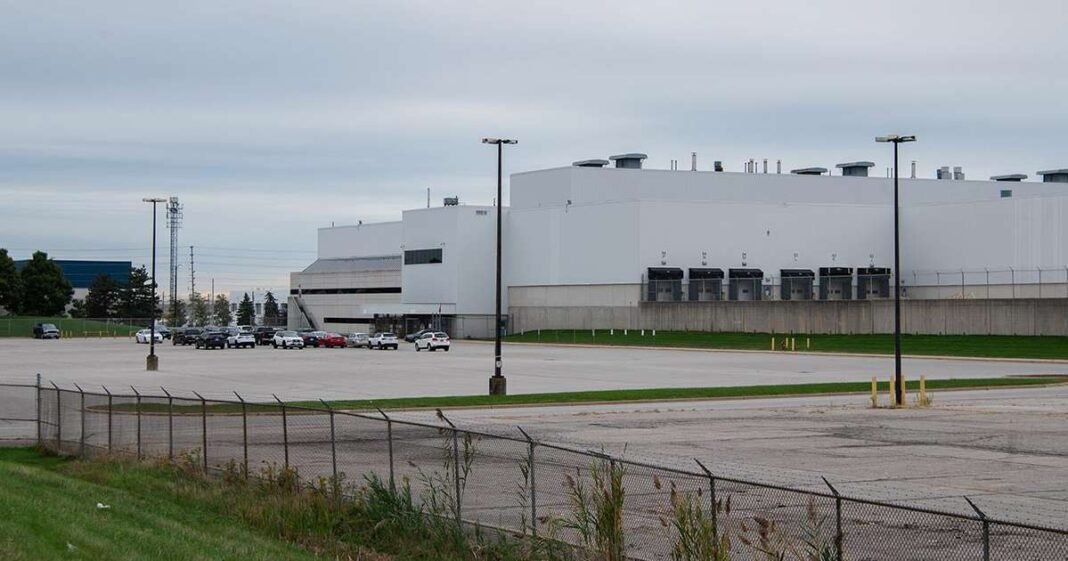

The Stellantis Brampton Assembly Plant in Ontario. (Laura Proctor/Bloomberg)
February 12, 2026 1:41 PM, EST
Stellantis NV is still in talks with the Canadian government and union about the future of its shuttered factory in Brampton, Ontario, according to the automaker’s CEO in the country.
The company wants “to find a sustainable option for Brampton” after moving production of the Jeep Compass SUV to the U.S., Stellantis Canada CEO Trevor Longley said on BNN Bloomberg TV on Feb. 12.
“The reality is that we want to build cars in Brampton. We’ve been making cars in Canada for 100 years and we want to continue making cars in Canada for the next 100,” he said in an interview at the Canadian International AutoShow in Toronto.
“We are working proactively with our government,” as well as with Unifor, which represents Brampton workers, he said. “That means that we find solutions for the tariff situations that have been imposed.”
Stellantis announced in October that it was moving production from Brampton to Illinois as part of a $13 billion investment strategy to strengthen its U.S. business and dodge tariffs. The move has affected 3,000 Canadian workers who were employed at the plant.
After the move, Prime Minister Mark Carney’s government cut the number of U.S.-made vehicles the automaker can import without facing counter-tariffs. Carney imposed the retaliatory levies in response to Trump’s tariff barrage last year, but exempted firms that keep producing and investing in Canada.
Longley said the company is still considering future products for the factory.
Industry Minister Melanie Joly has threatened to sue Stellantis over the production shift and has vowed to recoup Canadian taxpayer money that provided financial aid to the company.
Last week, Carney unveiled his government’s new automotive strategy, which aims to protect and attract investments from carmakers. The plan proposes to revamp the tariff remission program so that automakers that build vehicles in Canada receive import credits in return. Those credits can be used to bring vehicles from the U.S. tariff-free, and can be traded with other companies.
Transport Topics reporters Eugene Mulero and Keiron Greenhalgh examine the critical trends that will define freight transportation in the year ahead. Tune in above or by going to RoadSigns.ttnews.com.
Longley said more details on the plan are needed to evaluate it, but that “anything that protects Canadian industry and Canadian auto production, I think is a positive move.”
“For many years, it’s been more cost-effective to import cars into Canada than it is to make them here, and obviously we’ve been heavily invested in this country and we want to make sure that we can continue to do that well into the future,” he added.
The Stellantis executive also weighed in on Carney’s deal with China, which will allow 49,000 electric vehicles into Canada at a reduced tariff rate of 6.1%. Longley said while allowing more competition is a good thing, he raised concerns about whether Canada is on a level playing field with a non-market economy like China.

