

Although all-weather tire sales have climbed in recent years – surpassing winter tire sales – as more drivers discover there is a better four-season alternative to traditional all-season tires, there is still a market for dedicated winter tires.
For drivers – and tire dealers – in regions with prolonged or severe winter conditions, including cold temperatures, winter tires remain a seasonal mainstay.
“Right now we see the winter market as a stable segment that may present new opportunities as the car parc evolves over the next several years,” says Doug Martin, van, fleet and winter product manager at Continental Tire.
Tire dealers who stay current on performance trends and take time to match customers with the right winter tires can thrive in this segment. They can also benefit from added service opportunities when drivers return for twice-yearly changeovers.
Measuring Winter Tire Performance
When it comes to winter tire performance requirements, snow and ice traction, along with braking capabilities in inclement weather, are at the top of the list.
“The most important aspect of a winter tire is utilizing a high pattern sipe density and a compound that is able to remain pliable in cold weather — typically an average temperature of 45 degrees Fahrenheit or below — so that it can maintain traction at those lower temperatures,” Martin says.
He adds that three-peak mountain snowflake (3PMSF) certification is a good measure for acceleration traction on medium-packed snow. He explains that the recent introduction of the ice grip symbol (IGS) puts more emphasis on ice traction. This emphasis highlights an important attribute in winter driving performance.
“The ice grip certification is a means of measuring ice grip performance,” Martin says. “Passenger tires designed for use in ice conditions that meet or exceed the ice grip index of 1.18, as compared to the 16-inch standard reference test tire, will qualify for the IGS. Our new Continental VikingContact 8 has been tested and passed this certification and has the IGS.”
According to Tire Rack, the IGS assessment uses an agreed-upon reference tire as a standard baseline for ice testing. To pass the IGS exam, tires must display a minimum 1.18 index (18% better) for on-ice braking compared to the standard reference test tire.
“While the exact properties that make a tire handle well in wet snow and slippery ice may not always coincide, they are close enough that tires with the IGS brand may also earn a 3PMSF symbol, as the U.S. Tire Manufacturers Association has stated. In other words: tires with the IGS are permitted to be 3PMSF branded as well as ‘M+S’ badged,” Tire Rack states.
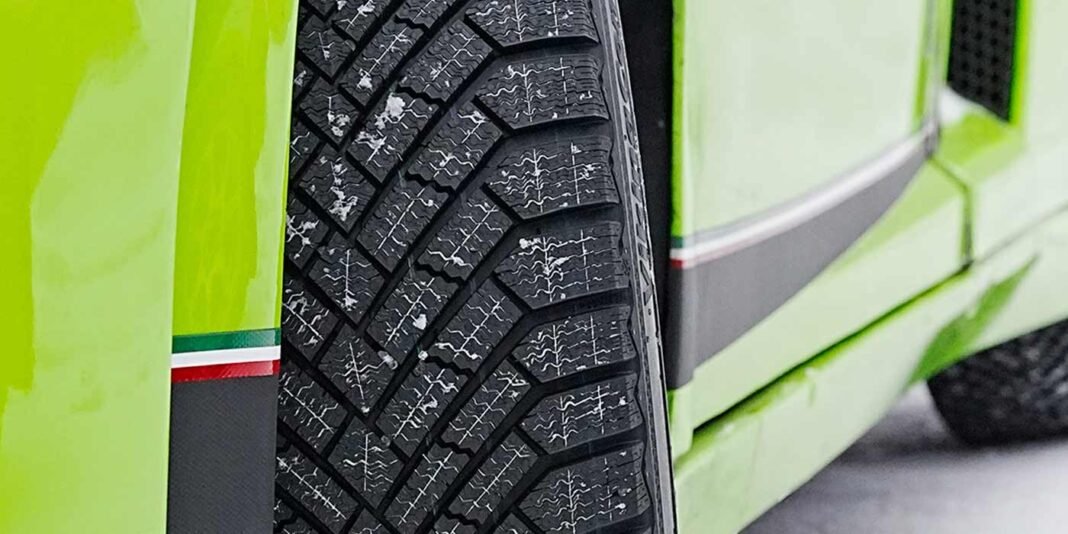
Winter tires use flexible cold-weather compounds and dense siping to maintain grip when temperatures drop.
Selling Customers on the Need for Winter Tires
Helping customers choose the right winter tires starts with understanding their needs and local conditions. Tire dealers play a key role in guiding those decisions — from stocking the right sizes to explaining how temperature and driving habits affect performance.
Dealers can cover about 85% of the premium winter tire market by stocking models with rim diameters from 15 to 22 in. and section widths between 185 and 285 millimeters, according to Continental’s Martin.
“It is always important to properly qualify your customer: what are their driving habits, where do they do most of their driving, what performance attributes are important to them?” he says.
It’s also imperative to discuss temperature, not just ice and snow, when explaining a winter tire’s performance attributes.
“Highlight the importance of winter tires, not only in areas of the country that experience heavy snowfall, but also in areas where temperatures drop below 45 degrees Fahrenheit that may not get much snowfall,” Martin adds. “Below 45 degrees, a summer or all-season compound becomes stiff and increases braking distances, while a winter compound remains pliable, offering much shorter braking distances. Educating the consumer is key, which is why this 45-degree topic should be discussed with every potential winter tire buyer to help increase sales.”
Continental offers its new VikingContact 8 in more than 80 standard sizes. The tire fits rim diameters from 15 to 22 inches and serves passenger cars, SUVs, crossovers and light trucks. The ice grip-certified tire carries the 3PMSF symbol and has PolarPlus technology, meaning it remains pliable in freezing temperatures.
According to Continental, a three-layer sipe design adds more biting edges. This improves grip, braking and handling across snow, slush and ice. The directional tread pattern moves water and slush away from the contact patch. This reduces the risk of hydroplaning and improves overall stability. A noise-reducing compound and refined tread design contribute to a quieter, more comfortable ride. Smart Energy Casing helps reduce rolling resistance and supports fuel efficiency and extends EV range.

