
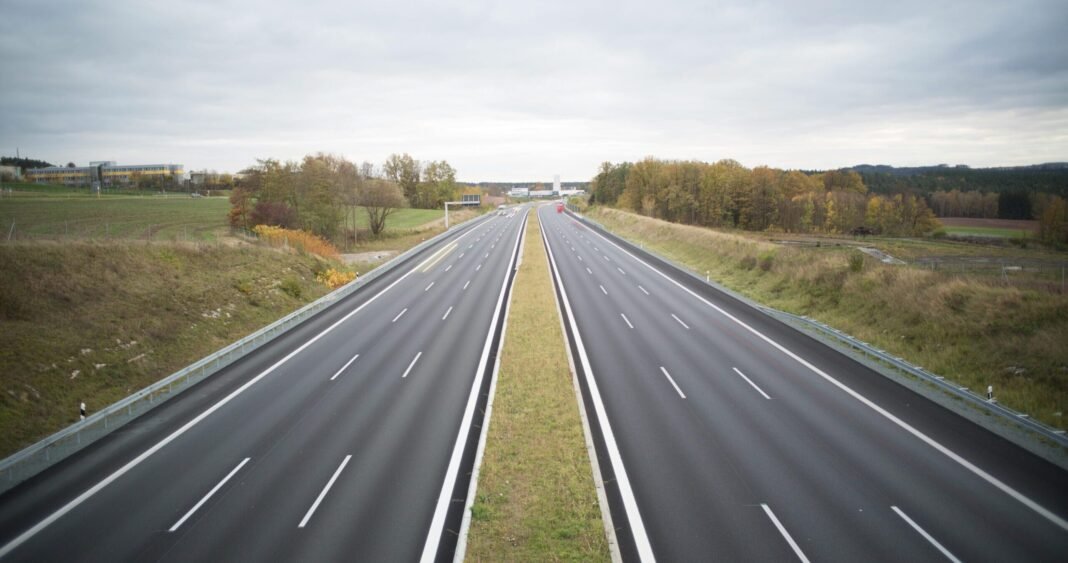

There has been a sharp rise in the number of drivers who feel nervous or anxious when using so-called ‘smart’ motorways, compared to the same time last year, according to new research* by The AA.
‘Smart’ motorways either have the hard shoulder permanently removed or it is converted into a running lane at peak times.
The survey of 12,705 drivers shows that the proportion reporting feelings of nervousness or anxiety on ‘smart’ motorways with no hard shoulder – relying instead on emergency refuge areas spaced around three-quarters of a mile apart – has doubled, from 23% last year to 46% this year.
Motorways where the hard shoulder is only opened to traffic during busy periods also saw a significant increase in anxiety, with the number of drivers feeling nervous or anxious rising from 30% to 47% in the space of the last 12 months.
Key findings
Respondents were asked in 2025 and 2006 whether compared with three years ago how nervous or anxious they feel now when driving on each of the following types of motorways?
Motorway type
% nervous/anxious (2026)
% nervous/anxious (2025)
Conventional motorway (continuous hard shoulder)
4%
1%
No hard shoulder – emergency areas ~0.75 miles apart
46%
23%
Hard shoulder used as running lane at busy times
47%
30%
By contrast, confidence remains highest on conventional motorways that retain a continuous hard shoulder. While levels of anxiety are still low on these roads, the survey shows a small increase compared with last year, suggesting that concerns about motorway safety may be rising more generally, even beyond smart motorways.
Taken together, the results highlight a clear and growing confidence gap between traditional motorways and smart motorway layouts, underlining ongoing public concern about safety, breakdown provision and emergency access on the strategic road network.
One driver told us that she felt “terrified…and they fill me with fear”, another said “it can be a bit anxious…there’s no safe spot, it can be quite dangerous”.
History of ‘smart’ motorways
The first trial of ‘smart’ motorways started 20 years ago on the M42 in the West Midlands between junctions 3A and 7 as a Dynamic Hard Shoulder scheme. This trial evolved into a permanent conversion of the hard shoulder, with the ‘smart’ motorway schemes extended to roughly 17% of the motorway network between 2010 and the cancellation of the programme in 2023.
What are the types of motorways?
- Conventional – motorway with a continuous hard shoulder.
- ‘All Lanes Running’ where there is no hard shoulder but emergency laybys at varying intervals. This is the most common type of ‘smart’ motorway.
- ‘Dynamic Hard Shoulder’ where the hard shoulder is only used as a running lane during peak hours or high levels of congestion.
- ‘Controlled Motorways’ where there is a permanent hard shoulder, but gantries which enforce lower speed limits.
Edmund King, AA president said: “It’s not surprising that our members are more anxious about using ‘smart’ motorways. If you break down in a live lane, in effect, you are a sitting duck. The failure of ‘smart’ motorway technology** over the last few years has, no doubt, added to the levels of anxiety.
“What the AA and our members would like to see is the return of the hard shoulder in a controlled motorway environment. Until that concern is properly addressed, it’s hard to see confidence in ‘smart’ motorways recovering.”
Long-standing concerns about ‘smart’ motorways
The AA has raised concerns about ‘smart’ motorways since their introduction and continues to believe that roads without a permanent hard shoulder should be scrapped.
Between 2010 and 2024, at least 79 people were killed on ‘smart’ motorways. Analysis has also shown that drivers who break down on a motorway without a hard shoulder are around three times more likely to be killed or seriously injured compared with those on roads where a hard shoulder is permanently available.
The AA believes these risks help explain why confidence in ‘smart’ motorways remains low.
Call for action and transparency
The AA says the findings underline the need for greater transparency and consistency in how motorway safety is assessed, monitored and communicated.
While a safety stocktake was published in 2023/24, the subsequent decision to scrap the programme has left drivers unclear about how safety on ‘smart’ motorways is now being independently reviewed. Similarly, The AA understands that a number of reports across several stretches of ‘smart’ motorway, which reviews the safety and economic benefits, are awaiting publication. Many of these reports have been awaiting publication for years, with The AA calling for these to by released urgently.
King commented; “These safety reports are vital in understanding how the smart motorways experiment has fared. By continuously delaying their release, it is feared that the drawbacks outweigh the benefits. Regardless of what these documents say, they need to be published immediately.”
The AA’s policy team has been asking drivers their views about ‘smart’ motorways

