
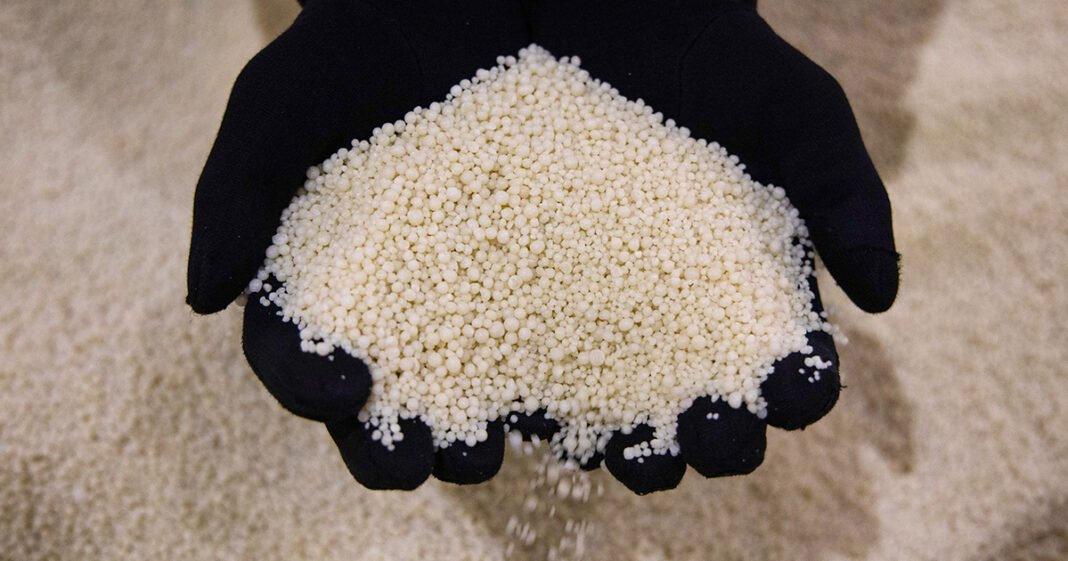

Fertilizer granules. (Andrey Rudakov/Bloomberg)
March 24, 2026 12:46 PM, EDT
Russia has temporarily suspended exports of ammonium nitrate, further tightening the global supply of crop nutrients already strained by the Iran war.
The Agriculture Ministry has paused exports from March 21 to April 21, Tass newswire reported, citing a government statement. Supplies under intergovernmental agreements are exempt.
“The suspension of exports will allow priority supply to the domestic market during the spring fieldwork period and ensure its uninterrupted progress amid rising export demand for nitrogen fertilizers,” the ministry said.
The announcement comes as global flows of fertilizers have been disrupted by the Iran war. The Strait of Hormuz — a crucial maritime transit point linking the Persian Gulf to the open ocean — has been effectively closed since the conflict erupted at the end of February. The waterway handles about one-third of the global fertilizer trade. The supply risks are compounded as China, the top producer of nutrients, has also curbed exports.
The impact of the supply snarls is heightened because Northern Hemisphere farmers usually ramp up application of the nutrients during the spring planting period. The shortages could increase competition for the limited available fertilizer stocks — boosting farmers’ costs and eventually flowing through to higher food costs.
Russia, the world’s second-largest fertilizer producer, accounts for about 20% of the global nutrient trade. The country produced 28.9 million tons of nitrogen fertilizers last year, but has already limited exports to prioritize domestic supply. The country set an export quota of about 10.6 million tons of nitrogen fertilizers, including ammonium nitrate from Dec. 1, 2025, through May this year.
Typically urea makes up the largest volumes of Russia’s exports.
❗️Russia temporarily HALTS ammonium nitrate fertilizer exports to prioritize domestic farmers amid the ongoing Iran conflict
Supply disruptions could severely impact the world food market pic.twitter.com/ghtV3mG868
— RT (@RT_com) March 24, 2026
The nation’s nitrogen fertilizer production capacity has also been affected by the war with Ukraine, as plants are often targeted by drones. Dorogobuzh PJSC, which produces about 2 million metric tons of nitrogen nutrients annually, was damaged in a fire in late February following an attack that Moscow blamed on Ukraine and it is expected to remain idle until May.

