
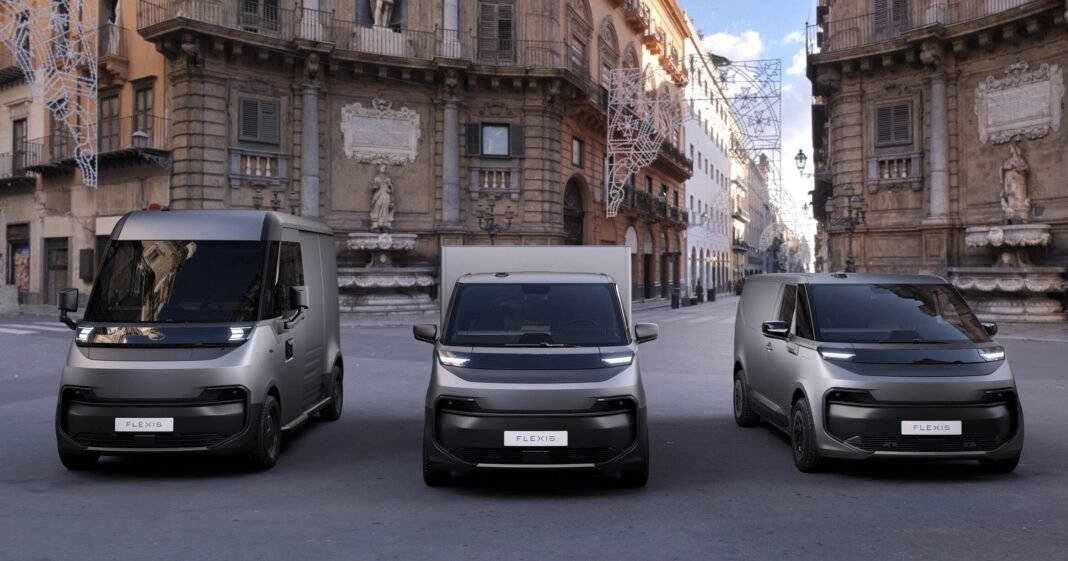

Renault is moving to take full ownership of the electric van manufacturer Flexis, buying out its partners Volvo Group and logistics giant CMA CGM, in a major development for its commercial electric vehicle (EV) ambitions. The agreement, reported by Le Monde and confirmed by multiple industry sources, marks a significant shift in the direction of Renault’s electric van strategy and reflects broader changes across the EV market.
François Provost
Flexis was established in 2023 as a joint venture between Renault Group, Volvo Group and CMA CGM to create a new generation of electric light commercial vehicles built on a software-defined vehicle (SDV) platform and designed for urban logistics. Each of the two manufacturers held 45 per cent of the company, with CMA CGM owning the remaining 10 per cent. The venture was conceived to leverage Renault’s mass-market commercial vehicle expertise, Volvo’s heavy commercial vehicle know-how and CMA CGM’s logistics insights to address booming demand for efficient, low-emission delivery vehicles.
Why Renault Is Consolidating Control
The planned takeover comes amid slower-than-anticipated growth in the electric van market, a reassessment that reportedly prompted Renault’s leadership to rethink the venture’s business plan. Under incoming CEO François Provost, who assumed leadership last year, Renault has been streamlining its operations and refocusing on core competencies, including folding its Ampere EV division back into the broader group and scaling back other ventures like car-sharing services.
According to Reuters, Renault is negotiating to buy out the stakes of Volvo and CMA CGM, though financial details have not been disclosed. A spokesperson for the company said discussions are ongoing and that relations among partners remain amicable, dismissing speculation that the move would lead to asset impairments in Renault’s forthcoming financial results.
Industry commentators suggest the decision reflects Renault’s desire to simplify governance and speed decision-making as it seeks to compete more effectively in an EV segment that has proven tougher than expected. The electric van space, while strategically important, has seen demand grow more slowly than projections suggested when Flexis was launched. Consolidation under a single owner gives Renault greater control over product direction, investment and go-to-market strategy without the complexities of joint decision-making.
Flexis: The Ambitious Vision of a New EV Player
At its launch, Flexis was seen as a bold attempt to establish a European alternative to US-based storied EV startups and to accelerate the transition of commercial fleets to zero emissions. With a connected, modular portfolio of electric vans aimed at urban and last-mile logistics, the venture was designed to capitalise on regulatory pressure for cleaner transport and expanding e-commerce logistics networks.
Production was scheduled to begin in 2026 at Renault’s Sandouville plant in France, with a range of vans built on a shared SDV architecture. Flexis also signed partnerships with technology firms such as Geotab and Ampeco to develop integrated fleet management and charging solutions, reinforcing its focus on a software-enabled vehicle ecosystem rather than purely hardware.
Despite these technical achievements, the joint venture model has faced challenges. Some reports suggest that tensions emerged between the partners over strategic direction, leading to mediation efforts in late 2025 before the eventual agreement to transfer full control to Renault.
Image: Flexis
What This Means for Renault and the EV Market
Renault’s decision to bring Flexis fully into its corporate fold signals a broader trend among legacy manufacturers reassessing partnerships in favour of greater internal alignment. For Renault, the move strengthens its foothold in the light commercial EV segment, an area that already accounts for a significant portion of its market share in Europe. Owning the entire Flexis operation gives Renault the ability to integrate electric vans more closely with its existing commercial vehicle sales and dealer networks, potentially boosting scale and profitability.
The consolidation also comes at a time when Renault is reshaping other divisions, such as reintegrating its Ampere EV unit and reducing non-core investment projects. This unified approach may allow Renault to better weather the volatility of the EV market, which has seen demand fluctuate as charging infrastructure and fleet electrification evolve.
While Volvo and CMA CGM have yet to issue detailed statements on the deal, their exit from Flexis could free them to pursue other electrification initiatives aligned with their respective strategic priorities. For Renault, the future of Flexis means full control over a promising but complex portfolio of electric vans, with the first production models still on track for launch in 2026.
In sum, this planned acquisition exemplifies the dynamic shifts underway in the automotive industry as companies recalibrate their electric vehicle strategies in response to market realities. For Renault, taking the helm at Flexis could be a bold step toward solidifying its position in a key commercial EV market, even as it adjusts to slower growth and the need for sharper strategic focus.

