
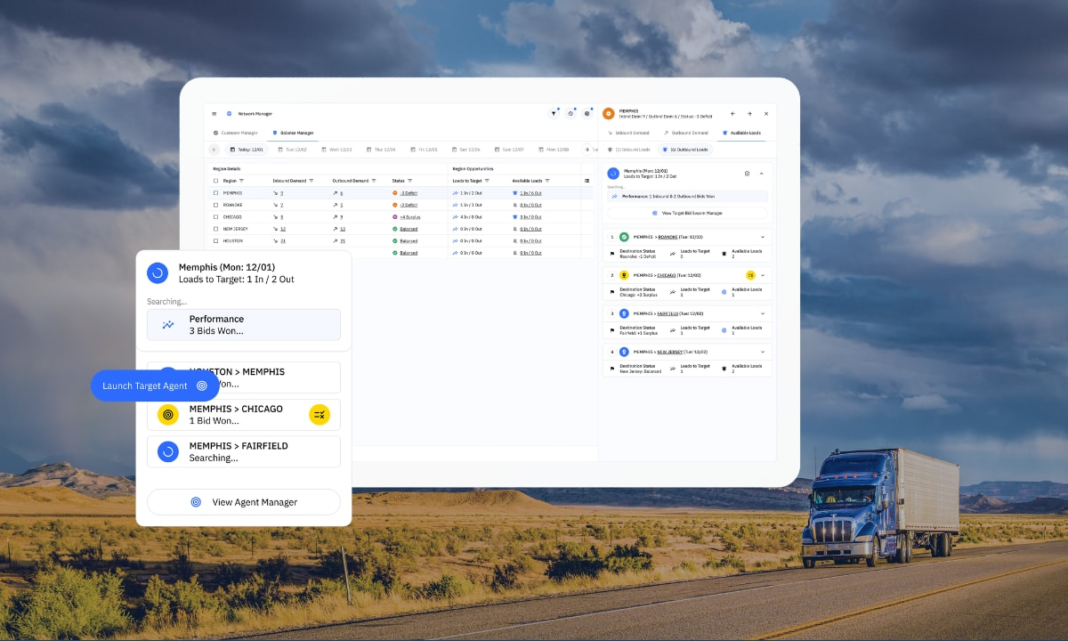

Traditional freight procurement relies on manual effort, gut feel, or reactive tools that treat each load as a standalone decision.
Even traditional agentic AI tools, according to Optimal Dynamics, respond to individual requests or operate in isolation.
Meet an early adopter of Optimal Dynamics technology: Turning a Private Fleet Into a Best-of-Class Motor Carrier
In contrast, Scale is a Decision-Native Agentic System, the company said, built around a decision-optimization engine that continuously learns a carrier’s network.
Scale identifies where capacity is constrained, where imbalance is developing, and where additional freight is needed to improve utilization, service, and profitability.
This allows carriers to move from a reactive “accept everything” mindset to a proactive, network-aware strategy.
How Scale Works
While conventional agents follow learned patterns or scripted workflows, Scale is decision-native by design.
It uses a software architecture that tightly couples optimization intelligence with autonomous agents.
5 Reasons Artificial Decision Intelligence Should be in a Dispatcher’s Toolkit
Scale deploys an always-on workforce of autonomous AI agents that operate continuously on a customer’s behalf. It searches, negotiates, bids, and procures freight across load boards, direct shipper channels, email, and EDI, aggregating freight opportunities from multiple sources.
From there, it determines which freight should be secured, from where, and when it should move, to keep the network balanced and ensure every action supports its strategic needs.
“As a carrier, the hardest part isn’t finding freight, it’s knowing which freight actually improves your network,” said Karen Smerchek, president at Veriha Trucking, in the announcement.
“With Scale, we expect to move from reactive decision-making to a system that continuously tells us where freight is needed ahead of time, and then works the market to secure it.”
Breaking the ‘Accept Everything’ Trap
“In today’s market, the pressure to accept more freight is intense, but accepting the wrong freight creates downstream problems,” said Daniel Powell, CEO of Optimal Dynamics, in a release.
“Carriers don’t just need automation; they need a system that understands their network and proactively works to improve it,” he explained.
Scale makes smarter decisions earlier in the order lifecycle, where imbalance and profit erosion often begin.
Autonomously Sourcing, Negotiating, or Declining Loads
Optimal Dynamics’ core optimization engine continuously evaluates opportunities across the entire network. In parallel, the Atlas agentic layer executes the necessary actions by autonomously sourcing, negotiating, or declining freight at scale.
“Instead of our team chasing opportunities manually,” said Michael McGovern, chief operating officer at Leonard’s Express, “we expect Scale’s agents to aggregate freight from many places, act autonomously, and secure the loads that align with our network strategy without us having to intervene on every decision.”

