
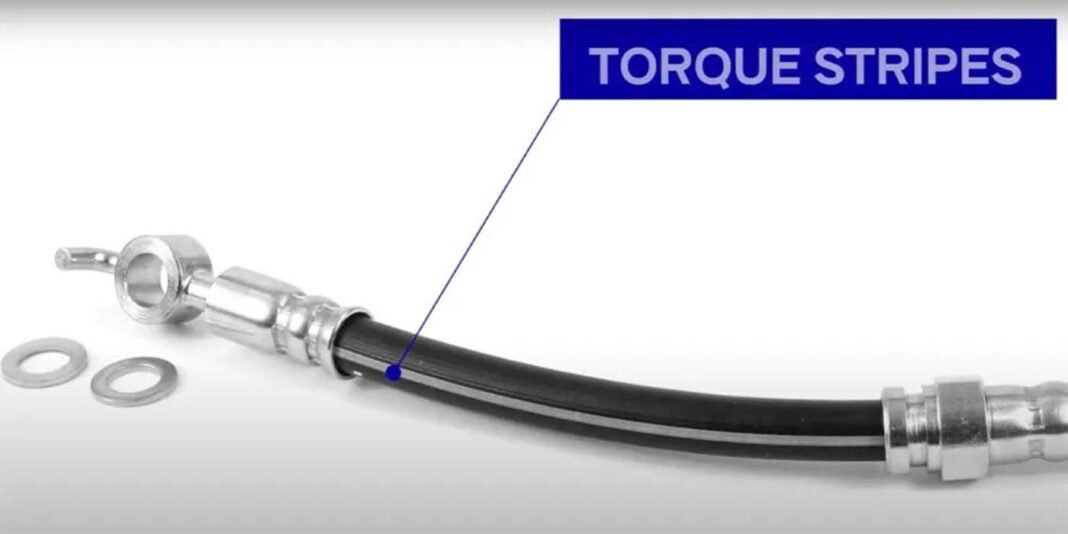

If you’ve ever noticed two perpendicular stripes running the length of a brake hose and thought they were just racing stripes or some kind of barcode, think again. These brake hose torque stripes serve two very important purposes in replacement brake hose applications.
Brake Hose Torque Stripes: DOT Compliance and Proper Installation
These stripes serve as required indicators that the brake hose meets Department of Transportation standards. Specifically, they reflect compliance with FMVSS 106 and SAE J1401, which outline the construction and performance standards for replacement brake hoses.
But there’s more to them than regulation. These are called “torque stripes,” and they help ensure that the hose is installed without any twisting. Every NAPA replacement brake hose features these stripes, at least 1/16th of an inch in width, placed on opposite sides and running parallel to the hose’s longitudinal axis. If the stripe spirals, the hose is twisted and improperly installed.
Replacing Damaged Hoses Safely
In this case, visible cracks in the outer rubber layer prompted the replacement of the front brake hoses. This kind of wear comes from repeated heat exposure and flexing. While the hose may not be leaking now, a damaged outer layer can eventually expose the inner core to failure.
To install the new hose correctly, start by threading it into the caliper. If it’s a banjo-style connection, thread it loosely and flip it 180 degrees if needed to keep the stripe aligned. Then, tighten the flared fitting and secure the bracket clip firmly. Leaving the clip loose or out entirely can lead to early failure, which is why some hoses come with new clips included.
Though the brake hose itself won’t rust, the metal fittings can corrode. This corrosion can strangle the hose and limit hydraulic pressure to the caliper. NAPA addresses this by using fully zinc-plated fittings and brackets, providing added resistance against the harsh environment inside the wheel well.
Pro Tips for Brake Hose Replacement
- Always use a line wrench when removing a brake hose. This minimizes the risk of slipping and damaging the fitting’s protective plating.
- Replace both front hoses at the same time. The opposite side has undergone the same mileage and wear and is likely due for service as well.
By paying attention to brake hose torque stripes, you not only meet DOT requirements—you also ensure a safe, proper installation that maintains hydraulic integrity.
This video is sponsored by NAPA.
The post NAPA: How it Works | Brake Hydraulics appeared first on Tire Review Magazine.

