
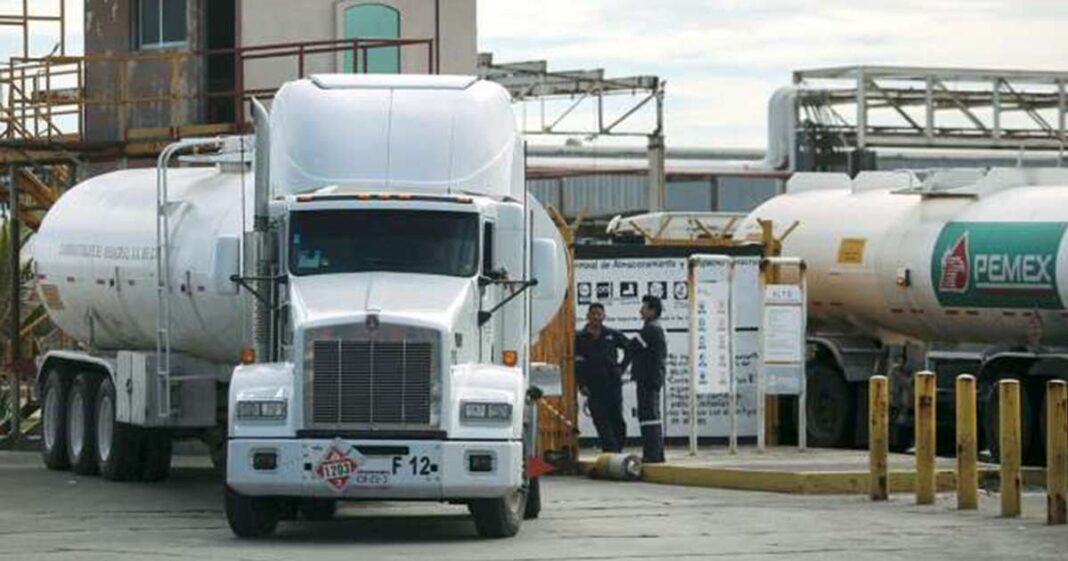

Tanker trucks wait at a storage and dispatch terminal of Petroleos Mexicanos. (Felix Marquez/Associated Press)
February 17, 2026 9:17 AM, EST
Tighter Mexican government controls to stop fuel smuggling and tax evasion have led to shortages of lubricants and greases needed at auto plants, according to people familiar with the matter.
One assembly plant halted operations while three others were just days away from doing the same in December, according to the people, who added that these plants belong to four brands with manufacturing operations in the states of Chihuahua, Coahuila, Aguascalientes and Guanajuato.
Ford Motors has a plant in Chihuahua, General Motors and Stellantis operate five in Coahuila, Nissan has production in Aguascalientes while Guanajuato is home to manufacturing complexes for General Motors, Ford, Honda, Mazda, Toyota and Volkswagen.
According to one of the people, the problem reached its boiling point in December. That’s when annual import permits are renewed, and excessive bureaucracy has delayed that process.
President Claudia Sheinbaum was briefed on the issue in at least two meetings in January with industry representatives, according to the people, and was told that delays in lubricant import permits threw the industry into disarray.
Carmakers, already reeling from tariffs imposed by the Trump administration, told Mexico’s president they need support from the authorities to avoid unnecessary hurdles that hamper investment and growth.
Sheinbaum’s office, the Ministry of Energy — which is responsible for issuing the permits — GM, Ford, Mazda, Toyota, Stellantis, Nissan and Volkswagen did not reply to a request for comment. Honda said that their manufacturing plant has operated normally and hasn’t faced input shortages.
Last year Sheinbaum’s government tightened even further its protocols to assure perfect traceability of all fuel and lubricant imports, mostly from US refineries.
The people said that since then companies have encountered more import permit delays due to efforts combating illegal fuel-smuggling through a scheme known as huachicol fiscal, in which organized crime groups smuggle bootlegged fuel to avoid taxes and sell it in the country at discount prices.
Mexico lost at least $11 billion in tax revenue last year linked to the smuggled fuel, according to the country’s customs agency. The nation’s largest association of fuel distributors and service station operators estimates that about one in three liters sold to Mexican customers is illegally sourced.
Transport Topics reporters Eugene Mulero and Keiron Greenhalgh examine the critical trends that will define freight transportation in the year ahead. Tune in above or by going to RoadSigns.ttnews.com.
Companies in the automotive sector had previously met Authorized Economic Operator certifications, promoted by the World Customs Organization, which guaranteed the traceability of their imports. The Mexican government tightened the rules in late 2023 to include several carmakers’ imports in a list of products with stricter regulations to avoid fuel-smuggling.
One of the people said that regulations state that the Ministry of Energy has 15 business days to process a request to import lubricants and greases, but those times have extended to as much as 32 days. This time frame was not adjusted after the introduction of the tighter protocols or the shortages.
The automotive sector is the crown jewel of Mexican manufacturing, and produced 3.9 million vehicles in 2025, of which 3.4 million were exported, 78% to the U.S., according to figures from the National Statistics Institute.

