
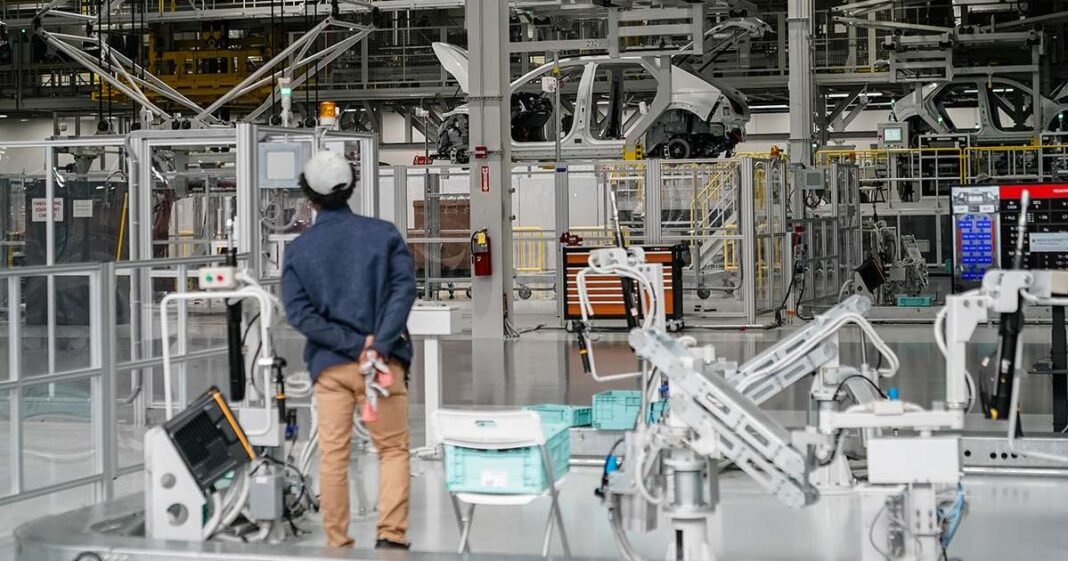

Unfinished vehicles move through a production line at the Hyundai Metaplant electric vehicle manufacturing facility in Ellabell, Ga., on June 11. (Elijah Nouvelage/Bloomberg)
February 18, 2026 4:00 PM, EST
U.S. factory output increased by the most since early last year in the wake of firmer-than-expected equipment orders at the end of 2025, adding to evidence of newfound momentum for the nation’s manufacturers.
Production increased 0.6% in January, according to Federal Reserve data out Feb. 18. While tarnished slightly by a downward revision in the prior month, the report showed broad strength across various categories and industry groups.
In a separate report from the Commerce Department, a key gauge of investment in equipment rose a larger-than-forecast 0.6% in December. The advance in those orders for nonmilitary capital goods excluding commercial aircraft followed an upwardly revised 0.8% gain a month earlier that was twice as much as previously estimated.
While spending on artificial intelligence has been a key driver of investments recently, the latest data shows early signs that more traditional areas of capital expenditures are starting to firm as well, Wells Fargo & Co. economists Shannon Grein and Tim Quinlan said in a note.
“Recent tax incentives in the One Big Beautiful Bill Act are supportive of broader investment, and the early-year pickup in commercial and industrial lending suggests firms are becoming incrementally more willing to finance capex beyond AI,” they wrote.
The latest figures are welcome news for President Donald Trump and his economic team, whose goal is to revitalize domestic manufacturing. The White House has pointed to pledges from a number of companies to make massive investments to expand U.S. production.
RELATED: US and Japan Advance Tariff-Linked $550B Investment Plan
January factory production was fueled not only by firm output of computers and electronic products — at the root of the AI boom — but also by machinery, metals and motor vehicles. The Fed’s so-called market group breakdown also showed strong gains in production of business equipment and consumer goods, as well as business and construction supplies.
The government’s durable goods report, meanwhile, illustrated nondefense capital goods shipments including aircraft, which feed directly into the equipment investment portion of the gross domestic product report, rose 1.8%.
Following the figures, the Federal Reserve Bank of Atlanta’s GDPNow forecast penciled in a 2.5% annualized increase in business outlays for equipment during the fourth quarter. The Commerce Department will issue its initial estimate of GDP for the period Feb. 20.
Core capital goods shipments, a less volatile metric of business investment that excludes planes and military hardware, rose an annualized 8.2% in the three months through December — the fastest since 2022. Economists prefer the core equipment shipments and orders figures because they offer a clearer picture of the underlying trend in business investment and the impact on the economy.
A sustained pickup in manufacturing would help soothe factory workers’ concerns about the labor market. Payrolls in the sector increased in January for just the first time since late 2024.

