

February 16, 2026 12:00 AM, EST
Commercial fleets have never had more technology available to them. Advanced powertrains. AI-driven analytics. Connected vehicles. New safety systems. Digital platforms promising better visibility, lower costs, and improved uptime.
The challenge is no longer whether solutions exist. The challenge is figuring out which ones actually work for your fleet, in your application and duty cycle, and under real-world operating conditions.
Fleets that get this right will run more efficient, safer, and more competitive operations. They will deliver higher uptime, lower cost per mile, stronger safety performance, and better financial results. They will be at a competitive advantage to win more business and be positioned to survive and grow in an increasingly demanding market.
The Fleet Industry Is Going Digital. Is Your Operation Ready?
Digitization and AI is reshaping nearly every industry. Commercial transportation is no exception.
Artificial intelligence, automation, and connected-vehicle systems are moving rapidly from experimentation into daily fleet operations. The question fleet leaders are asking is not “What is AI?” It is “What is really available and tangible today, and how do I actually use it?”
How can AI analyze data not just from my own vehicles, but from thousands of similar trucks running the same engines and duty cycles, to predict failures before they happen?
How can it help me move beyond fixed service intervals and toward dynamic, condition-based maintenance, where vehicles are serviced when they need it, not when a spreadsheet says they should?
For high-intensity applications, that means pulling vehicles in earlier to prevent failures and avoid downtime. For lighter-duty assets, it means keeping vehicles on the road longer and avoiding unnecessary service costs. The result is higher uptime, better productivity, and lower overall operating expense.
Predictive maintenance is no longer theoretical. It is happening now. The fleets that understand how to deploy it will have a clear advantage.
But what about mixed fleets with older equipment that is not fully connected? How do you implement these tools in the real world, not just on your newest assets? These are exactly the kinds of practical questions fleet operators will be work through at ACT Expo.
From Fixed Replacement Cycles to Smarter Asset Decisions
AI-driven analytics are also changing how fleets think about asset replacement.
Instead of retiring vehicles based strictly on age or mileage, fleets are beginning to evaluate real performance. Which assets are breaking down more often? Which are costing more to maintain? Which are delivering strong uptime and efficiency?
This allows fleets to replace lower-performing vehicles sooner while holding onto high-performing assets longer. The outcome is better capital allocation, improved reliability, and stronger financial performance across the fleet.
This shift requires new tools, new data, and new ways of thinking. ACT Expo is where fleets learn how others are doing this today.
Safety, Technology, and the Path to Automation
Safety remains one of the most critical priorities for fleet operators.
Advanced driver assistance systems are increasingly standard on commercial vehicles, but fleets are going further. AI-enabled camera systems can now identify risky behaviors before they lead to incidents. These tools can dramatically reduce collisions, protect drivers, and lower insurance and liability exposure.
The technology itself is only part of the equation. Successful programs depend on implementation, driver engagement, and trust. How do you introduce these systems in a way that drivers accept? How do you turn safety technology into a tool that drivers value, rather than fear?
These safety systems also form the foundation for increasingly automated vehicles. Technologies that were in research and pilot phases just a few years ago are now entering commercial deployment, with real scaling expected over the next one to three years.
Understanding the business case for safety investments, and where advanced driver assistance and autonomous technologies make sense, is now essential.
The Rise of Software-Defined Vehicles
Commercial vehicles are undergoing a fundamental transformation.
We are moving from machines that were largely mechanical with some digital assistance to vehicles that are fully software-defined. In fact, some vehicles on the road today are already there.
Software-defined vehicles can receive over-the-air updates that improve performance, efficiency, and reliability without ever entering a shop. In minutes, entire fleets can be scanned daily to ensure software is current and systems are operating optimally. Potential faults can be identified early, reducing downtime and repair costs.
At the same time, fleets must understand the risks. How do over-the-air updates affect uptime? What happens if something goes wrong? What new technician skills are required in a digital-first vehicle environment?
Preparing the workforce for this shift is just as important as selecting the right technology. ACT Expo’s continuing education programs are designed to help fleets build the skills they need to be prepared and to be successful in this new digital frontier.
Technology Decisions Must Be Business Decisions
In these days of ever-tightening budgets, fleets need technology investments to deliver real value to the bottom line. Confidence in those investment decisions comes from hearing peers share their experiences with new technologies, which is why ACT Expo spends the year identifying opportunities, and finding speakers who can showcase their results of related technology deployments. That means a strong focus on total cost of ownership, return on investment, and operational performance. It means helping fleets select the right mix of technologies to reduce costs, improve uptime, enhance safety, and drive measurable financial results.
It also means exploring new financial models, tax strategies, leasing structures, and capital tools that can unlock value and support smarter investment decisions.
At the same time, ACT Expo continues to cover the full spectrum of powertrains and fuels. From next-generation diesel platforms and efficiency technologies to battery-electric vehicles, natural gas, propane, hydrogen, and renewable fuels, the emphasis is on where positive TCO exists today and where it is emerging next. In addition to its usual coverage on advanced powertrains and low carbon fuels, ACT Expo is going much deeper into the “digital frontier.”
Digital innovation, advanced powertrains, and automation are not separate conversations. They are converging.
Fleets do not need to have everything figured out today. But they do need to stay in the race, in a pivotal year.
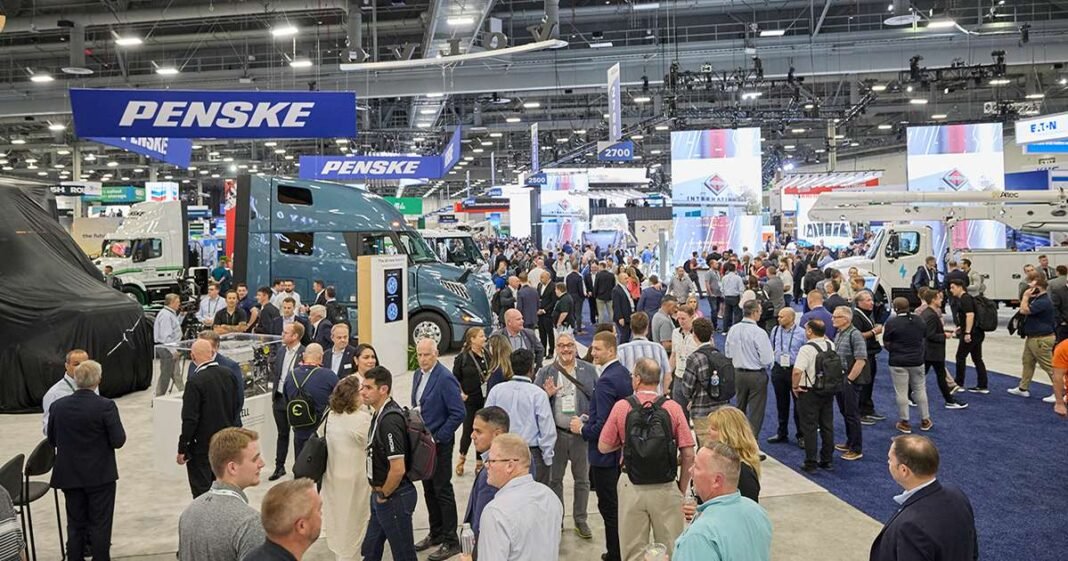
ACT Expo is where fleets come to learn what advanced technology is working (or not), why and how it’s working (or not), what is coming next, and how to build a smarter, more competitive operation for the road ahead. See you at ACT Expo, May 4-7 in Las Vegas.
Get $50 off your ACT Expo full conference pass with this code: 26AE-TRA50
The above article is sponsor-generated content. To learn more about sponsor-generated content, click here.

