
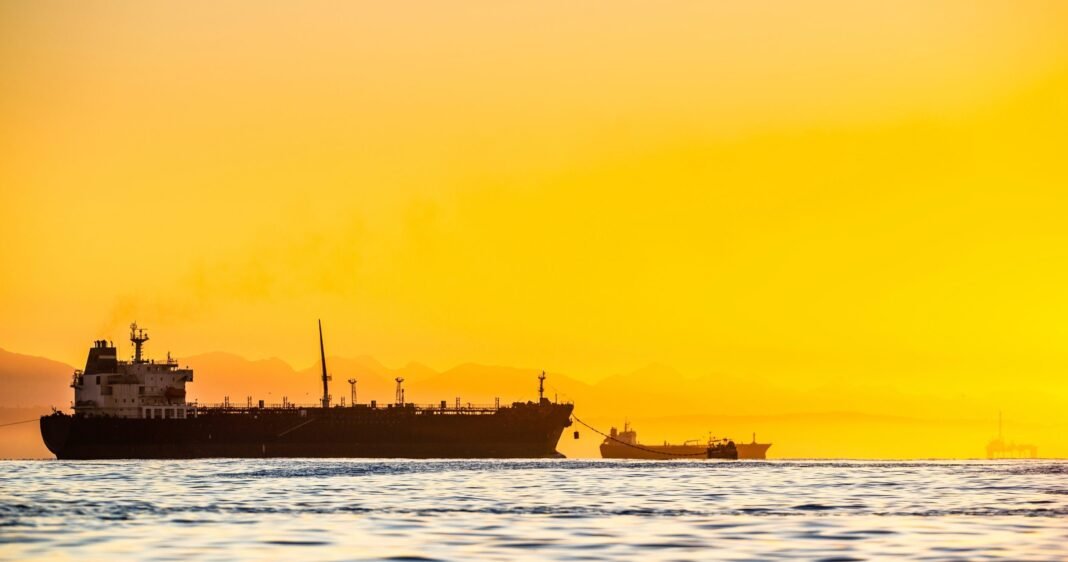

The sharp military escalation between the United States, Israel and Iran has sent shockwaves through global energy markets, raising fears of a sustained oil price surge and widespread disruption to international supply chains. With the Strait of Hormuz effectively under blockade, traders, logistics operators and motorists alike are bracing for volatility.
The Strait of Hormuz handles roughly 20% of global seaborne oil traffic, making it one of the most strategically critical maritime chokepoints in the world. Any sustained disruption immediately tightens global supply, pushes up benchmark crude prices and fuels inflationary pressure across economies heavily dependent on imported energy, particularly in Europe.
Brent Crude Surges as Energy Markets React
The market response was swift. Christian Dolderer, Lead Research Analyst at Transporeon, a Trimble Company, commented, “The military escalation between the US, Israel and Iran, which began this weekend, has sent an immediate shockwave through global energy markets. With the Strait of Hormuz, responsible for roughly 20% of global seaborne oil traffic, effectively under blockade, European fuel markets are bracing for significant cost pressure. When trading opened today, Brent crude jumped 10–12%, briefly moving above $80 per barrel.
“It’s no secret that diesel markets are particularly sensitive to geopolitical shocks. Prices typically rise quickly on bad news and fall only gradually once tensions ease. European fleet operators are now facing the prospect of crude moving toward $100 per barrel, which could translate into a €0.12–€0.15 per litre increase in raw material costs and retail diesel price rises of €0.20–€0.30 per litre within weeks.
“Oil market analysts see three scenarios emerging in Europe. A quick de-escalation could stabilise Brent at $80–$85, though a structural ‘war premium’ may persist through summer. A mid-term disruption pushing Brent to $90–$100 would keep pump prices volatile and add inflationary pressure. Finally, sustained closure of the Strait would trap Middle Eastern exports and shake the oil market, potentially driving crude past $125 per barrel and triggering skyrocketing diesel prices, impacting the European supply chain channels.”
The reference to a possible “war premium” highlights a key market dynamic. Even if physical supply is not entirely halted, perceived risk alone can inflate prices. Traders price in uncertainty, and insurers raise premiums for vessels operating in high-risk waters, further increasing shipping costs.
Impact on European Fuel Prices and UK Motorists
For European businesses, particularly those operating large vehicle fleets, diesel price inflation presents an immediate operational challenge. Fuel accounts for a significant proportion of transport costs, and any rapid increase reduces margins or forces companies to pass costs down the supply chain.
In the UK, motorists are already seeing early signs of pressure at the pumps. Simon Williams, RAC head of policy, said: “While the conflict in the Middle East undoubtedly has the potential to push up pump prices in the UK, it’s not a certainty. The oil price would have to rise significantly and stay that way for some time to have a dramatic effect.
“Forecourt prices were already on the rise due oil trading nearer to $70 a barrel in the last few weeks. Regardless of the current situation, petrol rose by a penny a litre in February and is likely to go up by another penny in the next week or so to an average of 134p a litre.
“If oil were to climb to and stay at the $80 a barrel mark, then drivers could expect to pay an average of 136p for petrol. At $90, we’d be looking at over 140p a litre and $100 would take us nearer to 150p, but it’s all too soon to know.”
These projections illustrate how sustained geopolitical tension can rapidly filter down to household budgets. Should Brent crude remain elevated, inflationary pressure could intensify just as many European economies are attempting to stabilise.
Supply Chains Face Air and Sea Disruption
Beyond fuel prices, the military escalation poses significant risks to global supply chains. Chris Clowes, associate director at global supply chain consultancy SCALA, warned of cascading effects across transport modes.
“From a supply chain perspective, the biggest risk of the escalation in the Middle East is wider instability that could affect both energy prices and the routes used to move everyday goods,” he commented.
“Air freight is likely to feel the impact fastest. If airlines must avoid certain airspace, capacity falls and flight times increase, pushing up rates quickly, with time-critical goods such as medicines, semiconductors and high-value technology among the most exposed.
“When it comes to sea freight, which is typically used to transport everything from clothing to consumer electronics, the Suez Canal isn’t formally closed, but if security risks rise, more Asia to Europe services are likely to divert via the Cape of Good Hope. That can add around 10 to 15 days and increase fuel and insurance costs. Longer voyages also tie up ships and containers, which can tighten wider capacity and push up rates beyond the region.
“Then there is the matter of energy; even partial disruption or perceived risk around the Strait of Hormuz could trigger a rapid rise in oil and liquefied natural gas prices, feeding through into transport, manufacturing and packaging costs in turn.”
A diversion around the Cape of Good Hope would significantly extend transit times between Asia and Europe, disrupting just-in-time supply chains and increasing working capital requirements for importers. Longer shipping times also mean fewer vessel rotations, effectively reducing global container capacity and increasing freight rates.
Broader Economic Consequences
If the Strait of Hormuz remains effectively blockaded, the consequences could stretch well beyond energy markets. Liquefied natural gas shipments from Qatar and crude exports from Gulf producers would face severe constraints, tightening global supply.
In Europe, which remains sensitive to energy price fluctuations, higher oil and gas prices would likely feed into transport, food production, manufacturing and retail. Inflation could re-accelerate, complicating central bank policy decisions and potentially delaying interest rate reductions.
The most extreme scenario outlined by analysts — crude prices surpassing $125 per barrel — would represent a profound economic shock. Diesel prices would surge, logistics costs would spike and consumer spending could weaken under renewed cost-of-living pressures.
Sam Coyne, CEO Europe at Currenxie, comments: “Rising oil prices might grab the headlines but escalation across the Middle East will result in price hikes across all industry supply chains. The crippling of key trade routes will prolong uncertainty and continue to drive up supply costs, squeezing merchant margins ever further and ultimately leading to a spike in the cost of consumer goods and surging inflation.”
Outlook: Volatility Set to Persist
The trajectory of oil prices and supply chains now depends largely on geopolitical developments. A swift diplomatic resolution could cap Brent crude between $80 and $85 per barrel, albeit with a lingering risk premium. However, prolonged disruption or further military escalation could drive sustained price spikes and deeper supply chain instability.
For businesses across Europe and the UK, contingency planning is once again essential. From fuel hedging strategies to rerouting logistics networks, resilience will be critical as markets navigate heightened uncertainty in one of the world’s most strategically vital regions.

