
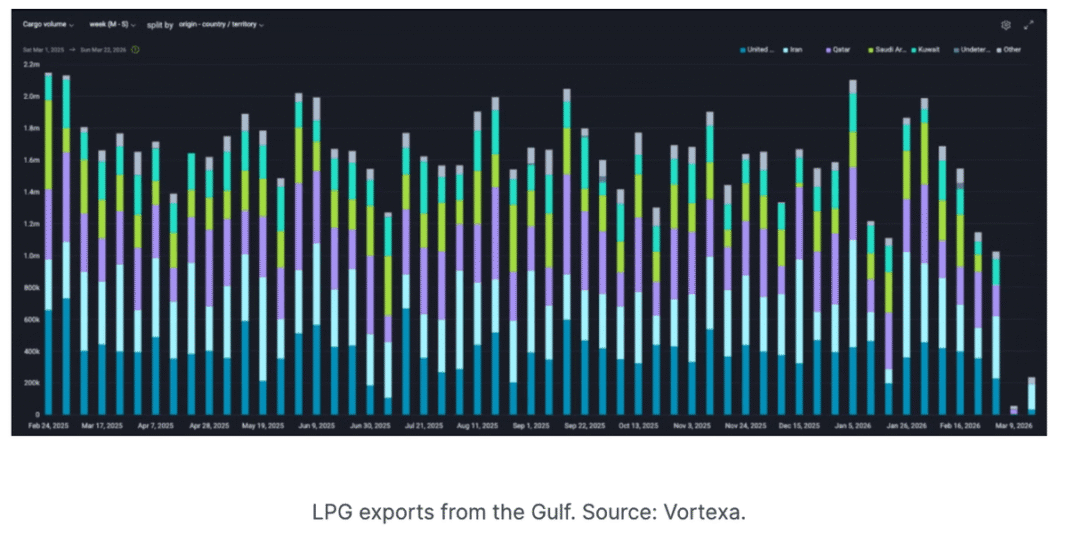

As the regional war between Iran and the U.S. and Israel extends into its ninth day, freight analysts are seeing increased global impacts of the regional violence, even as shippers struggle to predict specific disruptions and avoid price hikes and delivery delays.
According to Cargowise, a logistics transaction platform from Australian tech firm WiseTech Global, the supply chain impact is not confined to the Middle East. As carriers adjust routing decisions, disruption is surfacing across the Americas, EMEA, and APAC. This indicates how quickly volatility in one region cascades through interconnected global trade lanes.
“The Middle East sits at the center of global energy flows, petrochemical exports, and major east–west trade lanes. When routing decisions shift, volumes and schedules shift with them. Transshipment hubs absorb redirected cargo. Substitute airports take on unexpected connections. Downstream schedules tighten,” Angela Gadaev, International Logistics, Product Portfolio Leader at WiseTech Global, said in a release.
In addition to delayed deliveries, those changes are triggering price hikes for shipments. In a report, Cargowise said that flight cancellations, rerouted services, and extended flight paths are becoming more common as airlines adapt to restricted airspace. Longer routes mean higher fuel burn and rising operating costs. Capacity adjustments, in turn, are putting additional strain on schedule reliability.
But even as shippers hustle to mitigate those impacts, they are finding them nearly impossible to predict. That’s because airspace closures and vessel diversions often influence transit times and arrival schedules before formal service updates are issued. And congestion can build at alternative hubs long before cancellations are confirmed, Cargowise said.
The changes are also hard to predict because they can be caused by many different factors. For example, ship traffic through the Strait of Hormuz has been choked off for several reasons aside from the specific threat of physical missile strikes, according to the Washington, DC-based ocean data visibility provider Windward.
“The mechanisms suppressing traffic are no longer purely kinetic. The combination of vessel attacks, elevated strike risk, GPS and AIS interference, and the withdrawal of insurable war-risk coverage is now producing a de facto closure effect for much of the commercial market, despite the absence of a formally declared and universally enforced blockade,” Windward said in a report.
That combination of factors is highly effective. The statistics for the single day of March 7 show that vessel crossings through the Strait of Hormuz added up to only three ships (1 inbound and 2 outbound). That represents a 25.00% decrease compared to the previous day and a sharp fall below the 7-day average of 13.43 crossings.
As that uncertainty persists, the price hikes will continue to hit shippers more than other supply chain professionals, according to a report from financial market analyst firm TD Cowen. That applies particularly to the significant spike in diesel prices caused over the last few days by the Iran war. “TD Cowen believes the most impacted will likely be shippers, who bear the brunt of market dislocation via surcharges, fees, and delays. Elevated energy prices are passed onto shippers either immediately or over time and, in some cases, give freight carriers additional excuses to pass on costs,” the report said.

