
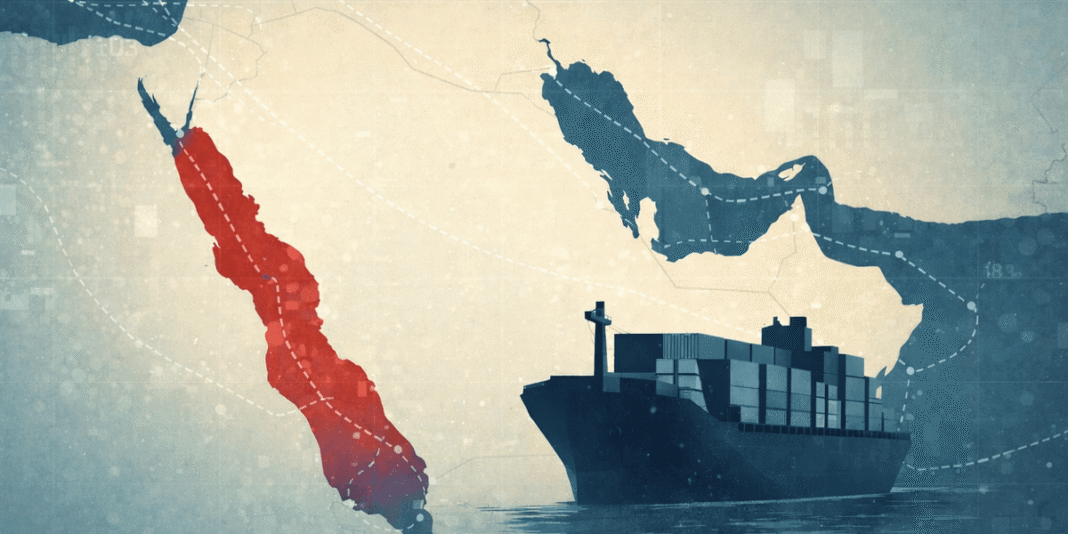

Spot rates for ocean container shipping are up by more than 30% since the end of February on routes with direct exposure to the Middle East disruption caused by the U.S. and Israel’s war against Iran, according to a report from Xeneta, anocean and air freight rate analytics provider.
And since global container flows move in a tightly orchestrated balance, those rate spikes are also affecting goods as far away as U.S. West Coast ports, the firm said.
“Five weeks into the Strait of Hormuz closure and spot rates on every major East-West trade lane have risen sharply, showing this is a conflict with global repercussions for ocean supply chains,” Peter Sand, Xeneta Chief Analyst, said in a release.
“No shipper is insulated from financial or operational risk. Far East to US West Coast – a trade which transits the Pacific thousands of miles from the epicenter of conflict – has seen spot rates climb 29% since the end of February. The complex interconnectivity of global supply chains means port congestion in the Middle East has rippled across to key Asian transshipment hubs — including Singapore, Port Klang and Tanjung Pelepas — which are also vital for feeding goods toward the US.”
Despite the jump in rates, wary shippers are still scrambling to secure capacity, as they hope to avoid potentially higher costs in the future, since peak season for importing inventory for winter holiday shoppers is only three months away.
“The position of carriers is unambiguous – the cost of uncertainty sits with the shipper, even on trades with no direct exposure to the Middle East. Market memory is a powerful force and shippers who experienced the second wave of the Red Sea crisis in 2024, when port congestion in Singapore saw already elevated rates double, are not waiting around and are securing capacity at today’s rates,” Sand said.
“Shippers booking capacity today are paying a premium for certainty, but it is a calculated risk against being caught short in peak season three months from now and paying even higher rates. Shippers who wait for conditions [to] stabilize are placing a bet with no clear evidence behind it.”

