
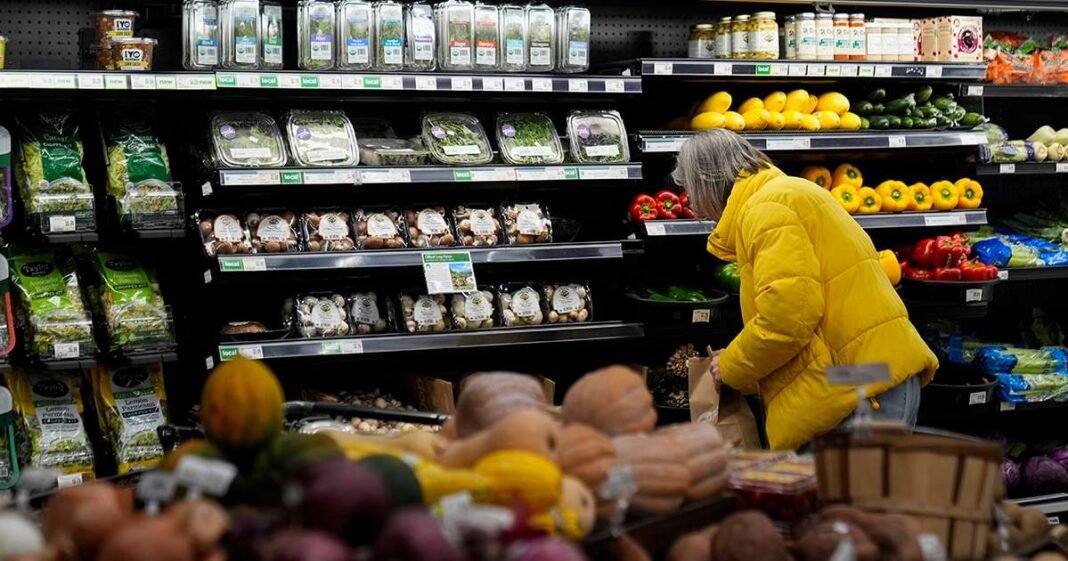

A shopper looks at produce at a grocery store in Chicago. (Erin Hooley/AP)
February 13, 2026 10:21 AM, EST
WASHINGTON — A key measure of inflation fell to nearly a five-year low last month as apartment rental price growth slowed and gas prices fell, offering some relief to Americans grappling with the sharp cost increases over the past five years.
Inflation dropped to 2.4% in January compared with a year earlier, down from 2.7% in December and not too far from the Federal Reserve’s 2% target. Core prices, which exclude the volatile food and energy categories, rose just 2.5% in January from a year ago, down from 2.6% the previous month and the smallest increase since March 2021.
The report suggests inflation could be cooling, but it comes after the cost of food, gas, and apartment rents soared after the pandemic, with consumer prices about 25% higher than they were five years ago. The increase in such a broad range of costs has become a high-profile political issue under the rubric of “affordability.”
On a monthly basis, consumer prices rose 0.2% in January from December, while core prices rose 0.3%.
If inflation gets closer to the Federal Reserve’s target of 2%, it could allow the central bank to cut its key short-term interest rate further this year, as Trump has repeatedly demanded. High borrowing costs for things like mortgages and auto loans have also contributed to a perception that many big-ticket items remain out of reach for many Americans.
Core CPI (y/y) at 2.5% was the lowest since March 2021.
This was an encouraging inflation report, especially with many key items moderating. The one sore spot is electricity (+6% in past year) and utility gas (+10%) https://t.co/HaZfohrwZM
— Heather Long (@byHeatherLong) February 13, 2026
U.S. markets immediately reversed course early Feb. 13 and moved into positive territory.
In January, economists expect that gas prices will have declined, while the cost of groceries could rise again after they jumped in December. Overall prices could increase by more than expected, economists say, because costs often rise more in January than other months as companies reset their prices at the beginning of the year.
Inflation surged to 9.1% in 2022 as consumer spending soared at the same time supply chains snarled in the wake of the pandemic. It began to fall in 2023 but leveled off around 3% in mid-2024 and has since barely improved.
Inflation cooled a bit this fall, though some of that reflected the disruptions of the six-week government shutdown in October. The shutdown disrupted the government’s data collection and led them to estimate price changes in November for housing that most economists say artificially lowered inflation that month.
Transport Topics reporters Eugene Mulero and Keiron Greenhalgh examine the critical trends that will define freight transportation in the year ahead. Tune in above or by going to RoadSigns.ttnews.com.
At the same time, measures of wage growth have declined in the past year or so as hiring has cratered. With companies reluctant to add jobs, workers don’t have as much leverage to demand raises. Smaller pay increases can reduce inflationary pressures as companies often raise prices to offset higher wages.
More modest wage growth is a big reason that many economists expect inflation to continue easing this year.
“We’re not expecting inflation to start up again by any stretch,” said Luke Tilley, chief economist for Wilmington Trust.
Many businesses are still eating some tariff costs and economists expect they may raise prices more in the next few months to offset those extra expenses. Still, most forecast that inflation will decline further by the second half of the year and drop closer to the Fed’s 2% target by the end of 2026.

