
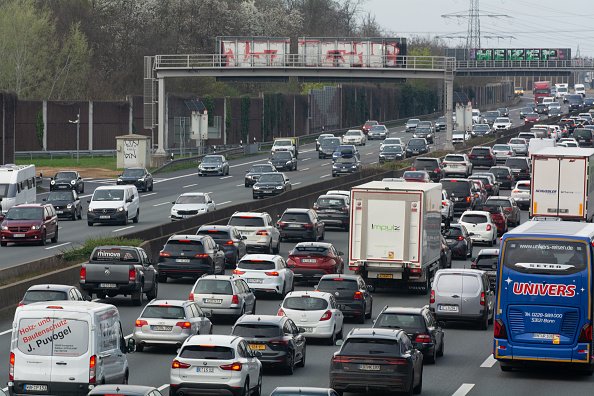

The International Energy Agency (IEA) recommended on Friday pushing commuters to ditch the car and drivers to cut their speed as the war in Iran rocks energy markets by choking global oil supplies.
“The war in the Middle East is creating a major energy crisis,” the IEA chief Fatih Birol warned on Friday.
Pointing to “the largest supply disruption in the history of the global oil market”, the Turkish energy economist warned that “the impacts on energy markets and economies are set to become more and more severe” unless a solution is found.
Focus on cars
The Paris-based intergovernmental agency – whose main goal is to ensure secure access to energy supplies for its (mainly Western) members – made ten recommendations to quickly reduce fuel use and ease pressure on prices.
Road transport is in the crosshairs, as about 45% of the world’s oil demand depends on it.
Authorities should encourage people to work from home, shift to public transport and reduce private vehicle use in cities, for example through number plate rotation schemes sometimes used to tackle smog.
People should drive more economically, for example by car-sharing, while businesses should optimise the use of their commercial fleets to reduce diesel consumption, the IEA said.
Alongside these immediate measures, the agency also recommended governments look into more structural and long-term solutions, such as boosting the uptake of electric vehicles – even if it buried this point in the report rather than highlighting it among its ten short-term proposals.
From kitchens to the skies
What the agency did highlight was a need to avoid running cars on liquified petroleum gas (LPG) – which is often used for cooking – as these models can also use gasoline. To do so, governments could increase LPG taxation at refuelling stations, the IEA suggested.
At the same time, demand for LPG as a cooking fuel should also be reduced by pushing households towards cleaner alternatives like electric stoves, it added.
Air travel is also in the frame: travellers should choose alternatives to planes, and companies should cut business travel, the IEA said.
The petrochemical industry can also ease pressure on energy prices by using petroleum feedstocks most readily available locally, the report notes.
“With quick maintenance checks, individual industrial facilities can often reduce overall oil use in their processes by up to 5% in the short-term,” the IEA’s report concludes.
(rh, aw)

