
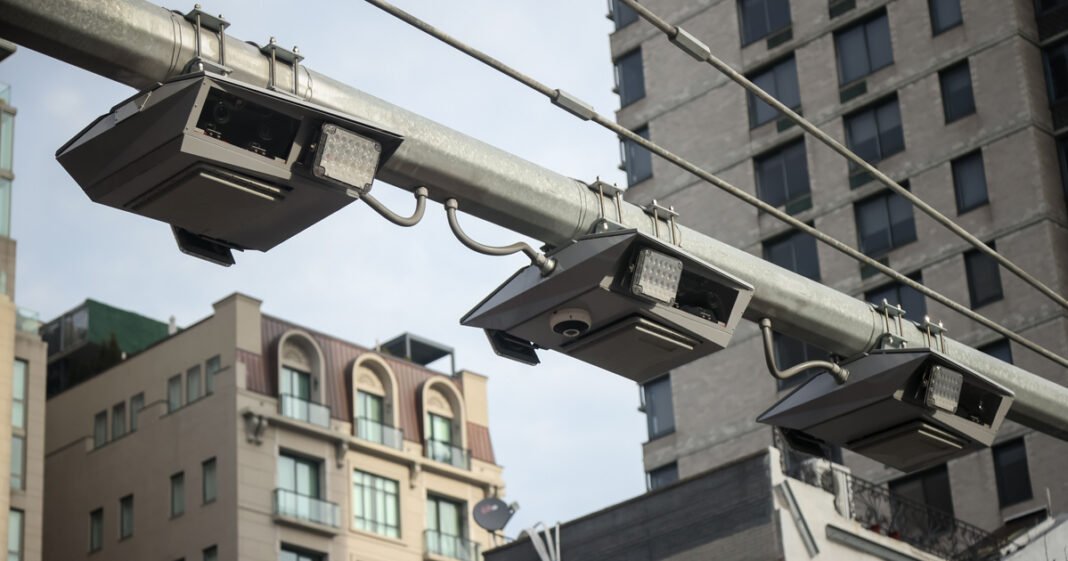

E-ZPass readers and license plate-scanning cameras over Second Avenue in New York. (Michael Nagle/Bloomberg)
March 3, 2026 1:26 PM, EST
Key Takeaways:
- A federal judge ruled March 3 that Transportation Secretary Sean Duffy’s attempt to terminate New York City’s congestion pricing program was unlawful.
- The decision preserves a key revenue source that brought in $562 million last year and is expected to finance $15 billion in MTA system upgrades.
- The Trump administration may appeal to the Second Circuit, leaving the program’s long-term legal status uncertain.
New York City’s congestion pricing program can continue after a federal judge ruled that the Trump administration’s attempts to terminate it were unlawful — a financial win for the nation’s largest mass transit provider.
U.S. District Judge Lewis Liman found March 3 that Transportation Secretary Sean Duffy’s move to end the program was “arbitrary and capricious.” Liman, however, declined to issue an order blocking possible future attempts to stymie the program.
The ruling means the Metropolitan Transportation Authority, which sued in February 2025 to prevent Duffy from terminating the deal, can keep operating the program indefinitely, though the legal fight may continue. The Trump administration could take the case to the U.S. Court of Appeals for the Second Circuit.
The ruling is a key win for the MTA’s finances. It’s relying on the congestion pricing revenue to finance $15 billion to help modernize a more than century-old transit system. The funds will extend the Second Avenue subway to Harlem, replace train signals from the 1930s and add more elevators to subway stations.
Spokespeople for the White House and Transportation Department didn’t immediately respond to requests for comment. Spokespeople for New York Governor Kathy Hochul and the MTA didn’t have an immediate comment.
The congestion toll is the first of its kind in the U.S. Most passenger cars pay $9 during peak hours to drive into the tolled area that runs from 60th Street in Manhattan to the bottom of the island. The initiative brought in $562 million of revenue last year, according to MTA financial documents.
The program has reduced traffic. From January through December last year an average 72,600 fewer vehicles entered the tolled area each day, about an 11% decline, according to MTA data. Public buses operating below 60th Street are running a bit faster, with average weekday bus speeds higher every month last year compared with 2024, according to MTA data.
The case is Metropolitan Transportation Authority v. Duffy, 25-cv-1413, US District Court, Southern District of New York (Manhattan).

