
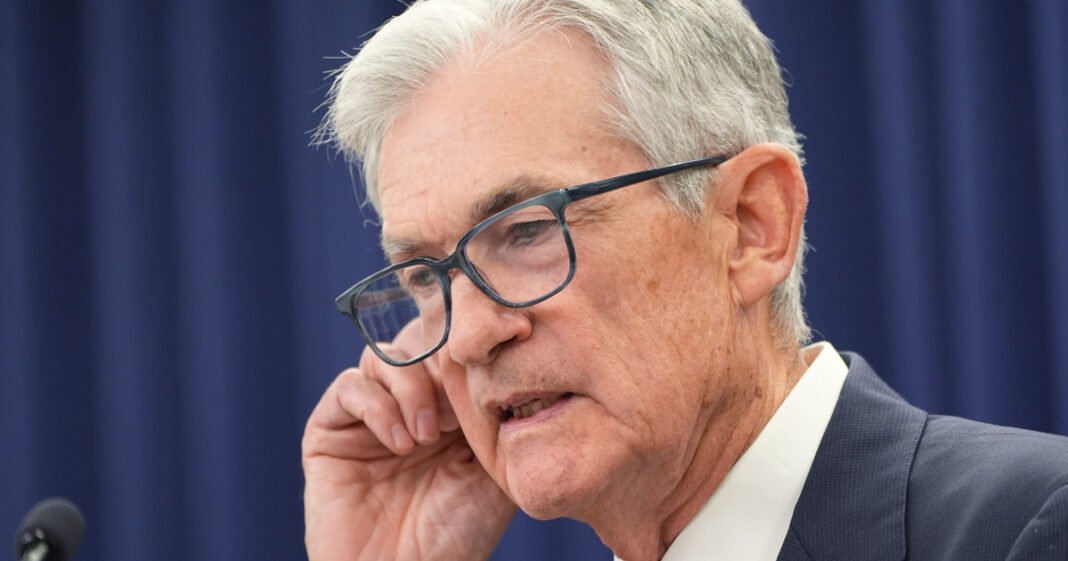

Powell. (Jacquelyn Martin/Associated Press)
March 17, 2026 2:49 PM, EDT
Key Takeaways:
- The Iran war has scrambled the Federal Reserve’s outlook on inflation and unemployment and will likely delay interest rate cuts this year, putting off any relief for consumers facing high borrowing costs for home and car purchases. The spike in oil and g
- Rising fuel costs and persistent core inflation have upended the Fed’s earlier forecasts, raising doubts about cutting rates this year as some economists warn.
- Fed officials will update inflation projections March 18 while monitoring economic fallout, leadership uncertainty and the Iran conflict before deciding when cuts might resume.
The Iran war has scrambled the Federal Reserve’s outlook on inflation and unemployment and will likely delay interest rate cuts this year, putting off any relief for consumers facing high borrowing costs for home and car purchases.
The spike in oil and gas prices presents already-divided Fed officials with a worst-case scenario as they conclude a key meeting March 18: Costlier gas will raise inflation in the short run, which typically leads the central bank to raise borrowing costs — or at least leave them unchanged — to combat higher prices. Yet if the spike is high enough or lasts long enough, it could weaken the economy and push up unemployment, which would typically prompt the Fed to move in the opposite direction and cut its key rate.
For now, the clearest path for the 12-member rate-setting committee, led by Chair Jerome Powell, is to stand pat and see which way the economy moves. The Fed is expected to keep rates unchanged March 18 and may remain on pause at its meetings in late April and June. Many economists now expect the first rate cut this year to come in September or later.
“With Iran and the oil shock, I think the committee’s room for maneuver here is pretty limited,” said Nathan Sheets, chief global economist at Citi and a former senior economist at the Fed. “I think they’ve got to wait and see how this plays through.”
Inflation Forecasts Now in Doubt
Yet the Fed also has to release a set of quarterly economic projections that carry their own pitfalls. In December, the committee forecast inflation would cool to 2.6% by the end of the year, with core inflation excluding food and energy falling to 2.5%. But those figures were rising before the Iran war, with core prices up 3.1% in January from a year prior, the biggest increase in more than two years.
The Fed had also forecast in December that it would cut rates once this year, but that will be harder to justify if the committee raises its inflation outlook. The Fed cut three times last year before pausing in January.
Tim Duy, chief economist at SGH Macro, argues the Fed should raise its forecast for core inflation, using its preferred metric, to at least 2.8% by year’s end. An increase of that size would argue against any cuts this year.
“Any reasonable forecast for inflation now should not have a cut” in the Fed’s projections, Duy said. “And it’s almost ludicrous that it might.”
Officials Split Over the Path Forward
Whether the Fed continues to project a single rate cut this year or pulls back and predicts none is seen as a close call by most economists. Many leading Fed officials — including governors Chris Waller, Stephen Miran, Michelle Bowman and possibly Powell — are reluctant to abandon the idea of reducing rates. Waller, for example, has said in a television interview that inflation is heading back to the Fed’s 2% target, with the Iran war likely only a temporary disruption.
Another group of Fed officials — including Beth Hammack, president of the Federal Reserve Bank of Cleveland, and Austan Goolsbee, president of the Chicago Fed — were already concerned about persistent inflation before the Iran war. The prospect of higher gas prices will likely intensify those concerns.
Mortgage rates have risen in the wake of the conflict, likely because markets expect higher inflation will prevent the Fed from cutting soon. The average 30‑year mortgage rate rose to 6.1% last week from 6%, though it’s still down from nearly 6.7% a year ago.
Leadership Turmoil Adds More Uncertainty
On top of the economic disruptions, the Fed is nearing a major leadership transition. Powell’s term as chair ends May 15, and President Donald Trump has nominated former top Fed official Kevin Warsh to replace him. But Warsh’s nomination has been delayed in the Senate because key Republican senators object to a Justice Department investigation of Powell over his testimony about a building renovation.
Last Friday, a judge threw out a pair of subpoenas the Justice Department issued to the Fed, dealing a blow to the investigation, but U.S. Attorney Jeannine Pirro has said she’ll appeal the ruling.
The Pandemic’s Inflation Shadow
Also hanging over the Fed is the inflation spike from the pandemic. Typically, the Fed would look past a supply shock like the disruption in oil supplies from the Middle East. Once it ends, any inflation it produces will likely fall back without the Fed having to raise rates. As a result, it could leave rates unchanged — or even cut them to support weak hiring.
Yet as the economy emerged from the pandemic in 2021, inflation jumped as Americans sharply increased spending, aided by stimulus checks and pandemic-era savings. Powell initially said inflation would be “transitory” and would fade as the economy normalized. Instead, it spiked to a four‑decade high in June 2022.
With inflation still elevated, many Fed officials are wary of repeating the mistake, making any cuts less likely as long as inflation is elevated.
“I think they are a little scarred from the blowback they got from the word ‘transitory,’” said Derek Tang, an economist at Macro Policy Analytics, a consulting firm.

