
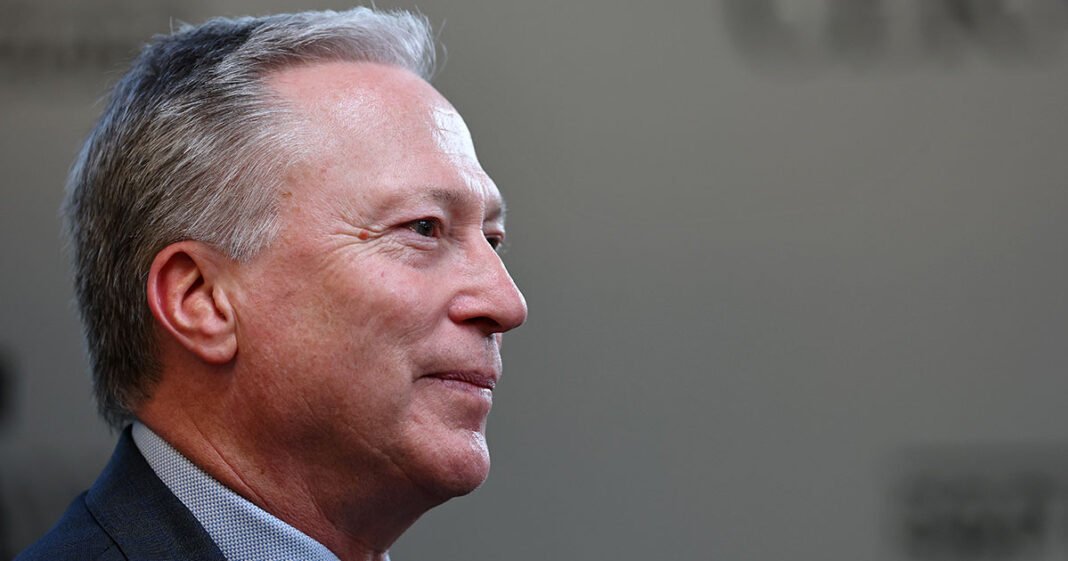

“What I would say is the conditions don’t yet exist for that pipeline to be built,” Enbridge CEO Greg Ebel said. (Aaron M. Sprecher/Bloomberg)
March 24, 2026 4:40 PM, EDT
Pipeline operator Enbridge Inc. hasn’t ruled out helping build a new oil pipeline from Alberta to the British Columbia coast under the right regulatory conditions, the company’s top executive said.
Alberta’s government is proposing a new oil pipeline with a capacity of 1 million barrels a day and has received early support from the Canadian government for the project. Alberta Premier Danielle Smith has said her government is getting the process started, but private-sector operators need to step up over the long run.
“I wouldn’t say a hard no,” CEO Greg Ebel said in a Bloomberg Television interview from CERAWeek in Houston. But he said regulatory hurdles need to be dealt with first. “What I would say is the conditions don’t yet exist for that pipeline to be built.”
The comments suggest a softening of the company’s position. Last month, Ebel said Enbridge was not willing to take the risk on a new west coast pipeline. It proposed a similar project a decade ago that was ultimately rejected by the federal government. The company spent C$600 million ($435 million) “trying to do this before I had the rug pulled out from under us,” he said March 24.
Canada must grant approvals for the project as well as lift a ban on oil tankers on the northern British Columbia coast, Ebel said. Prime Minister Mark Carney’s government has said it’s open to modifying the tanker ban if a pipeline is proposed and approved.
RELATED: Canada’s Pipeline Problem Returns as Oil Sands Output Surges
Last year, the prime minister and Smith signed a memorandum of understanding on energy development. It set an April deadline for their governments to come to an agreement on issues such as carbon pricing and a large-scale carbon capture project to reduce emissions from the energy sector.
“We don’t yet have a pipeline that’s permitted,” Ebel said. “We don’t yet have the ability to produce enough oil to fill that pipeline. All of that is tied up in the MOU and discussions between the Alberta government and the federal government in Canada.”

