
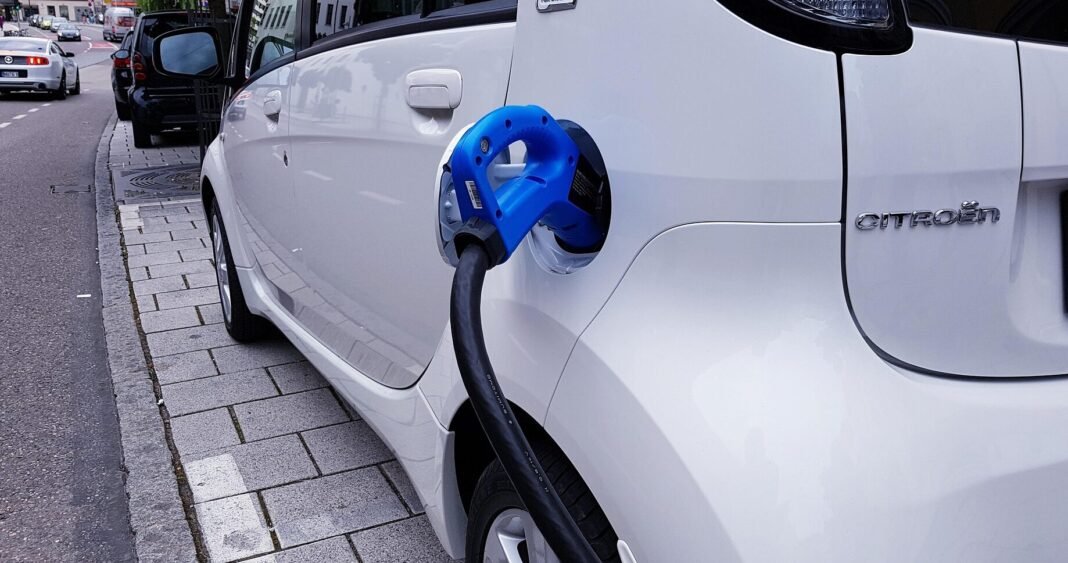

A new report by EY and Eurelectric suggests that electrifying UK fleets could significantly reduce operating costs for businesses across Europe, with savings of up to 64% for company cars and 38% for light commercial vehicles (LCVs).
The analysis estimates that fleet electrification across Europe could generate as much as €246 billion in operating cost savings by 2030, driven primarily by lower energy costs, reduced maintenance requirements and favourable tax policies.
Strong opportunity for UK fleets
The UK is identified as one of the best-positioned markets to benefit from fleet electrification. According to the report, more than 75% of new corporate car registrations in 2025 were battery electric vehicles (BEVs), reflecting one of the highest adoption rates in Europe.
A key factor behind this strong uptake is the UK’s Benefit-in-Kind (BiK) tax structure, which offers favourable taxation for electric company cars. The report highlights this as one of the most effective incentives encouraging businesses to transition to electric fleets.
Maria Bengtsson
Maria Bengtsson, Mobility Leader for EY UK & Ireland, said the findings demonstrate the strong business case for electrification.
“Fleet electrification presents a compelling opportunity for UK companies. Businesses can benefit not only from significant cost savings but also from meaningful environmental gains, supported by regulatory incentives encouraging cleaner transport.
“However, as the UK moves from early adoption to mass uptake, the pace of infrastructure development – including charging availability, affordability and interoperability – will be crucial.”
Operating cost savings across Europe
The report compares fleet electrification economics across four major European markets: the United Kingdom, France, Germany, and Sweden.
Among these, the UK delivers the largest operating cost advantage for electric corporate cars, with savings of approximately €0.19 per kilometre compared with petrol or diesel vehicles. This compares with €0.12 per kilometre in Sweden and €0.09 per kilometre in both France and Germany.
For electric vans, UK fleets could achieve around 38% operating cost savings compared with diesel models, which is broadly in line with France (40%) and slightly lower than Sweden (45%), but significantly higher than Germany (10%).
Policy incentives driving adoption
The UK’s policy environment is cited as a major contributor to its fleet electrification progress. The report highlights the country’s stable regulatory framework and supportive incentives, including the planned BiK tax trajectory, which will increase gradually from 3% to 5% by the 2027/28 tax year.
Other policies encouraging fleet electrification include the Zero Emission Vehicle Mandate, which requires increasing proportions of new vehicle sales to be zero emission, including vans from 2025.
However, adoption within the van market remains relatively low. According to data from the Society of Motor Manufacturers and Traders, battery electric vehicles accounted for just 10.4% of new UK LCV registrations in January 2026, highlighting the scale of the transition still required.
Grid capacity remains a key barrier
Despite the economic case for electrification, the report identifies grid connection delays as one of the main obstacles to wider adoption. In the UK, securing a new grid connection for fleet charging infrastructure can typically take 18 to 36 months.
Recent reforms approved by Ofgem aim to address this challenge by changing the grid connection process from a “first come, first connected” system to a “first ready and needed, first connected” model. The reform prioritises projects that are ready to proceed, including EV charging installations and fleet depots.
The report also highlights emerging solutions designed to accelerate electrification, including:
- Battery-integrated ultra-fast chargers
- Smart charging systems
- Flexible grid connection agreements
These technologies can help operators deploy charging infrastructure more quickly while reducing pressure on the electricity grid.
Financing models supporting SMEs
The report also points to innovative financing models that are helping smaller businesses adopt electric fleets. In the UK, options such as vehicle leasing, Fleet-as-a-Service, Car-as-a-Service, and salary sacrifice EV schemes are helping companies overcome the high upfront cost of electric vehicles.
These approaches reduce capital expenditure barriers for small and medium-sized enterprises while providing access to vehicles, charging infrastructure and fleet management services through bundled solutions.
Heavy-duty electrification still in early stages
While electrification is advancing rapidly for cars and vans, the transition remains slower for heavy-duty vehicles. Data from the Society of Motor Manufacturers and Traders shows that only 587 of the 40,504 heavy goods vehicles registered in the UK in 2025 were zero-emission models.
However, the UK offers some of the largest grant incentives in Europe for electric trucks, with support of up to €139,000 for the largest vehicles, which could help accelerate adoption.
The report concludes that depot-based charging and energy management strategies will be essential to reducing costs and enabling large-scale electrification of freight fleets in the coming years.

