
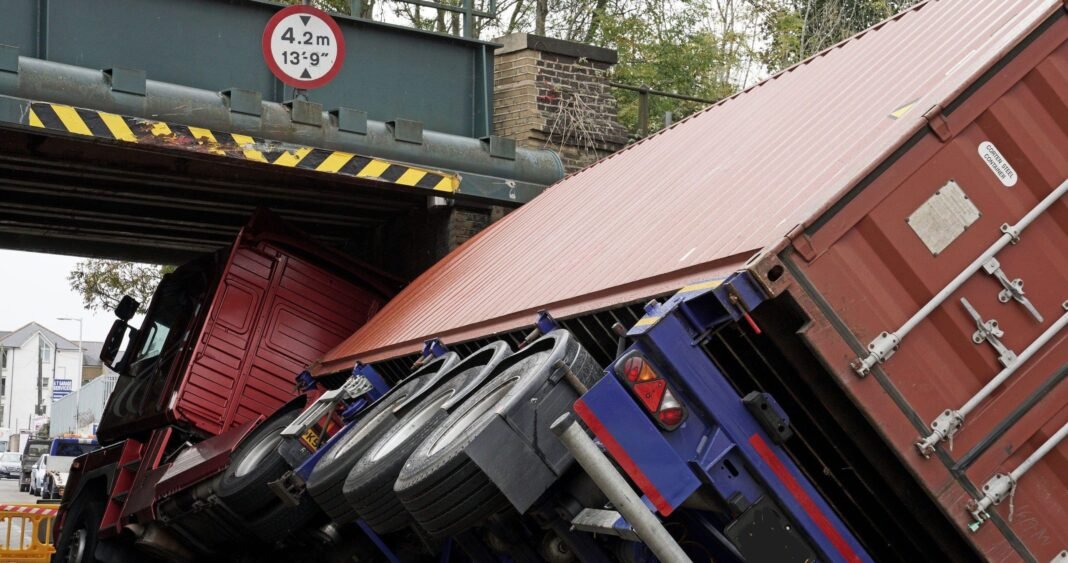

Fleet operators should adopt advanced low bridge detection technology as part of wider efforts to improve road safety and prevent bridge strike incidents across the country.
Bridge strikes continue to be a persistent challenge on UK roads. Latest figures from Network Rail show that between 1 April 2024 and 31 March 2025 there were 1,666 reported bridge strikes—roughly one every five hours—which caused more than 120 days (186,000+ minutes) of delays for rail passengers and cost the UK taxpayer around £23 million in a single year.
The majority of these incidents involve high-sided vehicles and are often avoidable through careful route planning and awareness of vehicle dimensions and bridge clearances. With some bridges struck repeatedly each year, industry bodies continue to urge operators and drivers to remain vigilant in journey preparation.
In response to these ongoing safety concerns, Durite recently introduced an AI Low Bridge Detection System that uses camera technology, artificial intelligence, and high-accuracy 10 Hz GPS linked to a UK low bridge database to identify low height risks well in advance, helping drivers make safer decisions before potential obstacles are reached.
“The cost of bridge strikes is not just damage and disruption, it’s about the risk to lives, the knock-on impact on road and rail users, and the reputational and operational consequences for fleets,” said John Nobbs, Sales Director at Durite.
“With low bridge detection systems as an added safety feature, operators can receive timely alerts when approaching hazardous clearances. While these systems are designed to help prevent collisions, they are a supplement to, rather than a replacement for, careful route planning and standard safety procedures.”
Meanwhile, Durite confirms that Sentinel Systems is now supplying the detection system as part of its broader vehicle safety technology portfolio, reinforcing shared industry goals around improving fleet safety and operational trust.
“Compatibility with MDVR systems, ease of use, and the clear warning provided to drivers when comparing bridge height to vehicle height are key differentiators when compared to other low structure detection technologies,” says John Little, Managing Director at Sentinel Systems.
“Also” explains john, “its ability to programme the vehicle height into the system, is a key benefit for fleets which carry variable height loads.”
“The Durite AI Low Bridge Detection System is high quality, easy to use and simple and quick to install, “adds John. “Moreover, Sentinel and Durite share the same goal of improving safety across commercial vehicle fleets and we trust Durite’s expertise.”
Durite points out that industry guidance emphasises that route planning remains one of the most effective measures operators can take to prevent bridge strikes. However, with increasing pressure across haulage and logistics sectors, the company also notes that AI-enabled detection technologies can play an important supporting role alongside driver training and planning practices.
“Quite simply,” adds John Nobbs, “the key is to provide drivers with accurate, timely alerts as a safety aid. These systems support drivers on the road but do not replace the essential task of planning safe routes in advance.”
Durite further advises that its solution is fully compatible with its broader vehicle safety camera portfolio and integrates effectively with connected fleet systems, enabling seamless deployment across mixed fleets while delivering both visual context and real-time alerts.

