
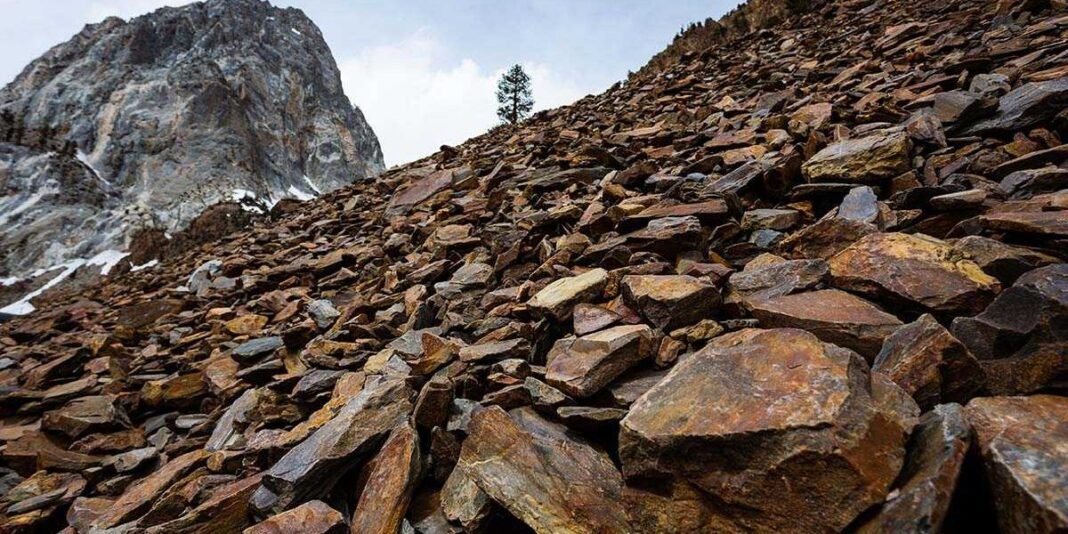

Our nation has been blessed with abundant natural resources. Some are more important than others.
Critical minerals are among the most vital. These are essential raw materials needed to make semiconductors, electronics parts, and critical defense systems. Without them a nation stops.
As automation and new technologies advance, their criticality to our supply chains continues to grow. And like most things these days, international politics is at the center of critical mineral discussions.
That’s because China controls most of the market for critical minerals, and the Chinese are using that status to manipulate the supply and determine who gets access to these essential minerals. For that reason, the U.S. government has been focusing on finding alternative supplies, both domestically and in other friendly nations. It has been a key part of the exchange for providing war matériel with Ukraine. Obtaining these hidden resources has also been tied to the U.S. actions in Venezuela and its overtures in Greenland.
As a professional geologist, Brodie Sutherland is always on the hunt for what is hidden in the earth. He has over a decade of experience leading mineral exploration across more than 20 countries, where he has leveraged his expertise in geological mapping, sampling, and drilling to unlock critical mineral resources.
Sutherland is the CEO of Patriot Critical Minerals Corp., a company that is working to find and develop critical minerals, including in the nation’s largest tungsten deposit, located in Elko County, Nevada. Tungsten is one of the critical minerals needed for domestic manufacturing and defense systems.
Sutherland was recently a guest on DC Velocity’s “Logistics Matters” podcast, where he spoke with Group Editorial Director David Maloney about the need for critical mineral supplies and his company’s work in developing these natural resources.
Q: Could you describe what actually makes a mineral critical for security and other manufacturing needs?
A: Yes. There is a whole range of these critical minerals, and you’ll hear a lot of talk about critical minerals, metals, and rare earths. These all fall under the “critical minerals” umbrella, and they are all minerals that are vital to either technology or military applications, or really just national security.
For example, the U.S. Geological Survey in early September issued an updated list of 20 to 30 of these critical minerals. And really what they’re showing is that if we don’t secure a domestic supply, it’s going to have a massive negative impact to our GDP.
What we’ve seen over the past few decades has been our complete reliance on other countries to supply those minerals and metals to us, and now we’re seeing a shift back toward onshoring the supply of these materials. And that’s part of where we come in. Where we’re focused right now is on a mineral called scheelite. That’s what [contains] the tungsten—the metal itself. And what we look to do is extract it from the ground, refine it, and then put it into a form in which we can sell it to manufacturers in the United States. We’re looking to rejuvenate tungsten mining, as we have not had any domestic supply in the U.S. for over a decade.
Q: What are some of the critical minerals that are now receiving attention due to supply needs and security?
A: A lot of them apply to technological applications. Neodymium is one that you’ll hear a lot about. This is used in magnets and numerous electronic applications. China has controlled 90% of that market historically, but we also have these resources on U.S. soil. Antimony is another big one with a lot of military applications, and because of demand, its price has moved up over the last couple of years. We feel that tungsten is a material that’s really starting to heat up in terms of interest, given that China placed export controls on it last year and China controls 83% of the market supply. [Editor’s note: China’s tungsten exports dropped 70% last year.]
Q: Why aren’t more of these critical minerals mined domestically? Are they simply not found anywhere in the U.S., or is it too expensive to mine them here?
A: In the past, the focus has been on allowing other countries to develop these projects, and in a lot of cases, China is now far ahead of the curve. Traditionally what’s happened is that as soon as the price of that commodity has gone up to a point where it’s economical to produce these resources in the United States, China will just oversupply the market and drive that commodity price down.
Now we’re starting to see a shift in this thinking. We have these materials here on U.S. soil, and now we see the U.S. government making moves in the critical-mineral space by setting a [price] floor on certain commodities, like neodymium, and ensuring that China can’t come back and flood the market to disrupt any new development on U.S. soil. We need these materials close to home to be able to have full security on numerous fronts, whether it’s technology or military defense. We need these metals. That is why we’re starting to see renewed interest in driving these projects forward.
Q: Are we also working with friendlier trading nations to help them develop their own capabilities for mining critical minerals?
A: Yes, 100%. The U.S. has struck big deals with a number of countries, including Australia, Malaysia, and Japan. The short answer is that we need all of it to offset what China was supplying. And going back to China, it has had a lot of subsidies and incentives to develop these projects, and that’s what’s put it ahead of the curve. And now I think we’re seeing the U.S. trying to match that. But the reality is, we need all these other countries aligned with the U.S. to offset that supply gap.
But it takes time. You can’t turn off all the supply for critical minerals and then expect to turn on other mines instantly. So our government is forging agreements with other countries to ensure that there is a supply established over the longer term. In the near term, however, we still need China in a lot of ways for the critical minerals.
Q: How large is the tungsten deposit in Nevada, and why hasn’t tungsten been mined in large quantities before?
A: A lot of it comes down to timing in the mining world. This deposit was first discovered in 1968, and it was fully evaluated … throughout the 1970s and 80s. Back then, the primary use for tungsten was for lightbulb filaments. But that has changed dramatically over the past 40 years, as we’ve seen numerous new applications for tungsten. Even today, we’re seeing new things come out in the tech space, where it’s used for energy, nuclear fusion, solar panels, semiconductors, and important military defense applications. It’s really these new up-and-coming uses for it that are driving interest in tungsten. And then there’s the commodity price. We’ve seen tungsten nearly triple in price, mostly due to China’s export restrictions. So that’s why we’re seeing renewed interest in it.
We have an incredible project before us. We have nearly 36,000 tons of contained tungsten there, which makes it the biggest deposit in the United States. We continue to [investigate] that resource with additional drilling, then we will start moving it through pilot production, showing the proof of concept, and ultimately moving it through full-scale production, so that we have that long-term, secure source for tungsten here at home.
Q: How long will it take before you’re actually mining the tungsten?
A: It will take time. We’re very fortunate to be coming up in a space where the government is very supportive of these types of projects. If everything works out perfectly, this could be online as a full-scale, producing mine within three years. Again, there are a lot of things that have to go right to get that done, but we’re quite confident that we’ve got the people and the process to make that happen. Right now, we’re lining up with potential offtake partners [buyers who sign a long-term contract to purchase all or a significant portion of a producer’s future output] that we can supply.
Q: What happens to the material once it’s mined?
A: There are key refineries on the East Coast, such as in Pennsylvania. There will be a lot of manufacturers that will then use the refined tungsten. Then there is also the U.S. government, which has shown interest in stockpiling this material. And we think we can assist in providing a source for it, so that’ll all come together over the next few years. We’re excited to get things started here with this kind of renewed and rejuvenated market.

