
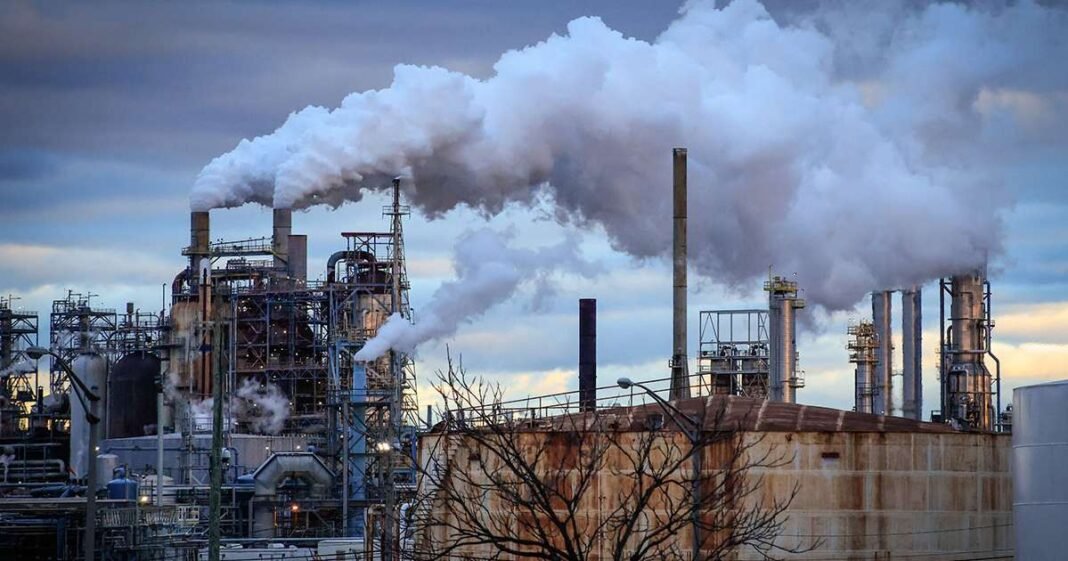

A Phillips 66 refinery in Linden, N.J. (Kena Betancur/Bloomberg)
February 11, 2026 4:24 PM, EST
Oil markets are awash in crude, keeping a lid on prices and squeezing drillers. For U.S. refiners, though, the glut is proving a windfall.
The big three U.S. refiners — Marathon Petroleum, Valero Energy Corp. and Phillips 66 — all beat estimates in fourth-quarter earnings results reported in recent weeks. On calls with analysts, executives signaled a profitable outlook for 2026 and the years ahead, not least because they’re set to benefit from an influx of cheaper and more readily available heavy crudes.
The divergence reflects a growing imbalance in global fuel markets: demand for gasoline, diesel and jet fuel is rising faster than new refining capacity is growing, even as oil producers continue to pump more crude than the world needs. That dynamic allows refiners to buy cheaper feedstock while charging more for finished fuels.
“We are very bullish,” Phillips 66 CEO Mark Lashier said on a Feb. 4 call with analysts. Fuel demand is set to grow in 2026, and global refining capacity additions will fall short, Lashier said.
The upbeat tone is a far cry from early 2025, when President Donald Trump’s tariff uncertainty clouded the economic outlook and sparked concerns over fuel demand. At the time, the industry braced for a wave of plant closures. Since then, fuel consumption has remained resilient even as the supply glut drove oil prices lower. Brent crude, the global benchmark, is down about 10% over the past 12 months.
Refining margins for America’s top fuel makers, who collectively process some 8 million barrels of oil a day, ended 2025 with profits that were about $5 a barrel higher than the fourth quarter of 2024. With fuel demand forecast to stay strong, the upward momentum for margins is likely to continue. Consultant Rapidan Energy, in its refined product outlook published Feb. 9, said it sees little evidence of a peak in transport fuel demand.
The 3-2-1 crack spread, an indicator of the profitability of producing diesel and gasoline against the cost of crude, was around $25 a barrel as of Feb. 11, higher than where it was at this point in 2025 and well above lows seen later in the year.
“Commentary indicates that 2026 will be another strong year for cracks given demand is outpacing supply,” Vikram Bagri, an analyst at Citigroup Inc., said in a report.
Trump’s moves to boost crude flows from Venezuela are strengthening the case for U.S. refiners, as companies position themselves to process the heavy oil coming out of the South American country.
Fuel makers typically buy a wide range of oil grades, with characteristics from heavy to light. The heavier and harder-to-process crudes, such as those usually exported by Venezuela, are usually cheaper, making them supportive of refiners’ bottom lines.
Valero, Phillips and Marathon are major buyers of heavy crude, having retooled their plants to process more of the harder-to-refine oil. All three companies said they are either purchasing or in the process of purchasing Venezuelan crude. The extra barrels coming out of Latin America should also depress the price of Canadian oil, a similar heavy grade.
Refiner shares have surged thanks to the improving margins. Valero, Phillips and Marathon have jumped about 25% year to date. The S&P 500, meanwhile, is up just about 1%.
Still, it remains to be seen if the momentum can be sustained. While fuel demand has room to run, Rapidan expects the market to tighten more meaningfully in 2027, with 2026 broadly balanced.
Executives say the data supports their outlook.
For the coming year, Valero expects there will be 400,000 daily barrels of net capacity additions, shy of the half a million barrels per day of light refined product demand growth, Chief Operating Officer Gary Simmons said on a recent call with analysts, citing consultant data. Marathon’s CEO, Maryann Mannen, said refined product demand growth will rise around 1% annually through the next 10 years.

