
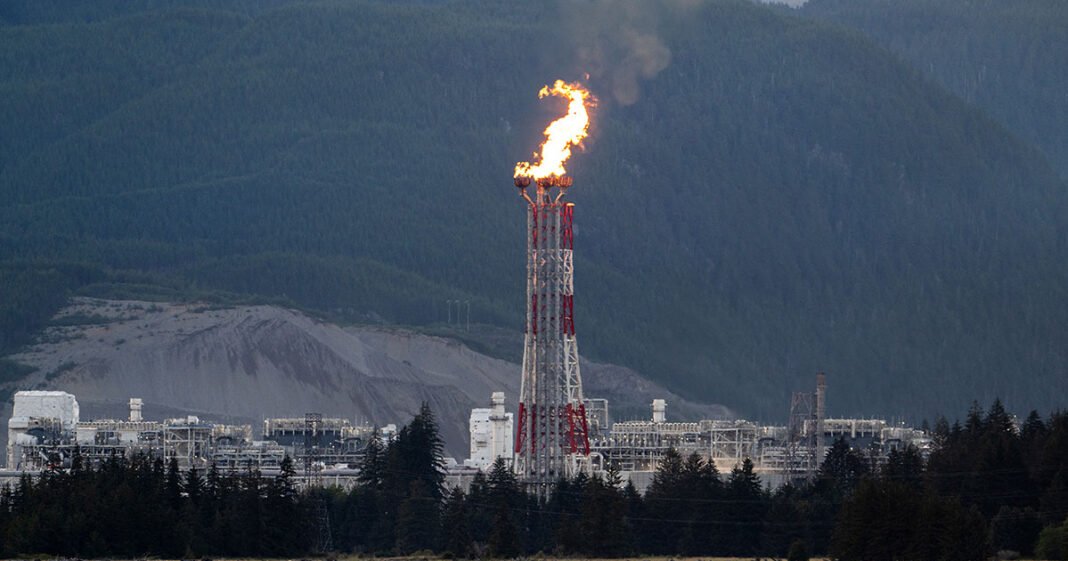

A flare stack at the LNG Canada facility in Kitimat, British Columbia. (James MacDonald/Bloomberg)
March 24, 2026 4:00 PM, EDT
Canadian Energy Minister Tim Hodgson pitched increasing natural gas flows to the U.S., a move aimed at boosting LNG exports from the Gulf Coast and meeting rising power demand from artificial intelligence data centers.
In an interview on Bloomberg Television, Hodgson said he had a “wonderful conversation” with U.S. Energy Secretary Chris Wright and Interior Secretary Doug Burgum during the CERAWeek conference hosted by S&P Global in Houston.
Canada ships 8 billion cubic feet per day of gas to the U.S., helping underpin 20 billion cubic feet per day of American liquefied natural gas exports, Hodgson said March 24.
“We talked about how we could help send more gas down to help you export more off the Gulf Coast and to help you with your AI strategy,” Hodgson said. “Obviously a key component of the AI race is building more data centers. That requires more natural gas. We can provide that gas.”
The Middle East conflict has tightened global energy markets, including LNG, after Iranian missile strikes caused extensive damage to Qatar’s Ras Laffan complex. Germany’s economy minister is now urging utilities to lock in additional long-term LNG supply, including from non-U.S. producers.
Hodgson also said he assured Wright and Burgum that Canada is doing everything possible to keep oil flowing amid the war.
The country has committed 23.6 million barrels toward the International Energy Agency’s emergency release of 400 million barrels. Canada doesn’t maintain strategic reserves as a net oil exporter, but companies have reason to offer more supply while U.S. crude trades around $90 a barrel after briefly passing $100.
The Canadian government asked oil sands producers to delay planned second-quarter maintenance to maintain output, Hodgson said.
A spokesperson for the minister later clarified that while delaying maintenance was discussed with industry, it was deemed unnecessary at this time to reach the IEA target.
Major oil sands producers have not announced any turnaround delays.
Hodgson also said he is in “intense discussions” on working out the details of a deal with Alberta that would see federal backing for a new oil pipeline to the west coast in exchange for provincial commitments on carbon pricing and the Pathways carbon-capture project.
A 2025 memorandum of understanding sets an April 1 deadline to reach agreements on carbon pricing and a framework for the construction of Pathways. Alberta Premier Danielle Smith has suggested that deadline is unlikely to be met.

