
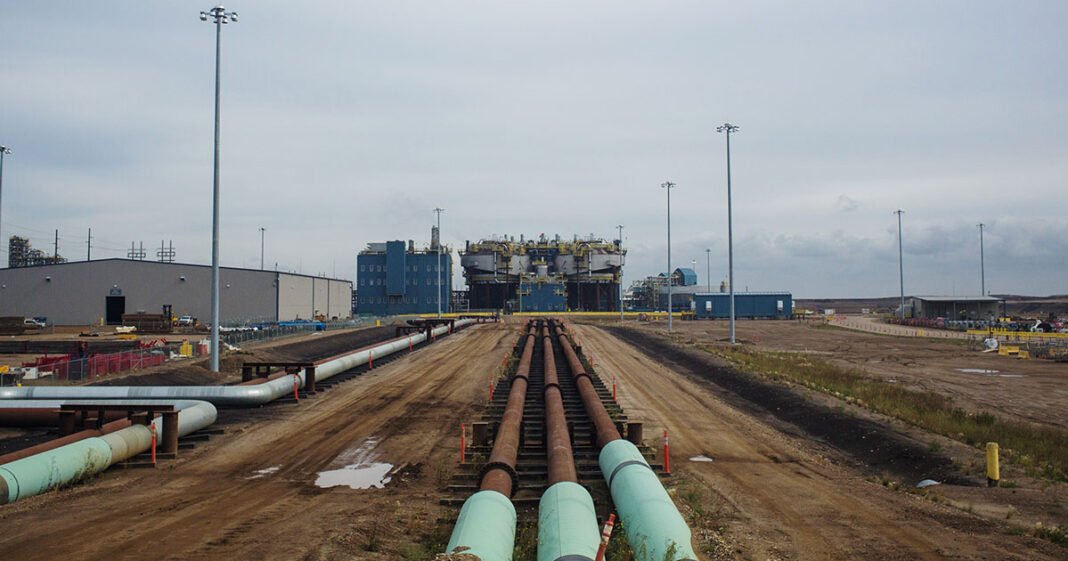

Pipes at an oil-sands extraction site in Alberta. (Ben Nelms/Bloomberg)
March 25, 2026 5:04 PM, EDT
The Alberta and Canadian governments have reached a deal to reduce methane emissions, the latest in a series of energy negotiations setting the stage for a new pipeline to the Pacific coast.
An agreement in principle to cut methane emissions in the oil and gas sector by 75% below 2014 levels by 2035 marks the second issue settled between the two sides ahead of an April 1 deadline set out in a memorandum of understanding late last year. Earlier this month, the federal government said it would delegate jurisdiction on environmental and impact assessments to the province.
Among the matters still to be decided are an agreement to hike the province’s industrial carbon price to C$130 ($94.13) a metric ton, shore up Alberta’s faltering carbon trading system and agree on a plan for building a carbon capture and storage system in the oil sands. In exchange, the federal government has promised to suspend clean electricity regulations and support Alberta’s plan to build a new million-barrel-a-day oil pipeline to the British Columbia coast.
RELATED: Enbridge Ties New Oil Pipeline to Canada Regulatory Changes
Alberta Premier Danielle Smith has signaled that more agreements will be announced, but negotiations may continue past the first of the month over the carbon capture project, called Pathways. Canada Energy Minister Tim Hodgson said negotiations are continuing.
“We are in intense discussions right now,” he said March 24. “I was talking with Premier Smith yesterday. I am confident we share a goal of building the biggest carbon capture project in the world.”
Last year’s MOU, called a “grand bargain” at the time, marked a thawing of relations between the oil-producing province and Ottawa under new Prime Minister Mark Carney, who was elected last year. Relations had deteriorated under previous Prime Minister Justin Trudeau, whose government imposed a range of environmental regulations that Smith and the province’s oil industry say hindered development.
Canada sends nearly all of its oil to the U.S., and Carney pledged to back a new pipeline to a Canadian port in an effort to reduce the country’s economic dependence on its southern neighbor.

