
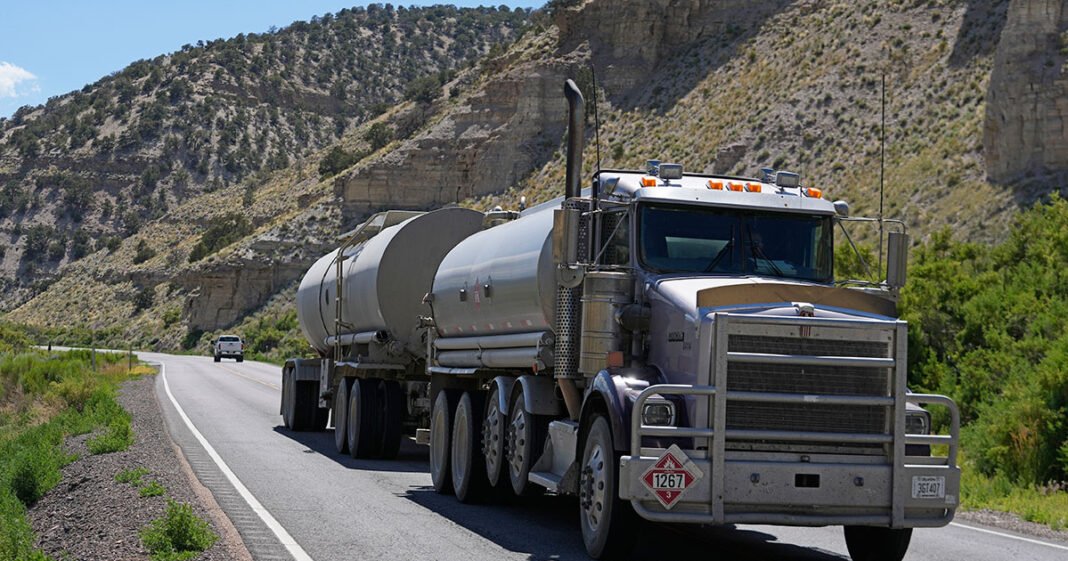

A tanker truck transports oil. (Rick Bowmer/Associated Press, File)
March 12, 2026 5:00 PM, EDT
Oil drillers in central California have resorted to the costly and cumbersome alternative of trucking crude barrels 50 miles after the shut down of a refinery and idling of a key pipeline cut off outlets for their products.
Up to 35,000 barrels a day of oil used to flow north from California’s once-prolific Kern oil field to refineries in the San Francisco Bay area on a pipeline operated by Crimson Midstream. The San Pablo Bay Pipeline has been empty since December, however, after one of the key buyers — Valero Energy Corp’s Benicia refinery — prepared to process its final barrel of crude and started shuttering operations in February.
The bottleneck has created a regional glut and is squeezing margins for California oil producers. This comes at a time when Gov. Gavin Newsom prepares for a potential presidential bid with an electorate concerned about the cost of living and as oil and gas prices spike nationally because of the war in Iran. Californians pay the highest pump price in the nation, an issue in part compounded by refinery closures spurred by years of what the industry views as hostile regulator policy.
About half of the displaced crude is being sent on an alternate line, but most of the remainder is being put on trucks in eastern Kern County and driven 50 miles to Pentland Station to be shipped on a pipeline to refineries in and around Los Angeles.
Crimson has been spending at least $3 million a month to keep open the option to ship crude on the pipeline. It has promised California’s energy regulator that the conduit would remain viable through at least the end of March, parent company CorEnergy Infrastructure Trust CEO Robert Waldron said. “If someone calls up tomorrow I could ship oil,” Waldron said.
Nearly 100 trucks a day are making the 100 mile round-trip journey to Pentland Station, according to oil driller E&B Natural Resources President Steve Layton, whose company is responsible for about a third of the oil being sent by road.
“It’s like being in a gymnasium, and there’s two exits rather than three, and there’s a fire alarm,” Layton said.
The bottleneck is part of a “collapsing infrastructure,” caused by state policy and refinery closures, said California Independent Petroleum President Rock Zierman.
It has also created an artificial oversupply in the region, pushing Kern crude to a $10 discount to Brent, the global benchmark, while producers pay up to $10 per barrel for trucking — severely squeezing margins.
The expensive trucking work-around also comes as President Donald Trump announces plans to invoke an emergency law to boost drilling at a major oil project off the coast of California as the war in Iran roils the global oil market. The state’s refineries are heavily reliant on Middle East oil, with California last year importing more oil from there than any other state despite being home to a dwindling number of refineries.
Newsom last year signed legislation aimed at bolstering oil production onshore in California, a move seen helping to moderate his approach on energy issues.
He also instructed his chief energy regulator Siva Gunda to work closely with refiners to ensure affordable and reliable fuel supplies. Since then, two refineries have closed and remaining fuel markers are up in arms over an emissions regulation proposal by the California Air Resources Board that they say would raise costs and push the industry to the brink of collapse.
The California Energy Commission did not immediately respond to a request for comment.
Whether Kern oil once again flows freely hinges on one of California’s few remaining refinery’s appetite for local crude. PBF Energy’s Martinez refinery, across the water from the recently shuttered Valero Benicia, hasn’t bought crude in meaningful quantities off the San Pablo Bay Pipeline since May 2025.
PBF did not immediately respond to a request for comment.
The Martinez plant has been recovering from an early 2025 fire, and the company has expressed its concern in a recent letter to Newsom and other state officials that impending emissions compliance rules could make an already difficult operating environment exponentially worse.
“If PBF don’t buy the oil, I don’t know who else would,” E&B’s Layton said.

