
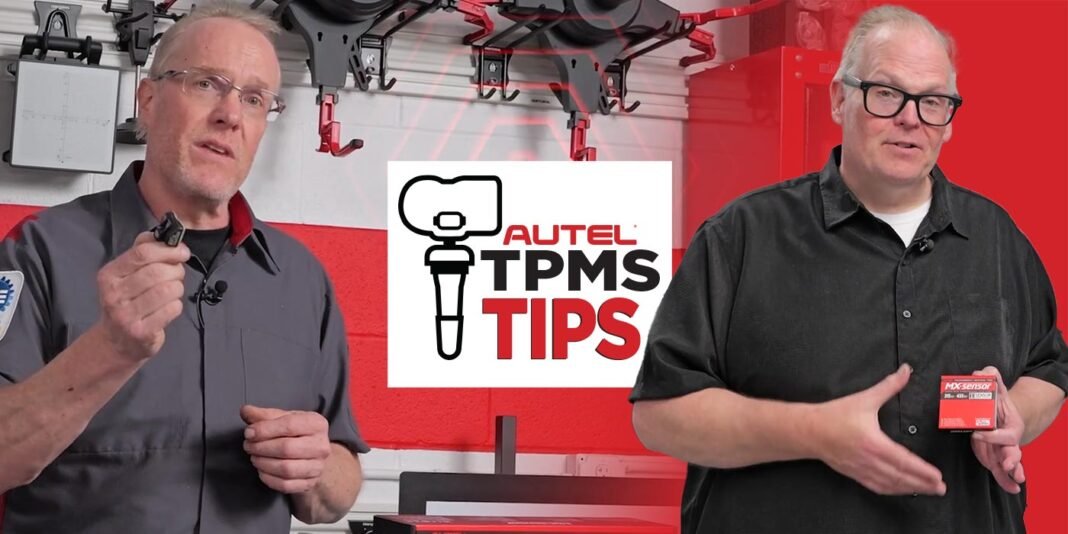

Whether you’re working in the front of the shop or turning wrenches in the bays, part of TPMS service is teaching customers what they don’t know about their vehicles. Many drivers may believe TPMS sensors last the lifetime of the car, but in reality, most batteries only survive seven to nine years. That’s why testing sensor battery health during tire service on older vehicles is a smart move. A low battery now is often a sign that TPMS sensor replacement is around the corner.
Understanding TPMS Sensor Modes
TPMS sensors operate in three main modes: drive mode, alert mode, and sleep mode. Some also offer a ship mode. Drive mode kicks in when the wheels start turning, sending data every 30-90 seconds. Alert mode activates during rapid pressure loss, transmitting data at a higher frequency to warn the driver. Sleep mode conserves battery by halting transmissions, while ship mode keeps the sensor dormant until activated with a scan tool.
Replacement and Programming Options
You will likely need to replace TPMS sensors after eight to 10 years. You can swap them out one-for-one with OE sensors or use programmable sensors that cover up to 90% of vehicles at both 315 MHz and 433 MHz.
Troubleshooting Signal Issues During TPMS Sensor Replacement
Since TPMS sensors use low-frequency RF signals, communication can be blocked by brake components. Sometimes, simply rolling the vehicle forward can restore the signal and the data flow.
Watch the video above for more TPMS tips!
Looking for more Autel TPMS tips? Click here.
This content is sponsored by Autel.
The post Autel TPMS Tips: TPMS Sensor Replacement Fixes Every Tech Should Know appeared first on Tire Review Magazine.

