
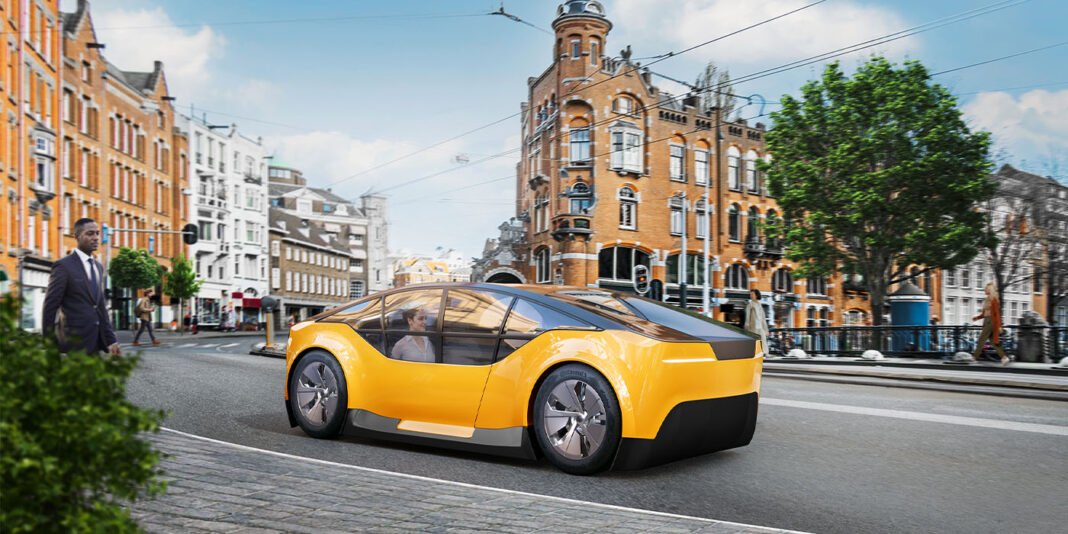

Continental has introduced a new line of original equipment (OE) tires designed for driverless vehicles. The aContact tires for self-driving cars feature specially developed technologies to meet the diverse needs of autonomous vehicle fleets, Continental said.
These tires are suitable for robotaxis, shuttle vehicles, autonomous delivery services, and, in the future, self-driving private cars. The aContact tires will soon be available on public roads in U.S. cities such as Las Vegas and San Francisco.
“Self-driving robotaxis will soon be part of our everyday mobility; alongside traditional cars, cargo bikes and e-scooters,” said Meletis Xigakis, Head of Research and Development for the OE business at Continental Tires. “To ensure maximum efficiency, it’s crucial they are equipped with tires made specifically for the job. That is where our aContact product line comes in. It combines technologies that have been adapted and customized for the ordering manufacturer or mobility provider, promoting safety and optimizing performance and efficiency.”
The Role of Continental aContact Tires in Autonomous Driving
Tire development has entered a new era with the rise of partially automated and fully autonomous driving. Continental said it has explored vehicle concepts and the demands these place on tires. Be that lightweight vehicles with alternative drive options to self-steering cars. AI-powered algorithms change how vehicles behave on the road, requiring tires for robotaxis to operate reliably for extended periods, Continental said.
In major automotive markets like China and North America, autonomous driving has already become more common. In cities such as Shanghai, Beijing, San Francisco, and Los Angeles, robotaxis are part of everyday traffic. Many manufacturers, from start-ups to established carmakers, are advancing technologies for emerging robotaxi fleets.
Continental said it supplies customized aContact options to customers operating or preparing to launch self-driving fleets. Each application requires specific quality standards and technical specifications. Safety features, such as short braking distances and superior handling, always remain top priorities, including in wet conditions.
Design Tailored for Self-Driving Fleets
The demands on autonomous vehicles vary widely, from hectic commuter traffic to shuttling airport passengers along defined routes. Continental said it adapts tread design and rubber compounds to fit these needs. Customers can order versions with reinforced sidewalls for extended service life or reduced rolling resistance to maximize electric vehicle range.
Tires for self-driving cars often feature a tall and narrow construction to cut both air and rolling resistance. This design also supports the heavy load of vehicle bodies and battery packs while improving handling and stability, Continental said.

