
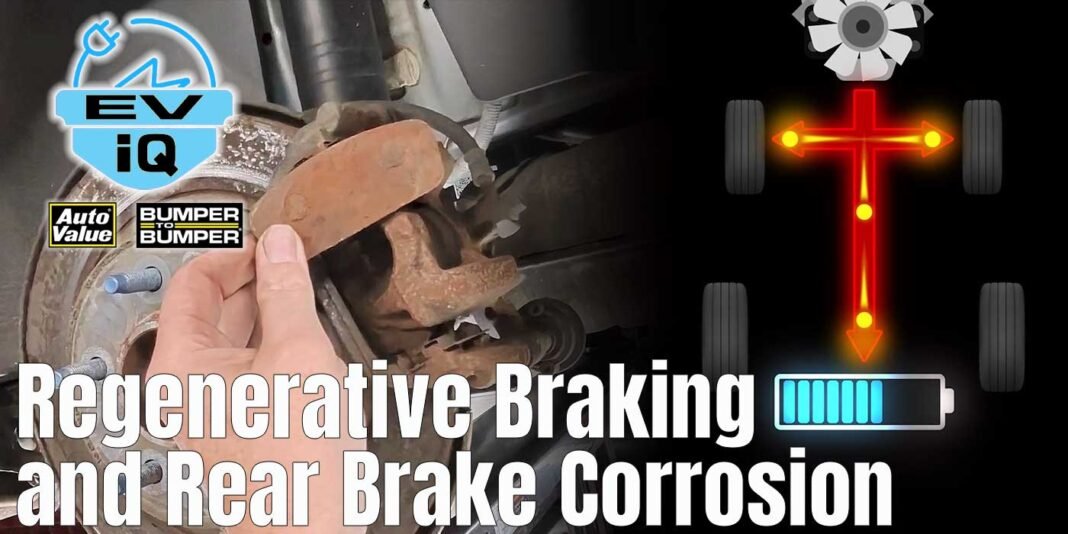

Someone recently brought in a 2016 Chevy Volt plug-in hybrid with a noise coming from the driver’s side rear when going over bumps. After a test drive confirmed the issue, removing the wheel revealed the cause: the puck separated from the backing plate and was rolling between the brake rotor and dust shield. More concerning was the brake rotor itself. It showed heavy corrosion, indicating it hadn’t been operating for a long time. Further inspection found the rear caliper seized and no longer functioning. This rear brake corrosion highlights a common issue with regenerative braking systems.
Regenerative Braking Contributes to Rear Brake Corrosion
The Volt primarily uses front-wheel regenerative braking to slow the vehicle under most conditions. Rear brakes engage only in situations like panic stops or at very low speeds when regen torque isn’t enough. Because the rear brakes see little use, they rarely heat up, making them prone to rust and caliper seizure. A bit of neglect compounded the problem in this case.
Proper Brake Service for Regenerative Vehicles
When servicing vehicles with regenerative braking, avoid just performing a visual inspection through the wheel. Remove the wheel and check the pads, caliper, and back of the rotor for corrosion or puck delamination. Always use high-quality parts on these systems.
Burnishing can also be an issue since regenerative braking doesn’t allow a traditional break-in. Some vehicles have a scan tool or service menu option to burnish pads manually. Alternatively, use high-quality pre-scorched pads that help seat the friction material without requiring heavy manual burnishing.
This rear brake corrosion case shows why thorough inspections and proper parts are critical when working on regenerative braking systems.
This video is sponsored by Auto Value and Bumper to Bumper.

