

This year’s report, which includes responses from more than 700 supply chain leaders, focuses on the need for supply chain organizations to pursue end-to-end orchestration—which has become “an essential strategy for today’s supply chains,” according to the authors. By way of definition, they noted that, “Seamless supply chain orchestration is characterized by strong underlying data (both internal and external); a best-in-class and fully integrated digital stack; a workforce that is digital-fluent, collaborative, and agile; and, in recent years, effective use of advanced analytics and generative AI (GenAI) tools.” Combined, these capabilities “enable data-driven decision-making, closer collaboration, and improved handling of exception scenarios across the entire supply chain network,” they added.
It certainly seemed, as I walked through the halls of McCormick Place, that many of the exhibiters were focusing on developing products to assist customers in their pursuit of end-to-end orchestration.
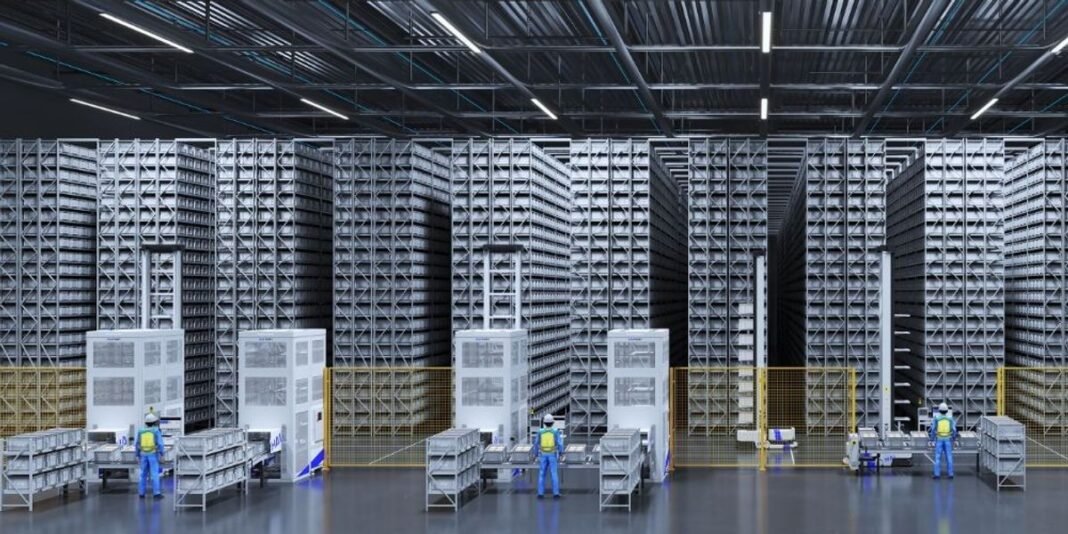
One example was Locus Robotics, which provided a sneak peak of its newest innovation, a high-density storage and picking system that automates end-to-end warehouse workflows. During a media event on the first day of ProMat, Locus unveiled Locus Array, a zero-touch order fulfillment system that it claims slashes warehouse/distribution center labor needs by 90%. Designed to optimize storage and throughput while providing flexibility, Array works seamlessly with Locus’s software to provide easy integration into any existing facility, the company said.
Similarly, you couldn’t walk the ProMat show floor without noticing how many vendors are incorporating artificial intelligence (AI), a technology with enormous potential to streamline operations across integrated supply chains, into their systems—an observation backed up by the findings of the MHI annual report. The survey showed that artificial intelligence adoption is surging, with 28% of respondents reporting that they are using AI in their operations today and more than half (54%) saying they plan to use AI within the next five years.
The newfound emphasis on end-to-end orchestration may be a sign of the times. Today’s supply chain leaders face a multitude of challenges, ranging from the economic to the technical. When asked about the biggest headwinds they face, respondents to the MHI survey cited inflation (38%), economic uncertainty (37%), workforce and talent shortages (35%), a lack of supply chain agility and resiliency (28%), and inventory challenges (25%).
“Today’s business environment is increasingly complex and volatile—requiring a more integrated and agile approach to supply chain management,” the report concluded. “End-to-end supply chain orchestration, which seamlessly connects every stage of the supply chain, has emerged as a critical strategy for organizations to remain competitive.”
Overall, there was an air of excitement among the ProMat 2025 attendees, despite the current economic uncertainties and continued challenges. Navigating today’s supply chain landscape might not be easy; but I like to think there’s something to the old notion that creativity and innovation flourish in times of upheaval.
To learn more about MHI and to download a copy of the “2025 MHI Annual Industry Report,” visit the organization’s website.

