
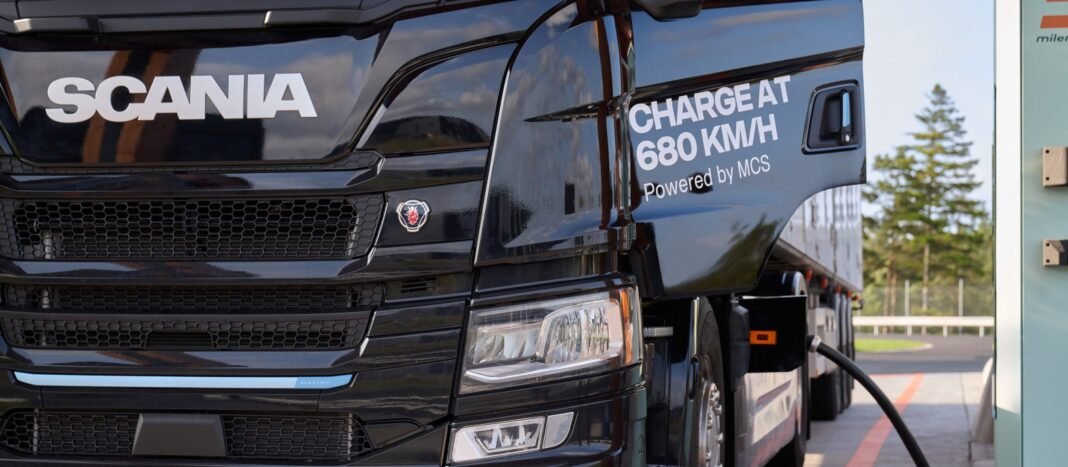

Scania has successfully demonstrated vehicle-to-grid (V2G) technology for trucks using the megawatt charging system (MCS). This proves that electric trucks can support the electricity grid by providing flexibility services such as smoothing consumption peaks, balancing the grid and energy storage.
The demonstration was carried out using the Megawatt Charging System (MCS), which enables secure real-time communication between the truck, the charger and the energy management systems. This makes it possible to dynamically control charging and discharging depending on the transport needs and the conditions of the electricity grid. The use of bidirectional energy transfer (V2G) can also improve the use of local renewable energy, such as solar energy, while providing greater flexibility in terms of grid connection and energy management. Initially, this technology is likely to be relevant in depot charging environments, where vehicles are parked for long periods and where charging can be tailored to energy demand and grid conditions.
“Electric trucks will not only consume electricity, but can also become an active source within the energy system,” says Tobias Ejderhamn, global head of Transformation and New Business at Scania. “This development changes the role of the fleet manager, who is no longer limited to providing transport services, but also offers energy flexibility.” An additional argument for electric trucks, according to Scania.

