
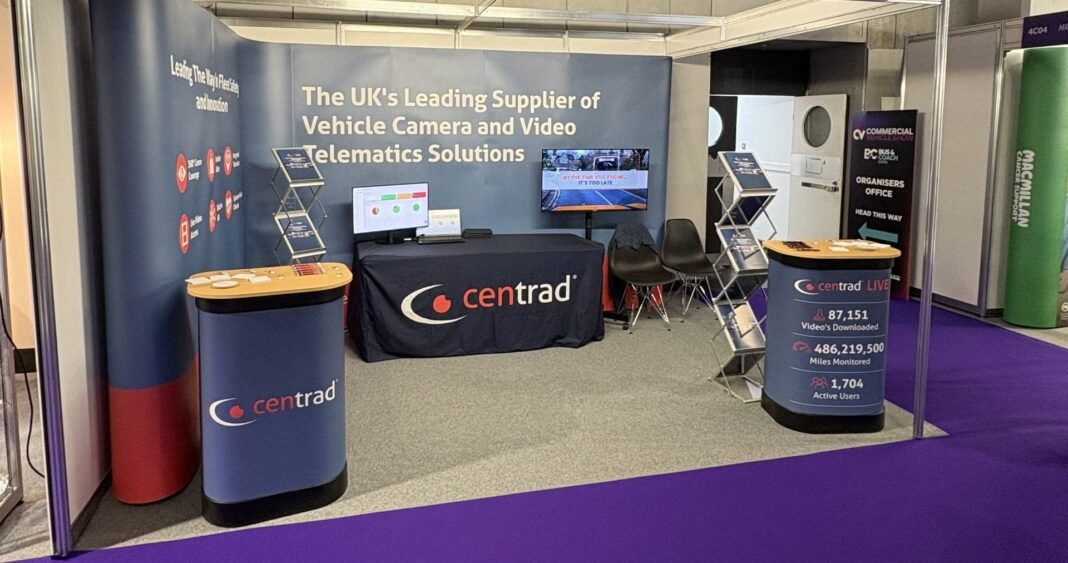

Fleet operators are increasingly prioritising remote access to CCTV systems, according to leading video telematics provider Centrad, following strong industry feedback at this year’s Commercial Vehicle Show 2026.
While fleet CCTV has become standard across the transport sector after years of widespread adoption, operators are now focused on maximising the value of their systems through real-time visibility, faster footage retrieval and proactive monitoring.
Discussions at the show revealed that dependable video evidence remains the cornerstone of effective fleet protection, despite continued advances in AI and telematics technology. However, many operators raised concerns about the operational risks created when footage cannot be accessed remotely.
Image: Centrad
A recurring issue highlighted by fleet managers was discovering that camera systems had failed only after physically removing a hard drive and attempting to review footage. In many cases, relatively minor faults such as blown fuses or hardware failures had prevented recordings from being captured, often without operators realising for extended periods.
Without real-time system monitoring, these failures can leave fleets exposed at critical moments. Police forces and insurers increasingly expect video evidence during incident investigations and claims handling. When footage is unavailable, operators may face legal and financial consequences, delayed claims processing and increased administrative workloads.
The problem is particularly significant for fleets operating long-distance routes or multi-day schedules, where delays in retrieving footage can result in important data being overwritten before it is reviewed.
For larger operators, managing CCTV systems has also become a major administrative responsibility. Remote access technology allows transport teams to retrieve footage within minutes rather than waiting for vehicles to return to base and manually extracting video files.
Fleet operators are also under growing pressure to defend against fraudulent claims, including disputed low-speed collisions and alleged vehicle damage incidents. Readily accessible video evidence is increasingly viewed as essential in protecting businesses from unnecessary costs and reputational damage.
To address these challenges, Centrad is helping operators modernise fleet CCTV management with connected video telematics solutions.
Its CenHub platform provides a centralised interface for remotely accessing and managing footage, while 4G-enabled hardware enables live and on-demand video retrieval without physical intervention. The system also delivers real-time health alerts, notifying operators immediately if a camera stops recording or a fault occurs.
In addition, CenHub simplifies footage sharing with insurers, police and other third parties. Video files can be compressed and securely distributed quickly, helping fleets avoid delays caused by large file sizes and lengthy email exchanges.
Geoff Cross, Managing Director at Centrad, commented: “Camera systems have been part of fleet operations for many years now, and operators absolutely recognise the value they bring. What we’re seeing now is a clear shift towards wanting more control, more visibility and ultimately more confidence that those systems are doing what they’re supposed to do.
“At the recent CV Show, it was striking how many operators had experienced issues with footage not being available when they needed it. At a time when fleet operating costs continue to rise, operators are becoming less willing to accept these ‘necessary evils’ of running a fleet. The ability to quickly access and share footage is increasingly seen as essential, particularly during the critical ‘golden hour’ following an incident.
“Remote access changes the game. It means operators can check system health in real time, retrieve footage within minutes and share it instantly with insurers or the police. It turns CCTV from a passive recording tool into an active, reliable part of fleet risk management and gives operators greater operational confidence which not only helps protect their bottom lines, but also their reputation.”

