
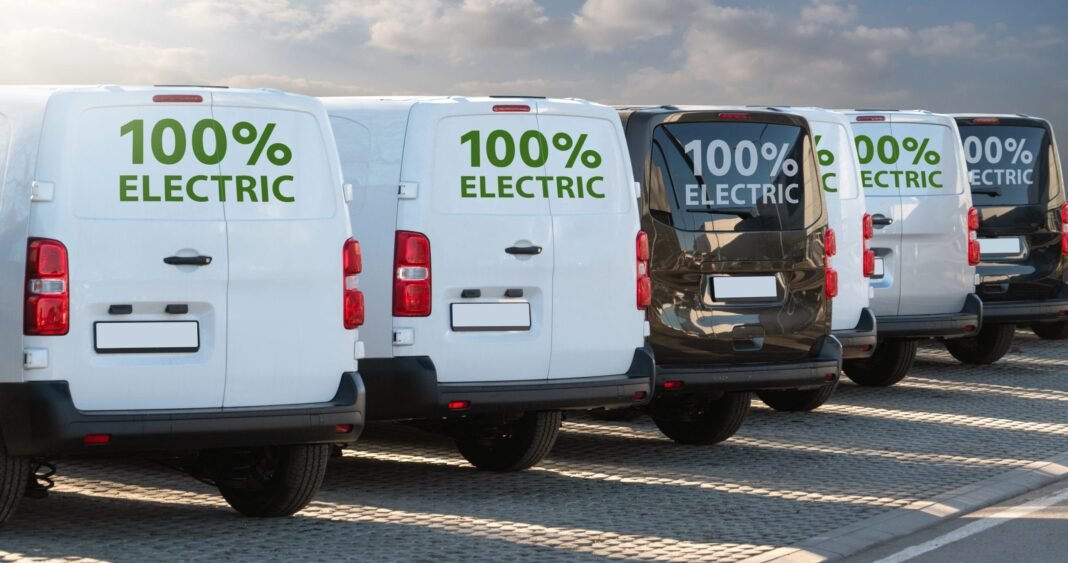

The UK Government has announced sweeping regulatory changes designed to remove long-standing barriers preventing businesses from adopting electric vans, particularly heavier 4.25-tonne models that have previously been treated like HGVs despite being used for the same work as standard diesel vans.
The reforms are being hailed by fleet operators, leasing companies and logistics groups as a major breakthrough for commercial vehicle electrification, with industry leaders arguing the changes will reduce costs, simplify compliance and accelerate the transition to zero-emission transport across the UK.
Under the updated rules, electric vans weighing up to 4.25 tonnes will be brought broadly into line with petrol and diesel equivalents. Until now, many electric vans exceeded the traditional 3.5-tonne threshold because of the additional weight of their battery packs, automatically pushing them into heavier vehicle regulations.
That created a series of operational headaches for businesses, including HGV-style MOT testing, tachograph requirements and stricter drivers’ hours regulations. Industry groups argued the rules were outdated and discouraged operators from investing in cleaner fleets.
The Government’s reforms aim to eliminate those inconsistencies. Electric vans in the 3.5 to 4.25-tonne category will move into the Class 7 MOT system rather than the HGV testing regime, reducing administration, downtime and testing costs. The changes will also remove many tachograph and EU drivers’ hours obligations, bringing electric vans closer to the regulatory framework already applied to diesel and petrol light commercial vehicles.
The Government has also continued financial support through the Plug-in Van Grant, enabling businesses to save up to £5,000 on the purchase price of a new electric van.
Aviation, Maritime and Decarbonisation Minister Keir Mather, said: “We’re backing UK businesses to expand and decarbonise their fleets, and that’s why we’re investing over £1 billion to support businesses to roll out e-vans, trucks and the charging needed to support them.
“Today’s announcement goes even further. As well as saving up to £5,000 off the cost of a new electric van, businesses will now no longer face unnecessary red tape when they make the switch, cutting costs, reducing bureaucracy and driving growth up and down the country.”
The changes are expected to have a significant impact on businesses operating delivery fleets, tradespeople, utilities companies and logistics providers. Many operators had delayed transitioning to electric vans because of the additional compliance costs and uncertainty surrounding the heavier vehicles.
By removing HGV-style obligations, businesses should benefit from lower operating costs, reduced paperwork and simpler fleet management. The reforms are also likely to improve driver recruitment and retention, as companies will no longer need to navigate some of the additional licensing and compliance complications attached to heavier electric vans.
Industry bodies have welcomed the announcement after years of lobbying for reform.
Toby Poston, BVRLA Chief Executive, said: “Tackling the barriers to large electric van uptake has been a top priority for the BVRLA and our members. Following extensive collaboration between government and industry, these changes remove major operational hurdles for fleets and unlock a critical part of the UK’s transition to zero-emission road transport.”
Logistics UK Chief Executive Ben Fletcher, added: “Electric vans have faced disproportionate regulatory burdens up to now, and been subject to different rules to their conventionally fuelled counterparts. The new regulations correct the nonsensical situation that saw standard size electric vans treated as HGVs when it came to MOTs, driver hours requirements and mandatory tachograph use, unless they were operated under tight geographical restrictions.
“It is only the extra weight from the batteries that moved electric vans into the same category as HGVs, and this has limited the adoption of cleaner electric vehicles by creating cost and complexity for operators looking to decarbonise their fleets.
“Now the legislation has been amended to standardise the sector – a move that Logistics UK and its members have been pressing government on for some time – operators will have the confidence to invest in cleaner electric vans as the additional costs and administration from adhering to legislation designed for HGV operators have been removed. Today’s news marks a victory for the environment and common sense, and we are pleased that the Government has listened to our call for change and taken action.
“At Logistics UK, we have been campaigning for full regulatory alignment between 4.25 tonne electric vans and 3.5 tonne diesel to make it easier for operators to make the switch to cleaner fuels. As part of the Zero-Emission Van Plan coalition we will continue to work to improve fiscal support for adopting electric vehicles and accelerating change.
“As operators face growing pressure to decarbonise fleets, regulatory clarity and consistency are essential and the new regulations are a clear indication that the government is listening to the sector’s concerns.”
The wider electric van market is expected to benefit as manufacturers, and leasing providers gain greater confidence in demand for larger zero-emission vans. The reforms may also encourage more businesses to electrify last-mile delivery operations, particularly in urban areas where emissions regulations are tightening.
Additional industry support has come from the British Vehicle Rental and Leasing Association and the wider Zero-Emission Van Plan coalition, both of which have argued that aligning electric van rules with diesel equivalents is essential if the UK is to meet decarbonisation targets while supporting economic growth.
For businesses considering the switch, the Government’s latest move removes one of the biggest practical obstacles to electric van adoption. Combined with grants, expanding charging infrastructure and lower running costs, the regulatory changes could mark a tipping point for commercial fleet electrification in the UK.

