
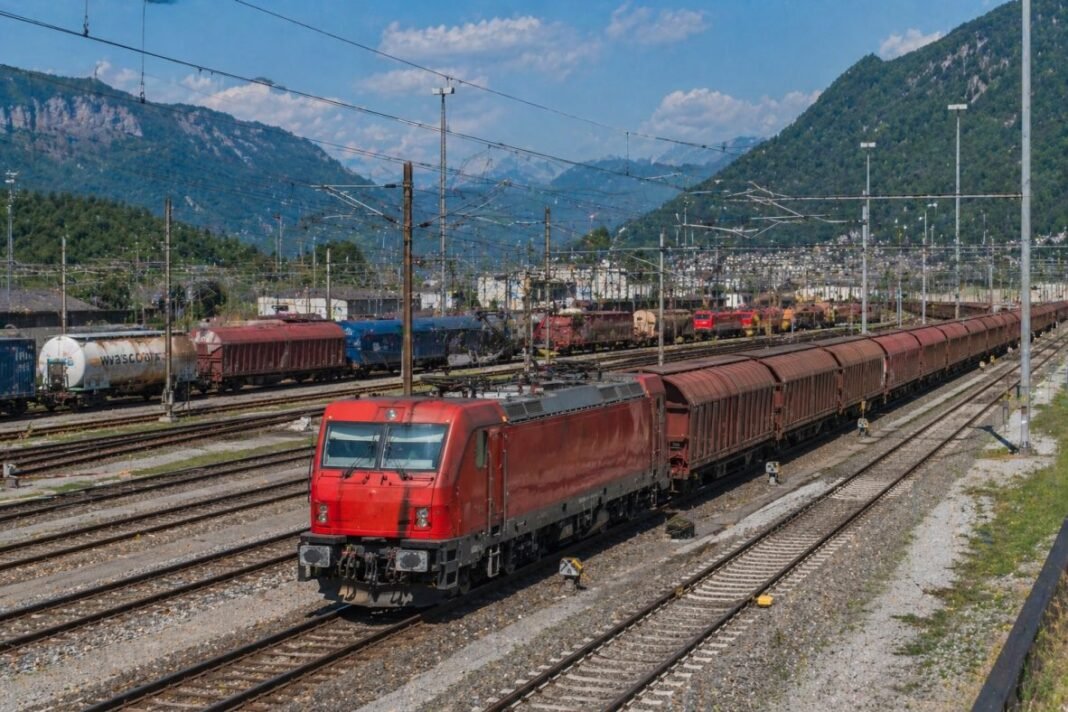

A single freight train takes up to 50 trucks off the road. Multiplied across thousands of trains every day, that is what Europe’s transport future should look like – cleaner, more efficient, fully integrated.
It is also what is at stake.
As EU transport ministers discuss the future of transport, rail freight must return to the centre of the debate. Geopolitical tension, strained supply chains, mounting pressure to decarbonise – rail is one of the few European systems that delivers competitiveness, energy security and climate progress at once.
But ambition alone will not deliver. Rail freight works because Europe built one system – one rulebook, one open border for wagons, one shared way to manage risk. That system is now fragmenting.
Fragmentation is the real competitiveness risk
At the very moment Europe is calling for more rail freight, the conditions that make it possible are fragmenting. Two trends are pulling the system apart: diverging safety rules and growing uncertainty around liability. The consequences are already visible. When rules no longer align, operations become more complex, less predictable, and capacity shrinks.
The first fault line is safety. National divergence is growing – even though Europe built the Joint Network Secretariat (JNS) precisely to keep the system aligned. Switzerland’s recent unilateral measures on broken wheels show what this looks like in practice. Wagons that should be moving will sit still. Capacity is lost. Customers feel it.
The fix is not new tools. It is using the ones we already have. The European Union Agency for Railways (ERA) and the JNS exist precisely for this. The upcoming update of ERA’s mandate is the moment to make sure common rules apply consistently across the network – not get reinterpreted at national level.
Aviation already shows what European integration can deliver: common rules, consistent application, one system. Rail must reach the same standard.
Liability – keep the risk where the operations sit
The second fault line is liability – who is responsible, and who pays, when something goes wrong.
For decades the balance has been clear: railway undertakings run trains; wagon keepers ensure wagons are fit for use. That clarity is what made the system both safe and efficient at scale.
Now, national and individual initiatives are trying to shift liability away from those who actually run the trains. The wagon keeper – who does not operate the train – would carry the consequence. The result is immediate: investment cases collapse, capacity disappears. European industry pays the bill.
Liability is not a contract clause. It defines rights and obligations. Change those and you change the market rules. Change the market rules and you reopen the foundations on which the European rail system has been built.
Europe’s ambition to shift more freight to rail depends on having wagons to carry it. Today UIP members manage around 255,000 of them – roughly half of Europe’s freight wagon fleet. Damage the market and the economics, and the fleet shrinks.
Rail freight is a shared European system. Its risks are best managed together – not pushed onto whoever is least able to refuse them. That is why UIP is advancing a joint insurance model where actors across the value chain contribute proportionately. Risk shared is risk managed. Risk shifted is risk denied.
Policymakers must now deliver concrete support for rail, not just declarations of intent
Rail freight already delivers for Europe. The Single European Railway Area exists on paper. It must now exist in practice. Coordination on safety and shared approaches to liability are not technical fine-tuning – they are the precondition for rail to carry the load Europe says it wants it to carry. Rail freight is ready. The question is whether Europe’s policymakers will walk the talk.
Gilles Peterhans is Secretary General at UIP

