
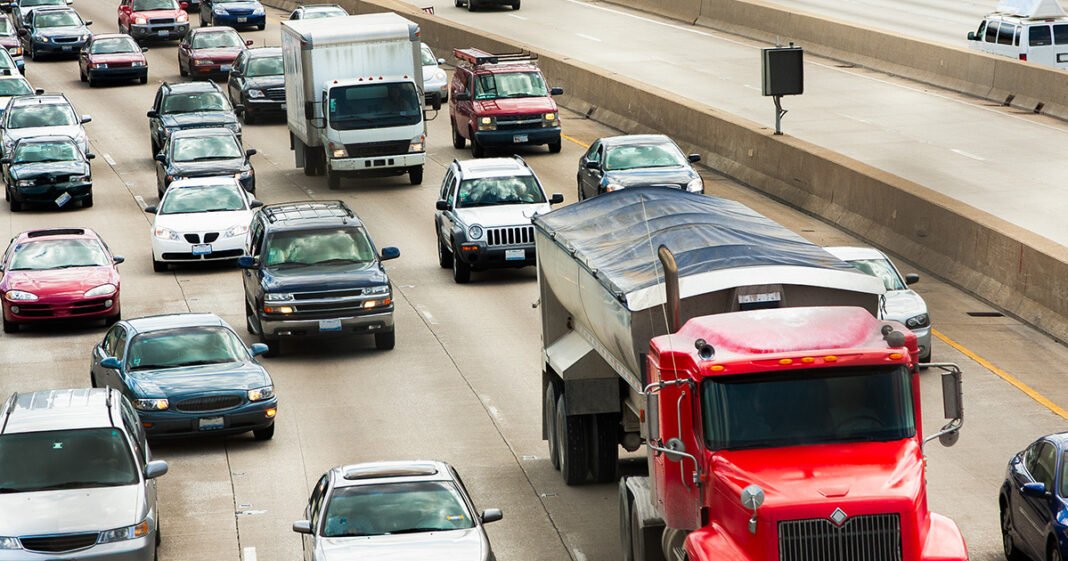

Outgoing traffic congestion on the Chicago Dan Ryan expressway. (HelpingHandPhotos/Getty Images)
March 19, 2026 11:51 AM, EDT
Key Takeaways:
- ATA wants the next surface transportation bill to prioritize the National Highway System and congested freight corridors.
- The federation is pushing for long-term truck parking funding and repeal of the federal excise tax on new trucks.
- Funding concerns loom as lawmakers prepare a highway bill with current authorization expiring in September.
The trucking industry is asking lawmakers to center the next surface transportation bill on the National Highway System, establish long-term funding for truck parking and repeal the 12% federal excise tax on new trucks.
American Trucking Associations says this set of priorities reflects freight corridors’ most pressing needs.
Truck drivers deserve a safe, legal place to park at the end of their shift.
ATA has helped unlock half a billion dollars to expand truck parking capacity, and we are continuing to advocate for this priority in the upcoming surface transportation bill.
This will not only…
— American Trucking (@TRUCKINGdotORG) March 4, 2026
ATA Vice President of Highway Policy Darrin Roth told Transport Topics that the federation wants federal dollars directed to the corridors that carry the bulk of freight and economic activity. He noted that previous surface transportation laws have spread funds across lower‑priority projects.
“If you’re going to have a federal bill, you should have a federal focus,” Roth said. Interstate highways, he added, are where improvements would produce the biggest economic benefit, particularly along congested freight corridors and locations in poor condition.
Roth pointed to the National Highway System — especially the busiest interstate segments — as the network most in need of attention. The American Transportation Research Institute in its annual list of freight bottlenecks placed Chicago at the top, with New York City and Atlanta close behind.
ATA also is pushing Congress to create a dedicated, multiyear funding stream for truck parking. Congress approved about $200 million through recent appropriations, but Roth said planners lack confidence that those dollars will continue. The Truck Parking Safety Improvement Act, sponsored by Rep. Mike Bost (R‑Ill.), would authorize $755 million over five years. The goal is to incorporate this truck parking bill into the larger surface transportation measure.
“I know firsthand how difficult, and oftentimes dangerous, it can be when America’s truckers are forced to push that extra mile in search of a safe place to park,” Bost said when promoting his bill last year. Truck parking ranked fourth on ATRI’s list of top industry issues in 2025.
ATA also continues to press for repeal of the federal excise tax on new trucks — a World War I‑era levy that opponents say adds $15,000 to $30,000 to the cost of a new heavy‑duty vehicle. “The price of trucks has risen significantly,” he said, adding the excise “just adds to that challenge.” Roth acknowledged that finding a replacement revenue source remains a consideration.
ATA continues to work with lawmakers who have backed previous repeal attempts.
As Congress returns to the Capitol, repealing the FET should be at the top of its to-do list.
The ATA & the Clean Freight Coalition are renewing the push to eliminate this WWI-era tax that is keeping newer, cleaner, & safer trucks off the road.https://t.co/BWKpD0V0Am
— American Trucking (@TRUCKINGdotORG) September 5, 2023
Looking ahead, Roth said Congress faces significant funding shortfalls as it begins to assemble the next long-term highway bill. With little appetite on Capitol Hill for raising federal fuel taxes, Roth said options expected to surface during the bill’s debate include a national registration fee, EV and hybrid surcharges and adjustments to vehicle-related taxes.
House Transportation Committee Chairman Sam Graves (R‑Mo.) has said he expects the bill to advance in April. Current authorization for federal highway programs expires in September.
Created during the Eisenhower administration, the Highway Trust Fund helps states pay for surface transportation maintenance projects but relies on fuel tax revenue that has not kept pace with infrastructure needs.

