
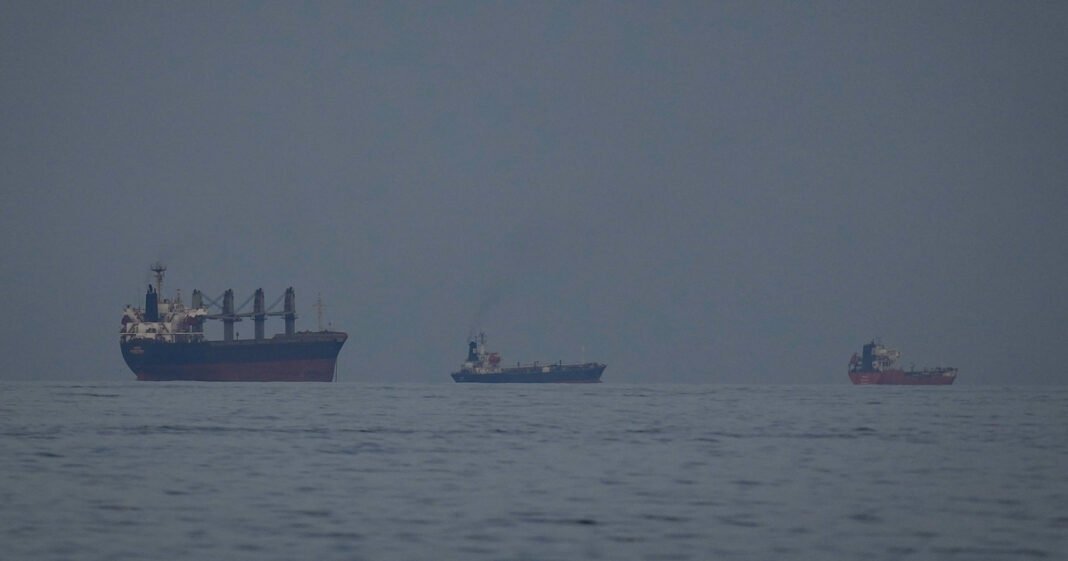

Oil tankers and ships line up in the Strait of Hormuz on March 11. (Altaf Qadri/Associated Press)
March 16, 2026 3:27 PM, EDT
Key Takeaways:
- Insurance for ships transiting the Strait of Hormuz remains available but now costs about 5% of a vessel’s value amid escalating regional attacks.
- The surge in rates highlights heightened security risks and uncertain shipowner willingness to transit the waterway, which handles about one‑fifth of global oil and LNG flows.
- The U.S. plans a $20 billion reinsurance program to revive traffic, while incidents continue and insurers await clarity on possible partnerships with the Development Finance Corporation.
Insuring vessels to sail through the Strait of Hormuz remains possible, though at a steep cost, according to people involved in the market.
The cost of coverage has surged to about 5% of a ship’s value — about five times the level seen in the earliest days of the Iran war and far above the fractions of a percentage point typical in calmer periods, the people said, requesting anonymity to discuss private information. That means insuring a $100 million oil tanker would cost about $5 million.
While the rates are high, they signal that coverage remains available for the handful of vessels still moving through the vital waterway, which typically carries about one-fifth of global oil and liquefied natural gas shipments. A key question is whether shipowners are willing to make the transit, given the safety risks.
Asked why the U.S. cannot immediately reopen the Strait of Hormuz if Iran’s mine‑laying ships are destroyed, President Trump said on March 16 that vessels must be willing to pass through the waterway for normal operations to resume.
Details of a plan for the U.S. International Development Finance Corporation to help insure tankers remain unclear. The U.S. has announced a $20 billion reinsurance program to revive shipping through Hormuz. Insurers have shown interest in partnering with DFC to offer the reinsurance, an agency official said last week. Trump’s push for allies to help secure the waterway has been met with reluctance.
So far, most insurance quotes are for vessels with links to China, India or Pakistan, one person said. Insurers in the London market have maintained that coverage remains available for vessels in the Middle East and is not a factor limiting trade in and out of the region.
The U.K. Maritime Trade Operations Center estimates that at least 20 ships have been involved in security incidents since March 1 in and around the Persian Gulf. The most recent occurred March 12, when a container ship was struck, causing a fire.

