
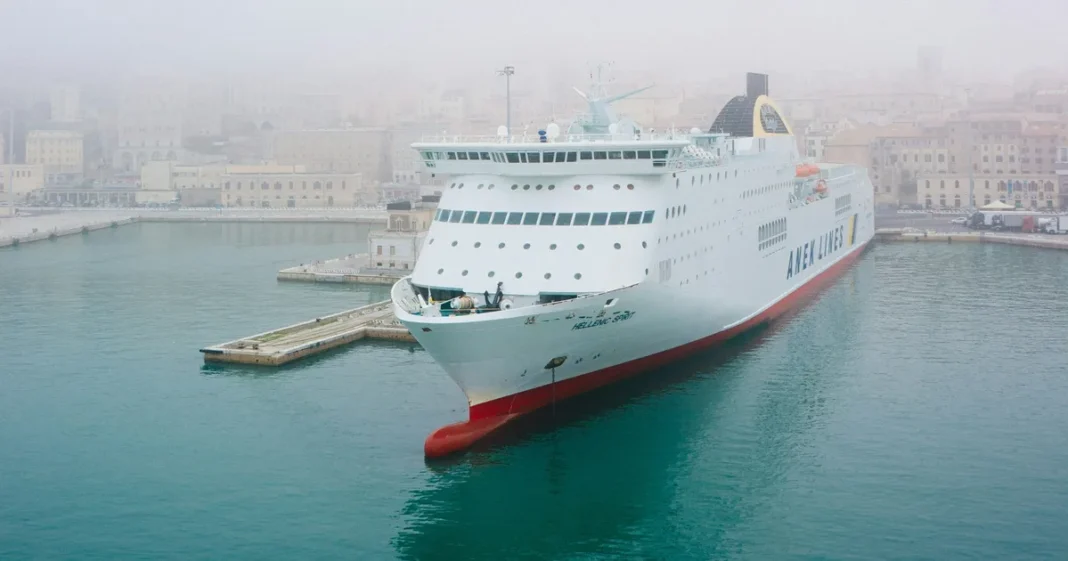

Ferries in port cities like Barcelona, Dublin and Naples are responsible for more toxic air pollution (SOx) than all the cars in those cities, a new study by T&E shows. Promisingly, 60% of Europe’s ferries could be electric by 2035, and over half (52%) would be cheaper to operate than fossil-fuelled vessels, the report shows. With the average age of ferries in Europe at 26 years, now is the time for a clean renewal, says T&E.
Ferries play a vital role in connecting Europe’s islands with the mainland, yet many are old and polluting, making them bad for the climate and the health of people living near ports. In 2023 alone, the 1043 European ferries analysed by T&E, many of which are small, emitted 13.4 million tonnes of CO₂ – the equivalent of 6.6 million cars over a year. Barcelona is the European port responsible for the highest ferry CO2 emissions.
Dublin is currently the most polluted port city in Europe when it comes to ferry air pollution, followed by Las Palmas and Holyhead. This is set to change in 2027, when new emission control areas will come into place, limiting the air pollution from maritime fuels in the North-East Atlantic. Even with similar measures already in place in the Mediterranean, in cities like Barcelona, ferries pollute 1.8 times more SOx than all the city’s cars.
A shift to electric ferries offers a cost-competitive solution that is already starting to take off in Europe. Unlike other parts of the shipping sector, ferries are easy to electrify, given their smaller size and fixed routes. T&E finds that at least 60% of Europe’s ferry fleet could run on battery power by 2035, with many routes already cheaper to operate as electric today. Electrification and hybridisation could cut ferry CO₂ emissions by up to 42%, and improve air quality in port cities while reducing operating costs.
Felix Klann, Shipping Policy Officer at T&E, said: “Ferries should connect communities, not pollute them. Too many ferries are burning polluting fossil fuels, pumping toxic air into Europe’s port cities. Electrifying them could dramatically cut emissions and bring a breath of fresh air to millions of people.”
Electric ferry routes are starting to appear across Europe, proving that clean ferry travel is commercially viable in many cases. The main barrier to scaling up electric ferries is charging infrastructure, but the challenge is smaller than assumed. 57% of ports would only need small chargers below 5MW to support electric ferry operations.
“Electrification makes economic sense. Electric ferries are already cheaper to run on many routes, and more will become cost-competitive in the coming years. With the average age of ferries in Europe at 26 years, now is the time for a clean renewal”, added Felix Klann, Shipping Policy Officer at T&E.

