
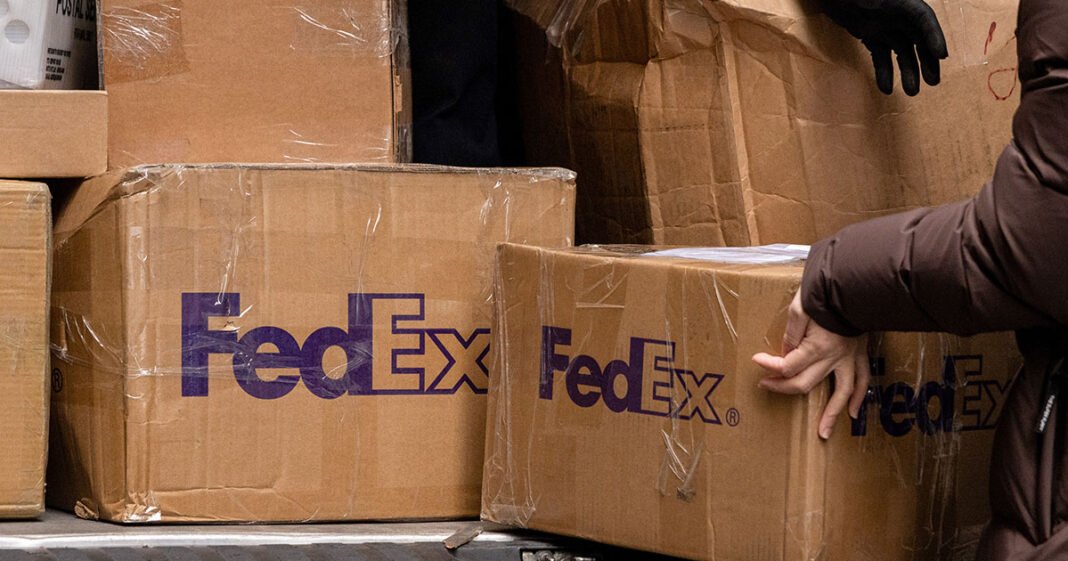

In his lawsuit, customer Matthew Reiser said FedEx’s promises of refunds weren’t enough and asked the court to impose a “legally enforceable obligation” on FedEx. (Yuki Iwamura/Bloomberg)
February 27, 2026 3:45 PM, EST
| Updated: February 27, 2026 5:05 PM, EST
Key Takeaways:
- Consumers filed proposed class actions against FedEx and EssilorLuxottica seeking refunds of tariff-related charges after the Supreme Court invalidated certain Trump administration duties.
- The suits argue companies are pursuing government refunds while still collecting or retaining tariff surcharges passed on to customers.
- The U.S. Court of International Trade will determine refund obligations as businesses and consumers await next steps following the Supreme Court ruling.
Thousands of companies are angling for refunds on President Donald Trump’s tariffs, many of which were ruled unconstitutional last week. Now some retail customers are joining the scrum.
On Feb. 27, Matthew Reiser, filed a proposed class action in Miami federal court against FedEx Corp., alleging the company acted as a “customs broker” and collected $36 in duties and “brokerage fees” on a pair of German tennis shoes he ordered.
FedEx was one of the first companies to sue for refunds in the days after the Feb. 20 Supreme Court decision. The delivery company has already publicly promised customers it will refund them if the company receives money from the government. In his suit, Reiser said these promises weren’t enough and asked the court to impose a “legally enforceable obligation” on FedEx.
“FedEx is the only entity with legal standing to seek a refund of duties directly from the government,” John Morgan, Reiser’s lawyer, said in a statement. “This leaves consumers like our client with no choice but to try to legally compel FedEx to refund them for the tariffs that they were charged by FedEx, not to mention the ancillary fees FedEx added to process these transactions.”
In a statement, the company said: “Our intent is straightforward: if refunds are issued to FedEx, we will issue refunds to the shippers and consumers who originally bore those charges. When that will happen and the exact process for requesting and issuing refunds will depend in part on future guidance from the government and the court.”
FedEx ranks No. 2 on the Transport Topics Top 100 list of the largest for-hire carriers in North America, No. 3 on the TT Top 50 list of the largest global freight carriers and No. 43 on the TT Top 100 list of the largest logistics companies in North America.
On Feb. 26, another consumer, New Yorker Nathan Ward filed a proposed class action against EssilorLuxottica, the maker of Ray-Ban sunglasses. Noting the company has sued the U.S. government for tariff refunds, Ward said the company should return any costs from the levies that it passed on to customers.
“Despite seeking an order entitling it to a refund of the duties collected as a result of the subject tariffs, EssilorLuxottica continues to collect and has not refunded the tariff surcharges it collected from consumers,” Ward said.
Ward, who said he bought a pair of Ray-Bans in August, claimed the cost of one model increased from $287 in March 2025 to $304 in May. Though considered quintessentially American, Ray-Ban sunglasses have largely been made in Italy since the brand’s 1999 acquisition by the former Luxottica Group.
EssilorLuxottica did not immediately respond to requests for comment.
The Supreme Court ruling invalidating tariffs Trump imposed under a 1977 emergency powers law was silent on the issue of refunds, leaving the matter for the the U.S. Court of International Trade to determine. More than 2,000 businesses have filed lawsuits in the trade court.
Trump made public comments suggesting his administration might oppose paying back the billions of dollars it has collected, but the Justice Department hasn’t taken an official position in court yet.
EssilorLuxottica, which also owns Oakley and Vogue Eyewear, sued the government over tariffs in November, requesting a return of the “unlawful duties” collected. The trade court put all tariff lawsuits on hold until the Supreme Court ruled and hasn’t announced what it plans to do next.
RELATED: Trump Plans Targeted Tariff Increase to 15%
According to the complaint, EssilorLuxottica Chairman and CEO Francesco Milleri said during a 2025 earnings call that prices would rise in the “single-digit territory” to “manage the impact of U.S. import duties.”
Since the Supreme Court decision, Trump has vowed to find alternative ways to impose tariffs, though those may also be subject to legal challenge.

