
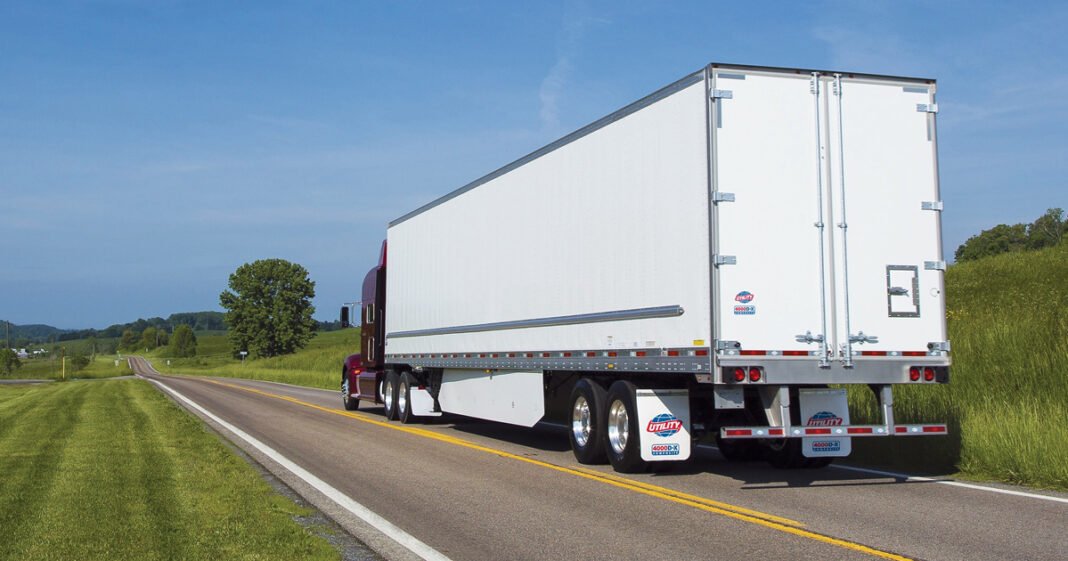

“The market is definitely rebounding, at least from our perspective,” Utility’s Bennett said. (Utility Trailer via Facebook)
February 26, 2026 1:34 PM, EST
Key Takeaways:
- U.S. trailer orders started the year mixed as January bookings rose 9% year over year to about 23,000 units but fell from December.
- Analysts said the market reflects lingering fleet hesitance, cost inflation and trade uncertainty despite signs of stabilizing demand.
- Federal investigations into alleged unfair trailer imports from China, Mexico and Canada are underway as manufacturers seek trade relief and await next steps.
U.S. trailer orders began the year reflecting the mixed market conditions and ongoing headwinds facing trucking fleets.
ACT Research preliminary net data for January showed orders rose 9% year over year to 23,000 units while also marking a sequential decline of 8% compared with December.
“Sequentially, a drop in net orders was expected as December is usually the second-strongest order month of the annual cycle,” said Jennifer McNealy, director of commercial vehicle market research for ACT Research. “January is usually the month when trailer makers begin to take fewer orders and start to work down the backlog that grew during the peak of order season.”
McNealy noted that fleet hesitance during the latter half of last year may have delayed the cycle a bit, causing recent results to be on the surprisingly high side while still following traditional patterns. She also noted that a weather-related spike in freight rates and aging equipment are factoring into trailer demand.
FTR Transportation Intelligence preliminary January data found trailer orders decreased 4% year over year to 24,206 units but were flat sequentially compared with December.
“Positive indicators from the truck freight market and improved regulatory clarity are much-needed boosts to the U.S. trailer market, but manufacturers and fleet purchasers still must deal with cost inflation and trade uncertainty that continue to shape pricing and demand,” said Dan Moyer, senior analyst of commercial vehicles at FTR.
The FTR report noted that the 2026 order season, which ended in January, was down 16% year over year despite recent demand stabilization and modest improvements.
“The market is definitely rebounding, at least from our perspective,” said Steve Bennett, president and chief operating officer at Utility Trailer Manufacturing Co. “Orders are getting placed, our dealers coast to coast are running out of inventory of new refrigerated trailers and new dry van trailers. In my opinion, we’re closer to a recovery than we have been.”
Bennett noted that this activity has been primarily coming from private fleets, which are placing orders for dry vans at a more advanced rate than they have in the past nine to 12 months. He noted that for-hire carriers are starting to sell their used trailers, including refrigerated units, instead of bringing new trailers in.
“For refrigerated carriers, they try to keep the average life around 3 to 4 years,” Bennett said. “Since many of them haven’t bought for so long, they have some catch-up to do to get that average life down.”
Targeting Overseas Rivals
Bennett also spoke about an initiative aimed at combating alleged unfair trade practices from overseas manufacturers.
The American Trailer Manufacturers Coalition was launched late last year to urge federal agencies to investigate the alleged subsidization of imported trailers and dumping of equipment. A petition accused exporters of selling products at less than fair value.
“The American Trailer Manufacturers Coalition is fighting to address the flood of unfairly traded trailer imports entering the country from China, Mexico and Canada,” the coalition said in a statement. “Over 50,000 American jobs supported by our industry are at risk due to these dumped and subsidized products, which is why our coalition is seeking strong trade relief.”
The Department of Commerce initiated an investigation after the petition was issued, and the International Trade Commission issued a preliminary injury vote in the group’s favor.
“It’s six different lawsuits — it’s Mexico, Canada and China — that they’ve brought this antidumping, countervailing, duty action forward,” Bennett said. “They could only get the numbers to take that action if they considered reefer and dry freight as one big blob.”
The coalition expressed hope that tens of thousands of trailer jobs could be saved but has also faced criticism on the grounds its actions could unfairly price out competition.
Bennett took offense to the characterization given the vastly different material and manufacturing requirements between trailers.
He also noted the challenges domestic manufacturers still face with regard to tariffs. He noted that the Section 232 tariffs on raw materials by the Trump administration have ballooned his expenses, especially for aluminum not smelted in the United States. He was paying $1.20 a pound about 14 months ago; that has since risen to about $2.45.
“We have three refrigerated trailer plants, one in Utah, one in Virginia, and we formerly had one in Texas,” Bennett said. “Texas didn’t work for us. We went back and put a plant over the border in Piedras Negras, [Mexico]. But all our raw materials come from the United States.”

