
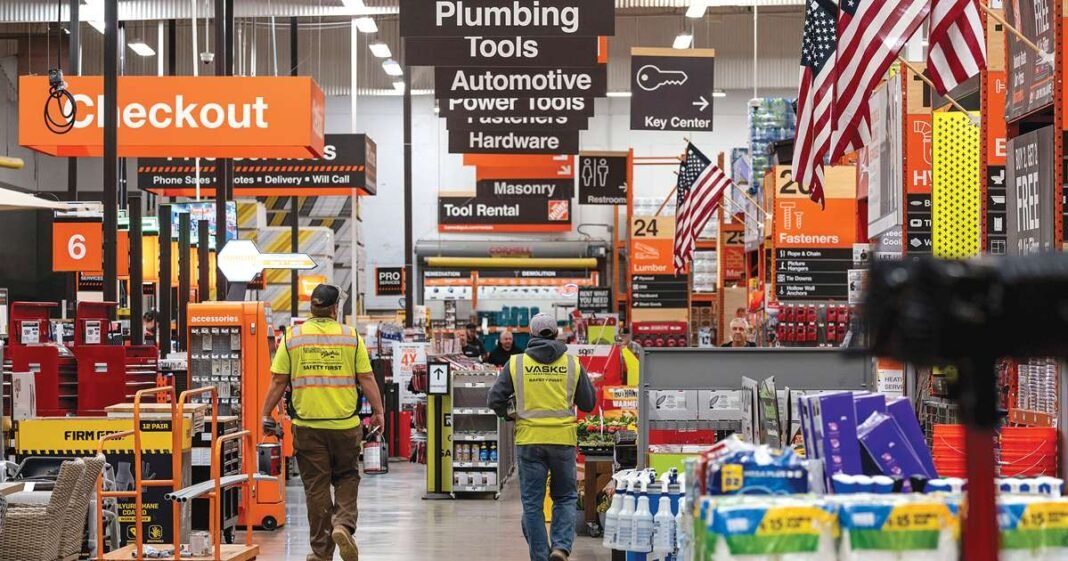

(David Paul Morris/Bloomberg)
February 24, 2026 9:40 AM, EST
Key Takeaways:
- Home Depot’s comparable sales rose 0.4% in the latest quarter, showing steady home‑improvement demand even as high interest rates and inflation continue to influence consumer behavior.
- Executives said homeowners remain hesitant to take on large remodeling projects, reflecting concerns about affordability, job stability and broader economic uncertainty despite early improvements in mortgage rates.
- The company reiterated its full‑year forecast while noting tariff-related pressures and modest price increases, emphasizing that a clear catalyst for stronger home‑improvement demand has yet to emerge.
Home Depot Inc. reported a key sales metric that beat expectations in the latest quarter on steady demand, though the retailer cautioned that macroeconomic challenges remain.
Comparable sales, which track performance at locations open at least a year, rose 0.4% in the quarter ended Feb. 1, better than the average of estimates compiled by Bloomberg. Earnings per share, excluding some items, also outpaced expectations in the period.
The results suggest that the appetite for home projects is holding steady despite elevated interest rates and persistent inflation concerns. Home Depot said it gained market share, while also achieving double-digit e-commerce growth for a third straight quarter.
Home Depot ranks No. 54 on the Transport Topics Top 100 list of the largest private carriers in North America.
Still, a meaningful change in housing demand has yet to materialize.
“Our customers have been on the sideline with respect to large remodeling projects for three years now,” Chief Financial Officer Richard McPhail said in an interview. “The homeowner is one of the healthiest customer cohorts out there, but they tell us that uncertainty is growing, that there’s concern around housing affordability, around job losses.”
There are some early positive signs for housing: Mortgage rates have dipped, while median home prices have stayed relatively flat over the past year. McPhail said mortgage rates would need to decrease and income levels would have to increase in a more pronounced way for growth to accelerate.
“Everything is moving very slowly in the right direction, but we haven’t seen a catalyst for a change in home-improvement demand,” he said. Home Depot reiterated its full-year forecast.
Consumer sentiment has been volatile, while affordability challenges remain and employment barely grew in the U.S. last year. U.S. tariff policy is once again in flux after the Supreme Court struck down President Donald Trump’s expansive global levies last week. Trump has promised new levies, but questions remain on their level, how they’ll be implemented and for how long.
Home Depot is analyzing the potential impact of these changes, McPhail said, adding that the company had largely moved through the impact of tariffs before the latest announcements. Some items will “modestly” get more expensive during the first half of this year following price increases the retailer recently implemented.
Home Depot executives said during an investor day in December that pent-up demand has been building up since 2023 will eventually translate to spending.
During the company’s extended slowdown, Home Depot has focused on its faster-growing business that serves professional contractors, who spend more than everyday customers. It has also sought to expand its digital operations and offer AI-enhanced shopping. To combat tariffs, Home Depot has diversified sourcing.
The retailer recently cut corporate roles and is requiring staff return to the office as it looks to recapture growth. It’s also making the requirements for bonus payouts to management more strict, Bloomberg News reported last week.
Home Depot is the latest big-box retailer to post results this earnings season, with key competitor Lowe’s Cos. scheduled to report on Feb. 25. Walmart Inc. offered a conservative outlook last week, citing a fluid economic backdrop. Still, consumers’ spending habits have been consistent, Walmart said, while price increases are normalizing across many product categories.

