
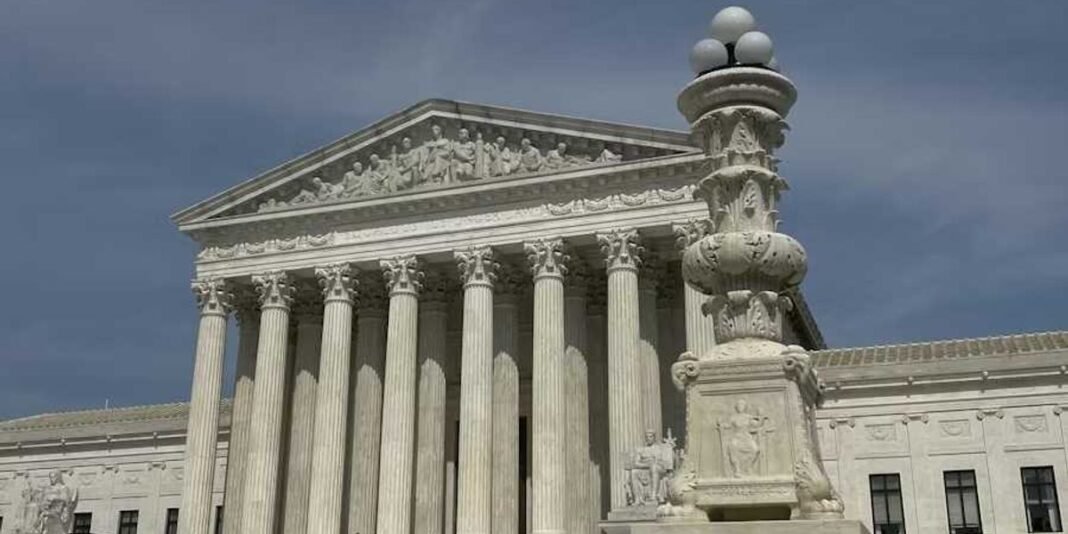

The U.S. Supreme Court today overturned President Donald Trump’s unilateral scheme of global tariffs in a move that could send a fresh wave of change through global supply chains that have spent the past year struggling to adjust to the import taxes, according to published reports.
The Administration’s tariffs have already shifted decades-old global trading patterns, forcing shippers and carriers to react quickly, whether each new round of tariffs was announced by social media post, press conference, threat, or negotiation.
Now, this new decision could force logistics industry operators to shift those patterns yet again, continuing a 13-month period of economic turbulence that has been characterized by unpredictable business conditions since the President’s second administration began.
While those conditions have often been muddy, the Court’s decision today was clear, shown by a 6-3 decision which was remarkable in an age of dissent on the top court.
In the majority opinion released today, Chief Justice John Roberts said the President had fallen short of demonstrating the emergency authority that he claimed empowered him to apply the tariffs. “The president asserts the extraordinary power to unilaterally impose tariffs of unlimited amount, duration, and scope,” Roberts wrote. “In light of the breadth, history, and constitutional context of that asserted authority, he must identify clear congressional authorization to exercise it.”
Specifically, today’s decision knocked down those tariffs enacted under the International Emergency Economic Powers Act (IEEPA), which leaves standing an array of other taxes levied under different government trade codes.
That means the Trump Administration may soon attempt to replace the invalid IEEPA tariffs with new ones, forcing businesses to scramble to adjust to the changes and stay compliant with changing laws, said Gartner analyst Brian Whitlock.
“Supply chains that have integrated IEEPA tariffs into pricing models, supplier contracts and ERP systems must audit existing contracts and pricing structures, including a review of all contracts, supplier agreements and pricing models that incorporate IEEPA tariff rates. This audit requires close collaboration among the legal, procurement and finance teams to identify clauses based on tariff assumptions that may no longer be applicable,” Whitlock said.
Organizations should also be prepared for new tariffs to follow quickly. Supply chain functions must understand the complexity of shifting tariff regimes, which are unlikely to mirror IEEPA tariffs. For example, it may not be possible to apply new tariffs to all countries as the IEEPA tariffs do today, nor may the rates be the same. Therefore, companies must be able to make adjustments to ensure they remain both competitive and compliant,” said Whitlock.
That extended uncertainty could handicap global trade flows by creating “sourcing paralysis” that extends well into 2026, agreed Andrei Quinn-Barabanov, Moody’s Supply Chain Industry Practice Lead.
“Following the Supreme Court ruling against country-based tariffs, the administration may impose additional commodity-based tariffs. This could trigger another round of exemption requests and international trade negotiations, potentially prolonging the tariff rate uncertainty and resulting sourcing paralysis well into 2026,” Quinn-Barabanov said in a statement. “Making prudent, long-term sourcing decisions becomes difficult when you can only make solid assumptions about tariffs for some potential vendors, but not for others. This sourcing paralysis may temporarily keep tariff-affected customers and suppliers in an uneasy status quo, leading to 2026 supplier negotiations that are more adversarial and short-term in their outlook.”

