
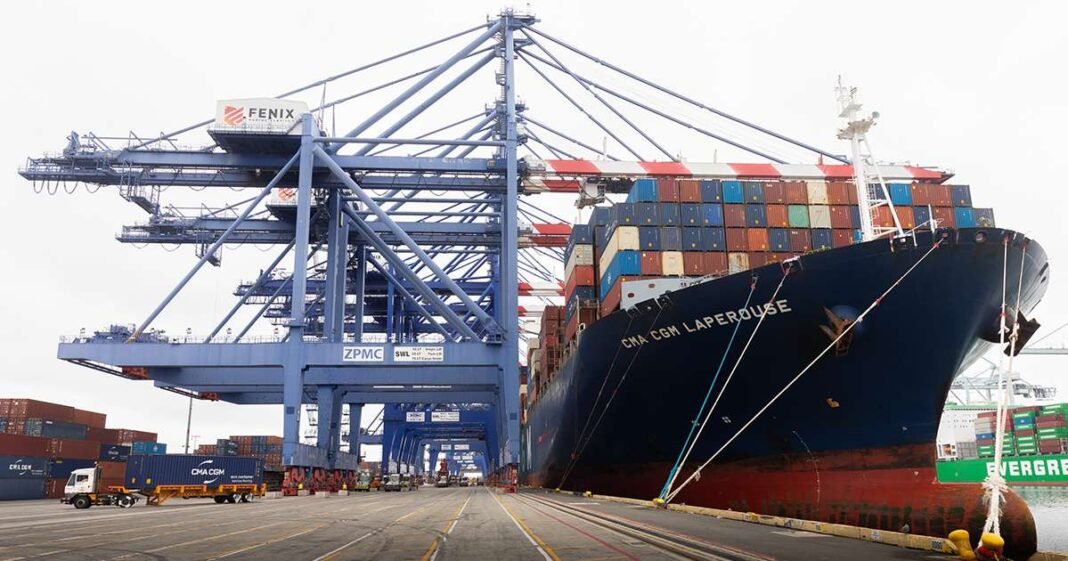

A containership at the Port of Los Angeles. (Tim Rue/Bloomberg)
February 19, 2026 9:54 AM, EST
The U.S. trade deficit widened in December, capping a turbulent year of erratic tariff policy.
The goods and services trade gap expanded from the prior month to $70.3 billion, Commerce Department data showed Feb. 19. The shortfall culminated in a full-year deficit of $901.5 billion, still one of the largest in data back to 1960.
The December deficit reflected a 3.6% increase in the value of imports. Exports of goods and services declined 1.7%. The median estimate in a Bloomberg survey of economists called for a $55.5 billion overall shortfall.
The trade data was notably volatile in 2025 on a month-to-month basis as U.S. importers reacted to a persistent drumbeat of tariff announcements from President Donald Trump. Gold and pharmaceutical imports were particularly choppy as companies raced to beat higher duties.
The increase in goods imports in December included gains in computer accessories and motor vehicles. The decline in exports largely reflected fewer outbound shipments of gold, according to the trade report.
The latest trade data will help economists firm up their estimates for fourth-quarter gross domestic product, which will be released Feb. 20. Before the figures, the Federal Reserve Bank of Atlanta’s GDPNow forecast net exports would add about 0.6 percentage point to fourth-quarter growth, now estimated at 3.6%.
After adjusting for changes in prices, which filters into the real GDP measurement, the merchandise trade deficit widened to $97.1 billion in December, the most since July. Trade in gold, unless used for industrial purposes such as in the production of jewelry, is excluded from the government’s GDP calculation.
Trump has leaned on tariffs as part of his strategy to reduce reliance on foreign goods, encourage domestic investment and correct decades of declines in manufacturing employment. He and his economic team have criticized research concluding that Americans have borne the costs of tariffs.
Lior Ron of Waabi discusses the accelerating evolution of autonomous trucking and how new AI capabilities are reshaping deployment models. Tune in above or by going to RoadSigns.ttnews.com.
Last year, U.S. companies imported nearly $145 billion worth of computers and accessories more than they did in 2024. The acceleration in demand reflected the massive investment underway in artificial intelligence.
By country, the shortfall with China narrowed sharply — reaching about $202 billion, the smallest in more than 20 years and a reflection of the higher tariffs Trump put on Chinese imports. Trade has instead been largely rerouted through other countries like Mexico and Vietnam, where deficits widened to respective records.
Meantime, the gap with Taiwan last year widened to a record $146.8 billion, while the annual shortfall with Canada narrowed.
Separate data Feb. 19 showed U.S. initial jobless claims fell last week by the most since November.

